

Tinted sunscreen gives you broad-spectrum UV protection plus visible-light-blocking pigments, which makes it one of the simplest daily habits for anyone worried about hyperpigmentation or wanting light coverage without foundation. Choose a broad-spectrum SPF 30 or higher, apply the full recommended amount, and reapply through the day. If you deal with melasma, post-inflammatory hyperpigmentation, or simply darker skin that shows every unprotected hour in the sun, a tinted formula does something a clear one cannot.
TL;DR:
- Tinted sunscreens with iron oxides provide protection from visible light, which can worsen hyperpigmentation, especially for darker skin tones and those with melasma or post-inflammatory hyperpigmentation.
- To be effective, tinted sunscreens should be applied at a full, recommended amount and reapplied every two hours during sun exposure, with sufficient product coverage, not just a thin layer.
- They contain mineral filters like zinc oxide or titanium dioxide that physically block UV rays and mineral pigments that reflect visible light, reducing the risk of patchiness and pilling when properly layered.
- Proper shade selection, especially for deeper skin tones, involves testing in natural light and choosing brands with broader or adaptable shade ranges to ensure a seamless match.
- For sensitive or eczema-prone skin, choose products with shorter ingredient lists and mineral-based formulas, patch-test before full application, and layer carefully to avoid pilling caused by incompatible skincare layers.
Table of Contents
- What Does Tinted Sunscreen Protect Against?
- How Do Tinted Sunscreens Actually Work?
- Which Tinted Sunscreen Should You Choose for Your Skin Type?
- How Much Tinted Sunscreen Should You Apply to Get the Labeled SPF?
- Why Does My Tinted Sunscreen Pill or Look Patchy?
- Do You Need a Different Tinted Sunscreen for Your Body?
- How Long Does Tinted Sunscreen Last Before It Expires?
- Can You Wear Tinted Sunscreen Under Makeup?
- A Publisher’s Perspective on Gentle Tinted SPF for Sensitive Skin
- How Pure Light Botanical Beauty Keeps Color Gentle Alongside Your SPF Routine
- Selected Sources for This Article
- FAQ
What Does Tinted Sunscreen Protect Against?
Standard sunscreen was built to stop UVA and UVB rays. Tinted sunscreen adds a third layer of defense: protection from visible light, the part of the spectrum your eyes actually see and that clear filters mostly ignore.
That distinction matters more than most people realize. Visible light, especially the blue and violet wavelengths from sunlight and screens, has been shown to darken pigment in skin that’s already prone to discoloration. NPR’s reporting on the subject found that tinted formulas offer a kind of protection regular sunscreen simply cannot replicate, because the pigments themselves, primarily iron oxides, physically absorb and reflect that visible spectrum. Clear sunscreen lets it through.
Harvard Health’s clinical overview of hyperpigmentation makes the mechanism clear: melasma and post-inflammatory hyperpigmentation are driven by pigment-producing cells that overreact to light exposure. Sun protection is the foundation of any treatment plan, and dermatologists increasingly point to visible light, not only UV, as a trigger they’d overlooked for years.
Certain groups see the biggest payoff from switching to a tinted formula:
- People with melasma, where visible light is a documented trigger for the blotchy, symmetrical patches that appear on the cheeks and forehead.
- Anyone recovering from post-inflammatory hyperpigmentation after acne, a cut, or a cosmetic procedure, since new pigment is especially reactive to light.
- People with darker skin tones, who tend to produce more melanin in response to visible light and therefore see more visible rebound darkening without a tint.
- Anyone who spends hours in front of screens or near windows, where visible light exposure adds up even without direct sun.
Iron oxides are doing double duty here. They tint the formula to match skin, and they function as a visible-light filter at the same time. That’s not a marketing footnote. It’s the actual reason dermatologists have shifted from “any SPF 30 will do” to specifically recommending tinted versions for patients managing pigment concerns.
How Do Tinted Sunscreens Actually Work?
Every tinted sunscreen is built from two components: a UV filter system and a pigment system. How those two interact determines the finish, the cast, and how well it plays with the rest of your routine.
Mineral filters (zinc oxide and titanium dioxide) work by sitting on the skin’s surface and physically deflecting UV rays. They’re the gold standard for sensitive and reactive skin because they don’t get absorbed and metabolized the way chemical filters do. Their well-known drawback is the white or gray cast, especially on deeper skin tones, because the mineral particles reflect light indiscriminately. That’s precisely the problem iron oxide tinting was designed to solve: the tint corrects the cast while the zinc or titanium still provides the physical barrier.
Chemical filters absorb UV radiation and convert it to heat, which lets formulators build very high SPF values into a thinner, more cosmetically elegant texture. They tend to layer more smoothly under makeup, but they’re more likely to sting compromised or eczema-prone skin, and some testing roundups have flagged unregulated “SPF boosters” added to certain hybrid mineral formulas, so ingredient transparency is worth checking before you buy.
Hybrid formulas blend both. You get some of the cosmetic elegance of chemical filters with the added reassurance of a mineral base.
When you’re reading a label, here’s the quick translation:
- Zinc oxide or titanium dioxide near the top of the ingredient list, with iron oxides for tint: a mostly mineral, sensitive-skin-friendly formula.
- Avobenzone, octinoxate, or similar names alongside iron oxides: a chemical or hybrid formula, usually thinner and better under makeup.
- A short ingredient list with recognizable names: generally a good sign for reactive or eczema-prone skin.
Which Tinted Sunscreen Should You Choose for Your Skin Type?
The right formula depends less on brand reputation and more on how your skin behaves by midafternoon. Here’s how to narrow it down by what actually bothers you.
- If you have oily skin, look for a matte-finish or oil-absorbing tinted sunscreen, often labeled with silica or a “mattifying” claim. Avoid heavy, cream-based tints that sit on top of already-active sebum and slide by noon.
- If your skin runs dry, prioritize a hydrating tinted formula with humectants like glycerin or hyaluronic acid built in. A dry base under a mattifying SPF will flake and pill within an hour, no matter how good the sunscreen is on its own.
- If you have sensitive skin or eczema, go fragrance-free with the shortest ingredient list you can find, and patch-test on your inner arm for 24 to 48 hours before applying it to your face. Mineral-forward formulas tend to be gentler than chemical-heavy ones here.
- If you have mature skin, look for formulas that mention hydration alongside sun protection, since drier, thinner skin shows texture from mattifying tints more easily than it did a decade ago.
- If you have a deeper skin tone, test in daylight, not fluorescent store lighting, and lean toward brands with an expanded shade range or a universal tint engineered to adapt to different undertones rather than sit as one fixed color.
Coverage preference matters just as much as skin type. A heavier tint feels like it’s doing more, but it also tempts people into applying a thin, foundation-style layer, which quietly cuts your actual SPF protection. A lighter tint is easier to apply generously and reapply midday, which in practice often gives you more real protection than a “fuller coverage” product used sparingly.
Pro Tip: If you’re buying a tinted sunscreen online for a darker skin tone, choose a retailer with an easy return policy and order two shade-adjacent options. Testing indoors and in daylight side by side beats guessing from a product photo every time.
How Much Tinted Sunscreen Should You Apply to Get the Labeled SPF?
Most people apply their tinted sunscreen the way they apply foundation: a thin, blended layer meant to even out tone. That habit is the single biggest reason people don’t get the SPF printed on the bottle. Testing roundups that compared dozens of tinted mineral formulas found this underapplication pattern again and again, because tinted SPF sits in a strange gray zone between skincare and makeup, and most people default to a makeup-sized amount.
- Use a nickel-sized amount for the full face, or the two-finger method: two full strips of product along your index and middle finger, covering face and neck. This is roughly double what most people intuitively use.
- Reapply every two hours during direct sun exposure. Dermatologist guidance on this hasn’t changed for tinted formulas versus clear ones. The tint doesn’t extend the protection window.
- Choose your reapplication method by situation. A tinted powder SPF is the easiest way to touch up over makeup without disturbing your look. A setting spray with SPF works for quick refreshes. Reapplying the original liquid formula gives you the most reliable protection but works best when you’re not wearing heavy makeup underneath.
- Match the product to the exposure. A daily commute, an office with windows, or errands call for a tinted SPF 30 to 50 applied once in the morning with a midday touch-up. Hiking, a beach day, or hours of direct outdoor exposure call for a dedicated high-SPF, non-tinted formula reapplied more aggressively, since tinted formulas aren’t typically designed for that level of demand.
Why Does My Tinted Sunscreen Pill or Look Patchy?
Pilling almost always comes down to what’s underneath the sunscreen, not the sunscreen itself. Testers and dermatology sources consistently trace pilling back to incompatible layers, most often a heavy silicone-based serum or a rich moisturizer sitting under a water-based tint. The two textures don’t bind, and they roll up into little flakes the moment you rub them in.
The fix is usually simplification, not a new product:
- Cut your routine down to a lightweight moisturizer before applying tinted SPF, and let each layer fully absorb before adding the next.
- Pat the sunscreen in with clean fingertips or a damp sponge instead of rubbing, which distributes it more evenly and disturbs fewer layers underneath.
- If a shade runs slightly off, blend a small amount into your moisturizer before applying rather than piling on extra product to fix the color, which just increases the chance of pilling and reduces even SPF distribution.
- For midday shine or a patchy finish, blot first, then set with a translucent or tinted mineral powder rather than adding another layer of liquid SPF on top of makeup.
Pro Tip: Keep your morning routine to three steps before sunscreen: cleanse, a light serum if you use one, and moisturizer. Every extra layer is another chance for a mismatch. For more on getting the order right, layering skincare products naturally is worth a closer look if pilling keeps showing up no matter which SPF you try.
Do You Need a Different Tinted Sunscreen for Your Body?
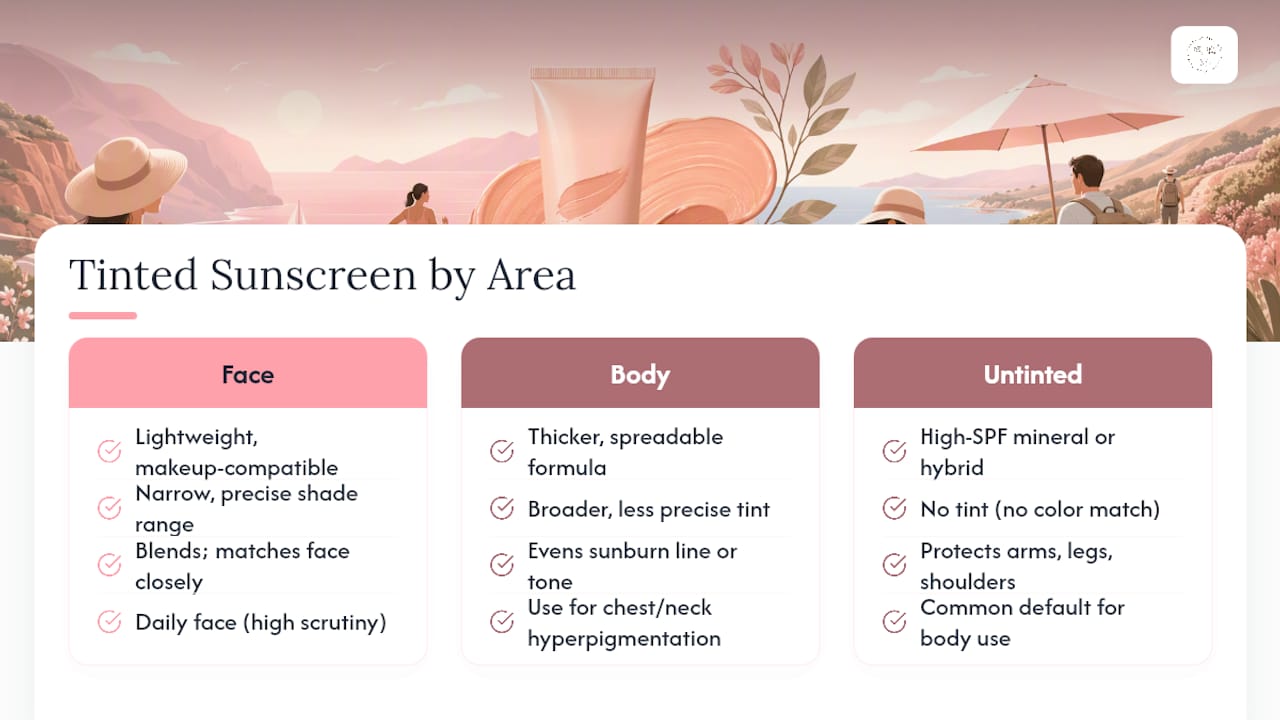
Face formulas and body formulas solve different problems, even when both carry a tint. Facial tinted sunscreen is built to sit under makeup, blend into visible skin, and match a narrower, more precise shade range because a face is scrutinized up close and in direct light all day.
Body tinted sunscreen, when you can find it, is usually formulated thicker, with a broader, less precise tint meant to even out a sunburn line or existing tone rather than match skin exactly. It’s applied over far more surface area, so cost per ounce and ease of rub-in matter more than a flawless finish.
In practice, most people don’t bother tinting their body sunscreen at all. Untinted, high-SPF mineral or hybrid formulas do the job on arms, legs, and shoulders, where visible-light-driven pigment concerns are less common than on the face. The exception is anyone managing hyperpigmentation on the chest, neck, or hands, areas that get regular sun exposure and visible attention, where a lightly tinted body formula can offer the same pigment-blocking benefit the face gets.
If you’re applying facial tinted sunscreen to your neck and chest to keep the tone consistent, that’s a reasonable substitution, just budget for reapplying more product since you’re covering more skin than the label’s face-focused portion accounts for.
How Long Does Tinted Sunscreen Last Before It Expires?
Tinted sunscreen follows the same shelf-life rules as any SPF product: most are good for about three years from manufacture if unopened, and many brands print a “period after opening” symbol, a small jar icon with a number like 12M or 24M, indicating how many months it’s reliable once you crack the seal.
Iron oxide pigments themselves are stable and don’t degrade quickly, but the active UV filters, whether mineral or chemical, can lose potency over time, especially with heat and light exposure. A bottle that’s spent a summer in a hot car or on a sunny windowsill won’t perform like one stored in a cool bathroom cabinet, even if it’s technically still within date.
Watch for practical warning signs rather than relying on the date alone: separation that doesn’t reblend with shaking, a change in smell, or a texture that’s gone grainy or watery. If your tinted sunscreen starts applying unevenly or the tint looks patchier than it used to, that’s often the pigment settling out ahead of the actives losing strength, an early signal worth taking seriously rather than finishing the bottle out of habit.
Can You Wear Tinted Sunscreen Under Makeup?
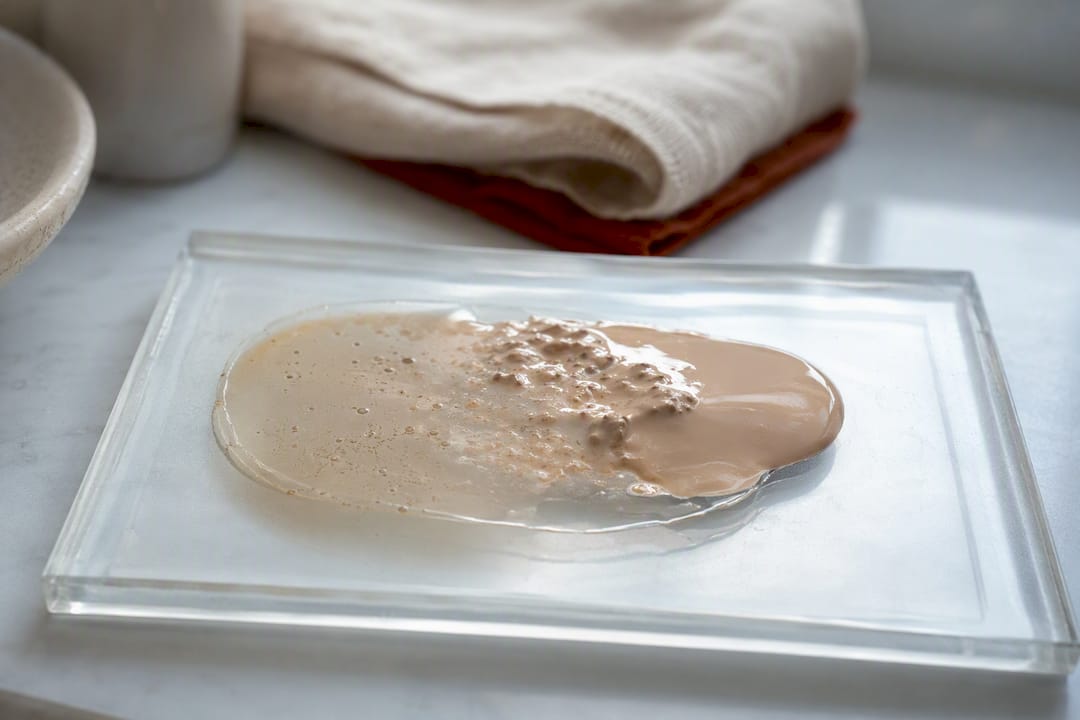
Yes, and for most people it works better as a base layer than as a standalone product. Tinted sunscreen slots in after moisturizer and before primer, foundation, or powder, functioning as a light-coverage step that also carries your SPF, rather than something added on top of a finished face.
The interaction to watch is texture compatibility. A silicone-based primer over a water-based tinted sunscreen is one of the more common causes of pilling, the same layering conflict that shows up when incompatible skincare stacks under makeup. Letting the tinted SPF set for a full minute before adding primer solves this most of the time.
Powder foundation and setting powders generally layer fine over tinted sunscreen since they add texture rather than another wet layer. Liquid foundation works best when you let the tint absorb first and use a light hand, since two liquid tinted products stacked on top of each other tend to move around and reveal each other’s imperfections rather than blending into one smooth layer.
If you already wear a full face of makeup daily, some people skip separate foundation entirely and let a well-pigmented tinted sunscreen do both jobs, touching up with a tinted powder SPF later in the day to keep protection current without disturbing the base.
A Publisher’s Perspective on Gentle Tinted SPF for Sensitive Skin
This brand was built on a simple premise: color and skin health don’t have to compete. That philosophy applies directly to how we think about tinted sun protection. For eczema-prone or reactive skin, the priority isn’t the deepest coverage or the highest SPF number on the shelf. It’s a short, recognizable ingredient list, a mineral-forward filter system, and a formula that doesn’t ask irritated skin to tolerate fragrance or unnecessary additives on top of sun exposure it’s already sensitive to.
Tinted SPF is appropriate for most eczema-prone skin once a flare has calmed, applied to intact, non-broken skin. During an active flare, patch-test first, and when in doubt, loop in a dermatologist before adding any new tint to broken or actively inflamed skin.
— Caitlin Grey
How Pure Light Botanical Beauty Keeps Color Gentle Alongside Your SPF Routine
Tinted sunscreen protects your skin from light. What you layer on top of it should protect that same skin from irritation, and that’s the gap Purelightbotanicalbeauty was built to close. Every shade in our collection is formulated with plant-based, non-irritating ingredients chosen for reactive and eczema-prone skin first, color second, so your midday touch-up never undoes the calm base you started the morning with.
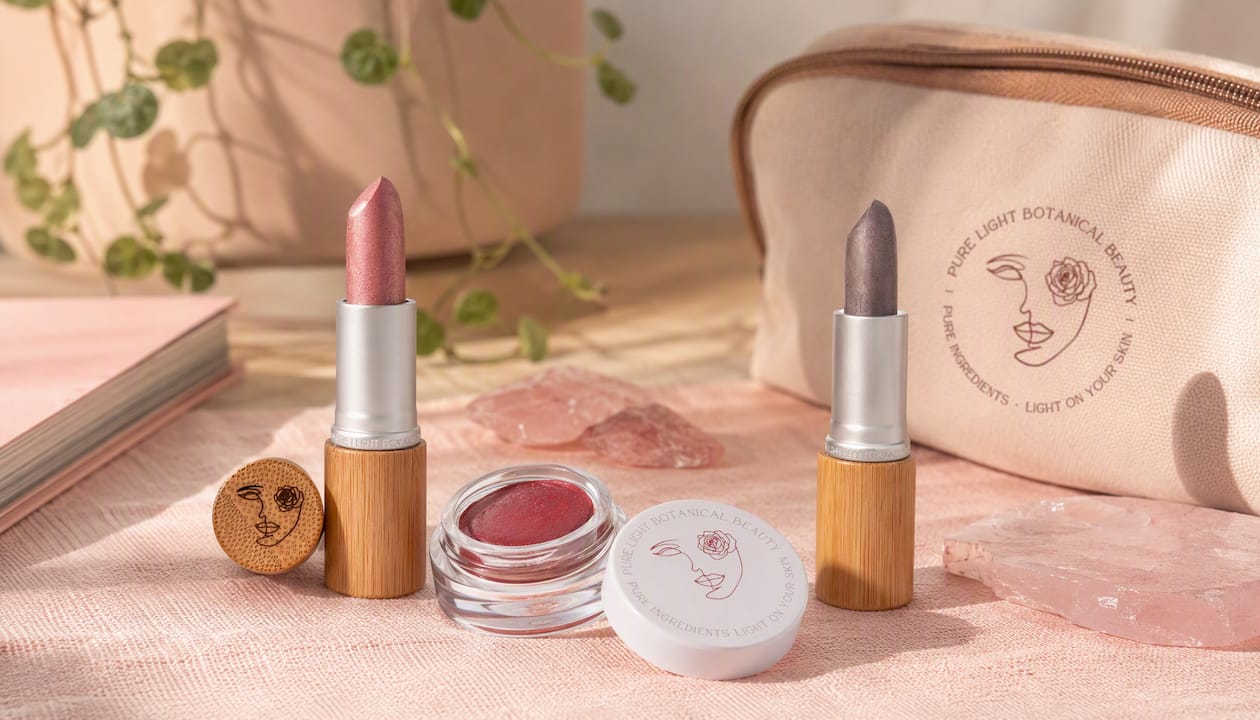
Certain nourishing lipsticks and crème blushes deliver rich pigment without ingredients that commonly dry or clog pores, making them easy additions once your SPF and tint are set for the day. Some botanical cream blushes add warmth to cheeks without heavy binders that can trigger breakouts on sensitized skin. For a fuller look at how these pieces sit next to sun-protective makeup, browse our sun protection makeup comparison, or head straight to the Rose Quartz lipstick page to see the full ingredient list and add it to your routine today.
Selected Sources for This Article
Reporting and clinical background for this piece drew on NPR’s coverage of tinted sunscreen and visible-light protection, Allure’s testing and dermatologist commentary on mineral tint formulas, The New Knew’s hands-on testing of 24 tinted mineral SPFs, and Harvard Health’s clinical overview of hyperpigmentation and photoprotection.
FAQ
What Is the Best Tinted Sunscreen?
There’s no single best option since it depends on skin type and shade range, but the strongest formulas share three traits: broad-spectrum SPF 30 or higher, iron oxides for visible-light protection, and a finish suited to your skin (matte for oily skin, hydrating for dry skin).
Is Tinted Sunscreen Better Than Regular Sunscreen?
For pigment concerns like melasma or post-inflammatory hyperpigmentation, tinted sunscreen offers an advantage regular sunscreen doesn’t: iron oxide pigments that block visible light, not just UV rays.
Does Tinted Sunscreen Work for Oily Skin?
Yes, as long as you choose a matte or oil-absorbing formula rather than a dewy or cream-based one, which will slide and look greasy by midafternoon on oily skin.
How Do I Find the Right Shade for Darker Skin?
Test in natural daylight rather than store lighting, order more than one shade if buying online, and prioritize brands known for an expanded shade range or an adaptive universal tint.
Can Tinted Sunscreen Replace My Makeup Entirely?
For many people, yes. A well-pigmented tinted sunscreen can replace light foundation on its own, especially when touched up midday with a tinted powder SPF, though a full-coverage look still calls for foundation layered on top.