

Yes, you can wear plant-based, non-irritating basic makeup when your skin is calm and unbroken. The safest approach follows one order: moisturize, add a light barrier, apply sheer cream-based color only where needed, and remove everything gently. Skip makeup entirely during blisters, oozing, or cracked skin, and lean toward products marked fragrance-free, hypoallergenic, and short on ingredients.
TL;DR:
- Fragrance-free and hypoallergenic labels are more reliable indicators of gentle makeup ingredients than “natural” or “clean” claims.
- Use minimal, cream-based products such as balm tints and blushes applied with dabbing techniques to reduce irritation risk.
- Patch test new products on the inner forearm for at least three to five days to detect delayed allergic reactions before full application.
- Avoid ingredients like formaldehyde-releasing preservatives, certain parabens, synthetic dyes, and fragrance chemicals linked to contact dermatitis.
- A simplified routine includes gentle cleansing, moisturizing while damp, thin barrier application, and light, targeted color to prevent flare-ups.
Table of Contents
- What Belongs in a Natural Basic Makeup Kit?
- How Do You Apply Basic Makeup Step by Step?
- Which Ingredients Actually Trigger Flares?
- How Should You Apply Makeup Without Irritating Skin?
- How Do You Patch Test a New Product Safely?
- Why Trust This Guide on Sensitive-Skin Makeup?
- Customizing Natural Makeup for Different Skin Tones
- Can Makeup Help With Redness and Uneven Tone?
- What Makes a Product Genuinely Hypoallergenic?
- How Do You Layer Products Without Overloading Your Skin?
- The Real Priority Isn’t the Makeup, It’s the Formula
- A Simple Starter Kit for Sensitive Skin
- FAQ
What Belongs in a Natural Basic Makeup Kit?
A minimal kit built for reactive skin looks different from the ten-step routines flooding your feed. You need fewer products, chosen more carefully, applied with more intention. The goal isn’t a smaller makeup bag for its own sake. It’s fewer chances for something to go wrong.
Here’s what earns a spot:
- A gentle, non-foaming cleanser that won’t strip your barrier before you’ve even started
- A ceramide-rich moisturizer as your actual base layer, not an afterthought
- A lightweight primer or emollient that buffers skin without clogging it
- A cream tint or balm foundation, since cream sits on skin rather than settling into cracks the way powder does
- A cream blush for color that blends with fingertips instead of stiff brushes
- A botanical lip oil or balm for lips, which crack and react as easily as facial skin
- An oil-based remover to dissolve makeup without scrubbing
When you’re reading labels, “fragrance-free” and “hypoallergenic” are worth trusting more than “natural” or “clean,” which have no regulated meaning. “Unscented” is trickier. It sometimes means a masking fragrance was added just to cancel out other odors, which defeats the purpose entirely.
Watch for DMDM hydantoin, quaternium-15, methylisothiazolinone (also called MI), certain parabens, synthetic dyes, mica, and fragrance chemicals like cinnamic alcohol used to mask scent. These are among the ingredients most frequently tied to contact dermatitis. Favor cream textures over powders, and choose sterile or airtight packaging. A detailed ingredient breakdown can help you cross-check a product before you buy it.
Pro Tip: Refillable formulas cut down on how often you’re breaking the seal on packaging, which matters more than most people realize. Every time a jar is opened and closed, air and bacteria get a chance to compromise the formula inside.
How Do You Apply Basic Makeup Step by Step?
A routine built for eczema-prone skin isn’t really about makeup at all. It’s about skin care that happens to end in a little color. Here’s the order that keeps irritation risk lowest:
- Cleanse gently. Use a non-foaming cleanser and apply any prescribed topical medication first, letting it absorb fully.
- Moisturize while skin is still damp. Reach for a formula with ceramides, glycerin, and hyaluronic acid. Damp skin holds moisture better than dry skin, so this step works harder than people assume.
- Add a thin barrier over dry patches, if needed. A light, non-mattifying primer can sit between pigment and compromised skin, cutting down on direct contact and friction.
- Apply sheer cream tint with dabbing motions. Build coverage only where you actually need it. Skin-like coverage, not full coverage, is the safer target here. Heavier layers mean more product to remove later, and removal is often where flares start.
- Finish with cream blush and a hydrating mist. Skip shimmer and glitter completely. If your look fades by afternoon, mist instead of reapplying a full layer.
At night, the order matters just as much. Use an oil-based remover first, follow with a gentle cleanser, then moisturize within about 60 seconds of finishing. That window isn’t arbitrary. Skin loses water fast once it’s been cleansed, and waiting too long undoes some of the benefit.
Pro Tip: Keep a hydrating mist at your desk or in your bag. A midday spritz refreshes cream makeup without adding another layer of product, which is exactly what fragile skin needs.
For more ideas on keeping a daily look this simple, these natural makeup essentials walk through the same principles in more depth.
Which Ingredients Actually Trigger Flares?
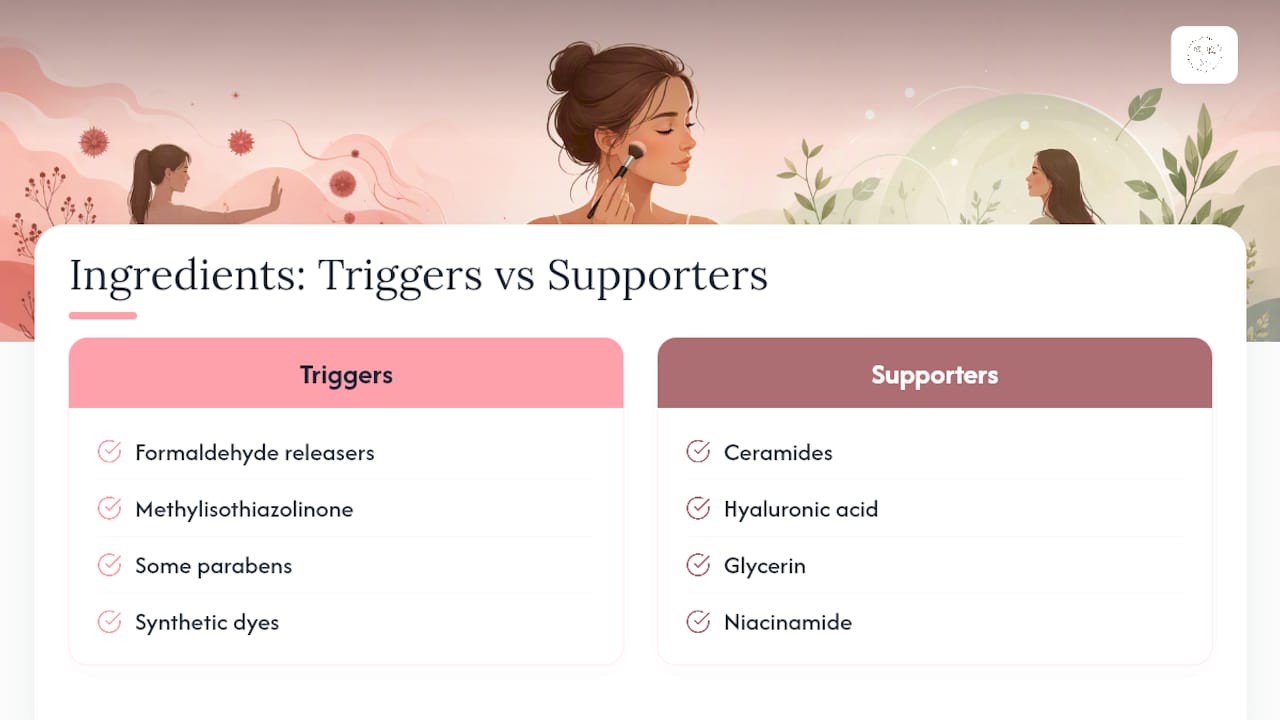
The ingredients most often tied to contact dermatitis and eczema flares are formaldehyde-releasing preservatives like DMDM hydantoin and quaternium-15, methylisothiazolinone, some parabens, certain synthetic dyes, and fragrance components such as cinnamic alcohol. These aren’t rare or obscure additives. They show up in mainstream drugstore formulas constantly, which is part of why so many women assume their skin is simply “difficult” when the real issue is the ingredient list.
On the other side, ceramides, hyaluronic acid, glycerin, niacinamide, and carefully chosen botanical extracts tend to support the skin barrier rather than test it. That said, plant-based doesn’t automatically mean non-allergenic. Some botanical extracts can still provoke a reaction in sensitive skin, so the word “natural” on a label is not a substitute for actually reading the ingredient list.
Label language deserves a second look, too. “Fragrance-free” should mean no fragrance and no masking agents. “Unscented” can still contain a masking chemical designed to neutralize odor, which means it’s not automatically safer for reactive skin.
One formulation concept worth knowing: hurdle technology. It combines sterile packaging, a carefully balanced pH, and naturally antimicrobial botanical extracts to keep a product stable without depending on harsh synthetic preservatives. That combination is part of why packaging choices matter as much as the ingredient list itself when you’re evaluating a brand’s approach to sensitive-skin formulation.
How Should You Apply Makeup Without Irritating Skin?
Technique matters as much as product choice. Skin that’s already inflamed reacts poorly to friction, so the way you apply makeup can trigger a flare even when the formula itself is gentle.
- Press, pat, or dab products on rather than rubbing or buffing in circles.
- Avoid dragging a sponge or brush over flaky, cracked, or actively irritated patches.
- Clean brushes and sponges weekly with a gentle cleanser, and skip rough wipes or reusable cotton pads unless they’re genuinely soft and freshly laundered.
- Apply thin layers and let each one absorb before adding the next; skip heavy powder on dry or active patches entirely.
- Skip makeup on eyelids or open lesions, and reach for a tinted balm or lip oil instead when you want color without contact on broken skin.
Pro Tip: If a brush feels stiff after washing, it likely wasn’t rinsed thoroughly. Leftover residue on bristles is a common, overlooked source of reapplied irritation.
A more mindful, ritual-based approach to application, outlined here, pairs well with this technique-first mindset.
How Do You Patch Test a New Product Safely?
Skip this step and you’re gambling. Here’s the process that actually catches delayed reactions:
- Apply a small amount of the new product to your inner forearm.
- Leave it undisturbed and check daily for three to five days, not just 24 hours. Contact dermatitis reactions are often delayed, so a one-day check misses many real reactions.
- Watch for redness, itching, blistering, or any irritation that shows up late in the window.
- Stop immediately and rinse if you notice a reaction, and skip that product going forward.
- If you’ve recently used a topical steroid, wait until your skin has fully calmed before introducing anything new, including makeup.
If irritation persists beyond a few days or worsens, stop use and check with a dermatologist rather than guessing. Sterile, airtight packaging lowers contamination risk compared to open jars you dip fingers into repeatedly.
Why Trust This Guide on Sensitive-Skin Makeup?
This guide comes from Caitlin Grey, who writes for the Pure Light Botanical Beauty blog on natural makeup essentials and skin-healing themes, with a focus on formulations that support rather than fight compromised skin barriers.
The guide builds around the principle that makeup and skin healing aren’t separate goals. The brand’s healing-first philosophy treats every formula as something meant to nourish skin, not just cover it.
Customizing Natural Makeup for Different Skin Tones
Sheer, cream-based color adapts to a wider range of skin tones and undertones than heavy pigment ever will, since it lets your actual skin show through rather than masking it with opacity. That’s genuinely useful if you’re dealing with eczema, because it means you don’t need a shelf of shade variations. A handful of adaptable cream products do the job.
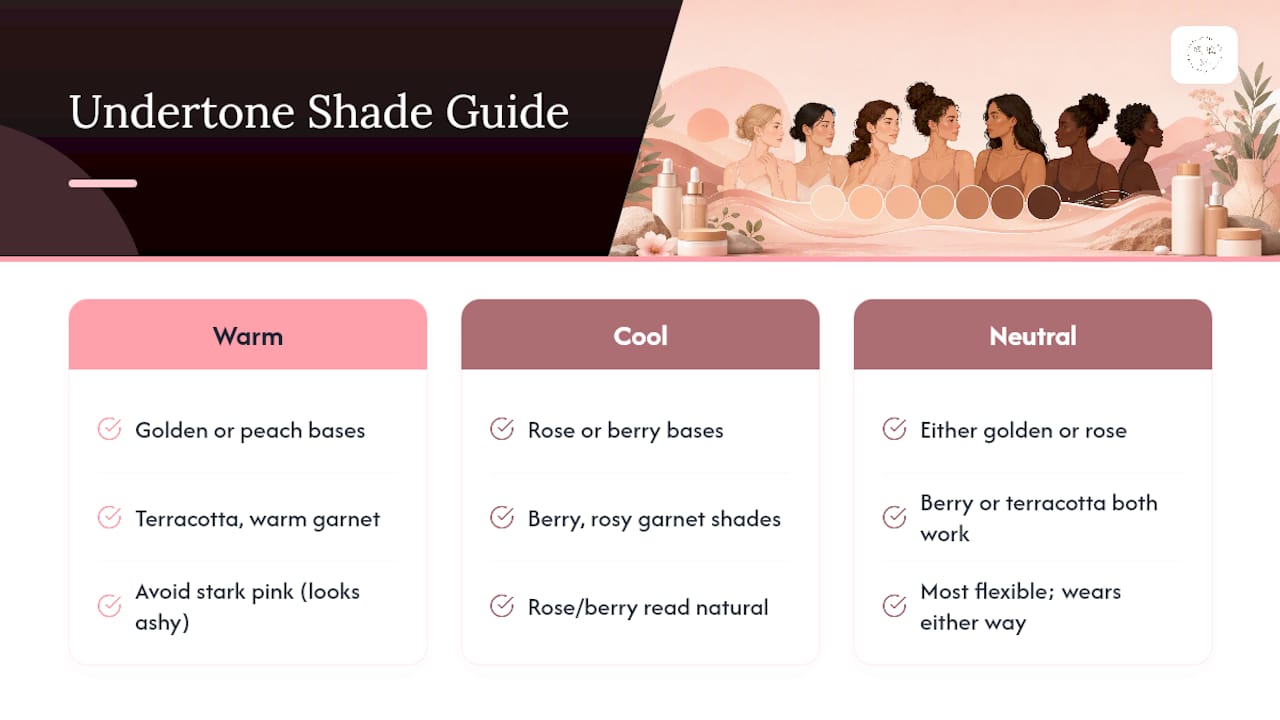
For warm undertones, look for tints with golden or peach bases rather than stark pink, since pink-based tints can read ashy against warmer skin. Cool undertones generally do better with rose or berry-leaning shades. Neutral undertones have the most flexibility and can usually wear either direction without a mismatch.
Cream blush works the same way. A berry or terracotta shade tends to look natural across a wide range of tones because it mimics the way skin actually flushes, rather than sitting on top like a distinct layer of color. The same logic applies to lip color. A balm-based tint in a warm garnet or rosy shade tends to adapt to your natural lip pigment rather than fighting it, which is part of why a shade like Garnet reads differently on different people while still looking cohesive.
If you’re unsure where you land, check the veins on your inner wrist in natural light. Blue or purple veins usually point to cool undertones; green veins usually mean warm. It’s not a perfect science, but it’s a reliable starting point when you’re choosing between a handful of cream shades instead of forty powder options.
Can Makeup Help With Redness and Uneven Tone?
Sheer cream color evens out tone without adding the heavy layer of pigment that redness-correcting products often rely on. That’s the better trade-off for reactive skin, because color-correcting formulas built for redness are frequently among the most heavily pigmented and preservative-dependent products on the market.
Instead of reaching for a dedicated green-tinted corrector, look for a lightweight cream tint in a shade slightly warmer than your natural skin. Warm tones tend to visually counteract redness better than trying to cancel it out with complementary color theory, which usually reads as gray or muddy on fair to medium skin.
Apply it exactly where redness concentrates, typically cheeks, nose, and chin, rather than as an all-over layer. This keeps total product on your skin lower while still targeting the areas that actually need coverage. Dab gently rather than blending in circular motions, since redness-prone skin is often the same skin that’s most reactive to friction.
For uneven patches from healed eczema marks, patience does more than product. Those spots typically fade with time and consistent moisturizing, and trying to fully camouflage them with heavier makeup usually means more product sitting on already-compromised skin. A thin, breathable cream tint that blurs rather than erases tends to hold up better through the day and causes far less irritation than a full-coverage approach chasing perfect uniformity.
What Makes a Product Genuinely Hypoallergenic?
“Hypoallergenic” isn’t a regulated term, which means the label alone tells you less than you’d hope. What actually matters is the ingredient list behind it: minimal formulas, no synthetic fragrance, no common sensitizers like methylisothiazolinone or formaldehyde-releasing preservatives, and ideally some evidence of thoughtful preservation, like hurdle-technology packaging that limits contamination without leaning on harsh chemical preservatives.
Products worth prioritizing tend to share a few traits. They list every ingredient plainly instead of hiding behind vague terms like “proprietary blend.” They favor cream and balm textures over powder, which sit more gently on compromised skin and remove more easily. They skip mica and glitter almost entirely, since these particles create friction risk on skin that’s already prone to micro-tears.
Rather than chasing brands purely because they market themselves as sensitive-skin friendly, cross-check the actual formula against the ingredient list covered earlier in this guide. Plant-based lipsticks and balms formulated specifically for reactive lips, cream tints with short ingredient lists, and cream blushes without synthetic dye are the categories worth building a kit around. If you want a deeper walkthrough of how to evaluate a brand’s full line before switching over, this transition guide breaks down what to check product by product.
How Do You Layer Products Without Overloading Your Skin?
Every layer you add is another chance for irritation, so the order and thickness of each layer matters more than the total number of products. The rule that keeps things safest: apply thinnest to thickest, and let each layer absorb before adding the next.
Moisturizer goes on first, while skin is still slightly damp, since that’s when it absorbs best. A thin primer or barrier cream comes next, but only over areas that genuinely need buffering. Slathering primer over your entire face when only your cheeks run dry just adds unnecessary product load.
Color goes on last, and only in the amount needed to even out tone, not to build heavy opacity. If you find yourself layering tint three or four times to get the coverage you want, that’s usually a sign the shade or formula isn’t right for your skin. Reaching for something more pigmented in the first place beats stacking layer after layer of a sheer product that isn’t doing the job.
Skip separate setting powder or spray unless your skin genuinely needs the extra hold, since these are additional products for barrier-compromised skin to tolerate all day. When in doubt, fewer layers, applied thinner, protect your skin better than a technically “correct” multi-step routine that adds product just because a tutorial said to.
The Real Priority Isn’t the Makeup, It’s the Formula
Most advice about “natural” makeup obsesses over technique: blending, contouring, the right brush angle for your face shape. That’s backward for eczema-prone skin. The technique barely matters if the formula underneath is working against your barrier. What actually protects your skin is a boring, repeatable sequence: moisturize, buffer, apply thinly, remove gently. That’s it. That’s the whole system.
Conventional beauty advice also treats “natural” as a synonym for “safe,” and that assumption has caused more flares than any single bad ingredient. Plant-based extracts can still sensitize skin, which means label vigilance never becomes optional just because a product markets itself as clean.
If I’m being honest about where people go wrong, it’s usually impatience with the patch test. Three to five days feels excessive when you just want to try a new lipstick. But delayed contact reactions are common enough that skipping this step is the single riskiest habit in this entire guide. Formula first, packaging second, technique last. Get that order right and the rest gets easier.
— Caitlin Grey
A Simple Starter Kit for Sensitive Skin
If you’re rebuilding your routine from scratch, you don’t need much. A minimal kit that follows every principle in this guide includes just a few pieces, and Pure Light Botanical Beauty carries options built specifically around them.
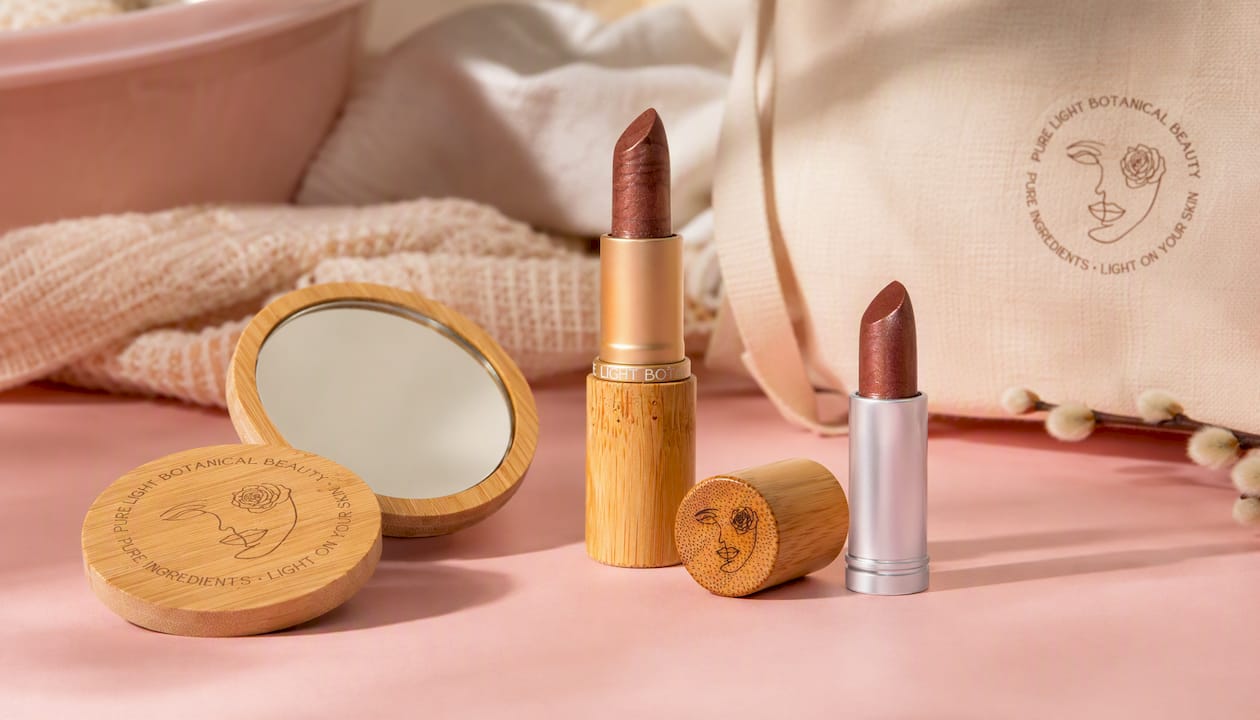
Start with a Nourishing Lipstick™ in a shade like Garnet, a cream-balm formula that gives lips color without the harsh preservatives found in traditional long-wear lipsticks. Since balm-based color needs reapplying more than powder formulas, the refillable Nourishing Lipstick option cuts down on packaging waste and keeps you from breaking a fresh seal every time you replace it, which matters for both your skin and your routine.
Round out the kit with a bamboo hand mirror for a slower, more intentional application process. Applying color with a mirror at eye level, rather than rushing through a routine in a dim bathroom, naturally encourages the dabbing and pressing technique this guide recommends over rubbing or buffing.
This isn’t a mandate. It’s a starting point for anyone ready to simplify without giving up color entirely.
FAQ
Can You Wear Makeup With Eczema-Prone Skin?
Yes, as long as skin isn’t actively flaring with blisters, oozing, or cracks. Choose fragrance-free, hypoallergenic, cream-based formulas and remove them gently at the end of the day.
What Ingredients Should Sensitive Skin Avoid in Makeup?
Watch for formaldehyde-releasing preservatives like DMDM hydantoin and quaternium-15, methylisothiazolinone, certain parabens, synthetic dyes, and fragrance chemicals such as cinnamic alcohol. All are frequently linked to contact dermatitis.
How Long Should a Patch Test Last?
Test a new product on your inner forearm for three to five days, not just 24 hours, since many contact reactions are delayed and won’t appear on day one.
Is Powder Makeup Safe for Eczema-Prone Skin?
Powder generally carries more risk than cream because it can settle into flaky or cracked areas and often requires more friction to blend, which irritates already-reactive skin.
Does “Fragrance-Free” Mean the Same as “Unscented”?
No. “Fragrance-free” should mean no added scent at all, while “unscented” can still include masking agents added to cancel out odor, which may still irritate sensitive skin.