

TL;DR:
- Clean moisturizers combine humectants, emollients, and occlusives to hydrate, repair, and seal sensitive skin. Choosing fragrance-free formulas free from irritants prevents reactions and ensures effective barrier support. Layering these components correctly maintains hydration and protects against dryness and irritation.
Clean moisturizers are defined by three core functions: humectants that draw water into skin, emollients that soften and repair the barrier, and occlusives that seal moisture in. Understanding the types of clean moisturizers matters because sensitive skin reacts differently to each category. The wrong formula can trigger redness, flaking, or breakouts even when every ingredient is plant-based. Choosing the right combination of humectants, emollients, and occlusives gives your skin exactly what it needs without the guesswork that comes with conventional products.
1. What are the main types of clean moisturizers?
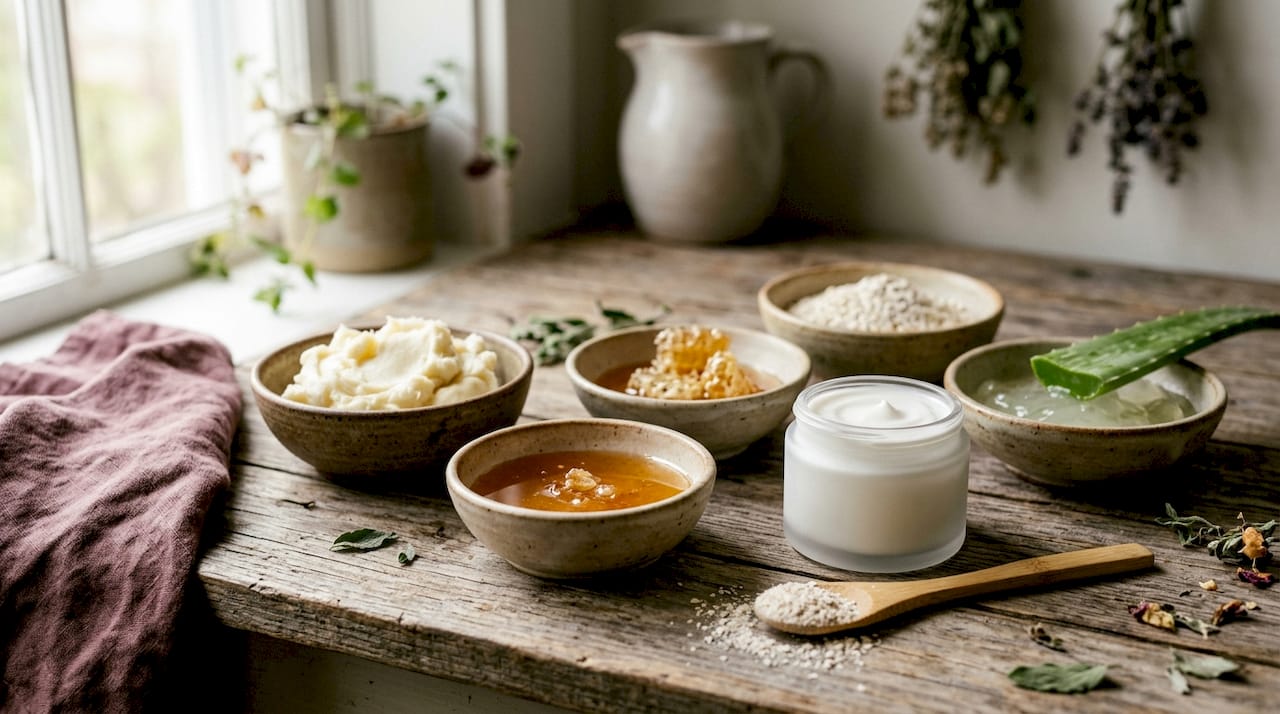
Clean moisturizers fall into three functional categories, and most effective formulas combine all three. Humectants attract water, emollients fill and soften the skin barrier, and occlusives create a physical seal to prevent water loss. Each type plays a distinct role, and sensitive skin benefits most when all three work together in one formula or layered routine.
The term “clean” in skincare refers to formulas free from synthetic fragrances, parabens, sulfates, and other ingredients with known irritation risks. Clean does not automatically mean safe for sensitive skin. A product can be plant-based and still contain essential oils that trigger contact dermatitis, which is why ingredient literacy matters as much as the “clean” label itself.
2. Humectants: drawing hydration into sensitive skin
Humectants are the hydration workhorses of any clean moisturizer. They pull water from the environment and from deeper skin layers up into the outer skin, increasing moisture content where it is most visible. For sensitive and reactive skin, gentle humectants are the first line of defense against tightness, flaking, and irritation.
The most effective clean humectants include:
- Glycerin: A plant-derived sugar alcohol that attracts water effectively and is well tolerated by nearly all skin types, including eczema-prone skin.
- Hyaluronic acid: A naturally occurring molecule that holds many times its weight in water. Multi-weight formulas penetrate different skin depths for layered hydration.
- Panthenol (provitamin B5): Soothes inflammation while hydrating, making it especially useful for reactive and post-procedure skin.
- Aloe vera: A whole-plant humectant with calming properties that reduces redness alongside hydration.
Pro Tip: Apply humectant-rich products to slightly damp skin right after cleansing. This gives the humectant more water to pull in, maximizing hydration before you seal it with an emollient or occlusive.
Sensitive skin that feels perpetually dehydrated often lacks sufficient humectants in its routine. Adding a glycerin or hyaluronic acid serum under a clean cream moisturizer addresses both the hydration deficit and the barrier weakness at the same time.
3. How emollients support skin barrier repair
Emollients fill the microscopic gaps between skin cells, restoring flexibility and smoothness to a compromised barrier. They do not add water to skin. Instead, they make the surface feel soft and prevent the rough, tight texture that comes with barrier damage. For sensitive skin, this distinction matters because emollients address the structural problem, not just the symptom.
Clean, plant-based emollients suitable for sensitive skin include:
- Squalane (olive-derived): A biomimetic lipid that mimics the skin’s own oils. It absorbs without greasy residue and does not clog pores, making it ideal for sensitive and acne-prone skin.
- Jojoba oil: Technically a liquid wax, jojoba closely resembles human sebum. It balances oil production while soothing irritation.
- Shea butter: Rich in fatty acids and vitamin E, shea softens and calms inflamed skin. Unrefined shea retains more of its natural anti-inflammatory compounds.
- Plant-based esters: Derived from fatty acids and alcohols found in plants, esters like caprylic/capric triglyceride provide a silky texture without synthetic silicones.
Emollients are the reason a clean cream moisturizer feels different from a plain glycerin gel. They give the formula its skin-softening quality and help the skin feel repaired rather than just temporarily coated. For eczema-prone skin, emollient-rich formulas applied consistently are one of the most clinically supported approaches to barrier repair.
4. Occlusives: locking in moisture without irritation
Occlusives create a physical barrier on the skin surface that slows transepidermal water loss. They do not hydrate skin on their own. Their job is to trap the moisture that humectants and emollients have already delivered. Applied without humectants underneath, occlusives can leave skin feeling sealed but still dehydrated.
Natural occlusives appropriate for sensitive skin include:
- Beeswax: A gentle, non-comedogenic wax that creates a breathable barrier without blocking pores.
- Candelilla wax: A plant-based alternative to beeswax, suitable for vegan formulas.
- Carnauba wax: Derived from palm leaves, it provides a firm seal and is commonly used in lip and eye products.
- Cocoa butter: Occlusive and emollient in one, cocoa butter seals moisture while softening skin.
Pro Tip: Use occlusives as the final step in your routine, not the first. Apply a humectant serum, follow with an emollient moisturizer, then seal with a thin layer of an occlusive balm on the driest areas. This layering method, sometimes called the “sandwich method,” prevents water loss without congestion.
Sensitive skin does best with lighter occlusives like beeswax or candelilla rather than heavy petroleum-based options. Plant-based occlusives provide effective moisture sealing with a lower risk of pore congestion or comedone formation.
5. Gel moisturizers for sensitive and oily skin types
Gel moisturizers are water-based formulas that deliver hydration with a lightweight, breathable finish. They suit sensitive skin that also runs oily or combination, particularly in warm or humid climates. Many gel formulas contain under 1% plant oils to improve texture and support barrier function without causing congestion. This is an important nuance: gel moisturizers are not always oil-free, but the oil content is low enough to avoid heaviness.
Key features of clean gel moisturizers for sensitive skin:
- Fragrance-free and alcohol-free base
- Primary humectants: hyaluronic acid, glycerin, or aloe vera
- Lightweight texture that absorbs quickly
- Non-comedogenic profile
Gel formulas work best as a standalone moisturizer in summer or in humid environments. In dry or cold conditions, they often need a second layer of an emollient cream or a thin occlusive to prevent moisture from evaporating off the skin surface.
6. Cream moisturizers for dry and barrier-compromised skin
Cream moisturizers are oil-in-water or water-in-oil emulsions that deliver both humectants and emollients in one step. They suit dry, sensitive, and eczema-prone skin because they address hydration and barrier repair simultaneously. Fragrance-free, hypoallergenic cream formulas are the most clinically recommended option for reactive skin.
Rich creams with shea butter, squalane, or plant-based esters provide the most benefit for skin that feels tight, rough, or inflamed. Applied morning and night, a clean cream moisturizer rebuilds barrier integrity over time rather than just masking dryness. For those managing eczema or chronic sensitivity, consistency with a cream formula matters more than switching products frequently.
7. Colloidal oatmeal formulas for soothing irritation
Colloidal oatmeal is one of the most clinically validated ingredients for sensitive and eczema-prone skin. It is finely milled oat flour suspended in a water or cream base, and it works as both a humectant and a skin protectant. Clinical guidance consistently points to colloidal oatmeal as a first-choice ingredient for soothing irritation, reducing itch, and supporting barrier function.
Colloidal oatmeal moisturizers are available in cream, lotion, and bath soak forms. For sensitive skin with active flares, a colloidal oatmeal cream applied immediately after bathing locks in moisture while calming the inflammatory response. This formula type is one of the most accessible natural moisturizer options for both adults and children with reactive skin.
8. Fragrance-free and hypoallergenic labels: what they actually mean
“Fragrance-free” means no added fragrance compounds, synthetic or natural. “Hypoallergenic” means the formula is designed to minimize allergic reactions, though no product can guarantee zero reaction for every person. For sensitive skin, both labels together signal a safer starting point than “natural” or “organic” alone.
Natural essential oils can cause contact dermatitis despite their plant origin. Lavender, citrus, and peppermint oils are common culprits. A product labeled “100% natural” may still contain these irritants. Choosing fragrance-free and hypoallergenic clean moisturizers removes this risk category entirely, which is the most protective choice for sensitive and reactive skin.
9. Water-free and preservative-free natural formulas
Water-free moisturizers, such as whipped tallow balms or fresh aloe gels, contain no water and therefore require no traditional preservatives. This appeals to people seeking truly chemical-free moisturizers with minimal ingredient lists. The trade-off is practical: water-free natural formulas often require refrigeration to prevent microbial growth, since the absence of preservatives removes the protection that keeps conventional products shelf-stable.
These formulas work well as targeted treatments or overnight masks rather than daily moisturizers. If you choose a preservative-free product, check the storage instructions carefully and use it within the recommended period. For sensitive skin, microbial contamination in an improperly stored product poses a real irritation risk.
Key takeaways
The most effective clean moisturizers for sensitive skin combine fragrance-free humectants, plant-based emollients, and gentle occlusives in a layered routine that hydrates, repairs, and protects.
| Point | Details |
|---|---|
| Three functional types | Humectants hydrate, emollients soften, and occlusives seal. Sensitive skin needs all three. |
| Fragrance-free is non-negotiable | Natural essential oils can cause contact dermatitis, making fragrance-free labels the safest choice for reactive skin. |
| Layer in the right order | Apply humectant first, emollient second, and occlusive last to maximize moisture retention. |
| Match texture to climate | Use gel formulas in warm weather and richer creams in cold or dry conditions for best results. |
| Colloidal oatmeal for flares | Colloidal oatmeal is clinically supported for soothing itch and irritation in sensitive and eczema-prone skin. |
What I’ve learned from years of watching sensitive skin routines fail
The most common mistake I see is treating moisturizer as a single step when it is actually a system. People with sensitive skin often reach for one product and expect it to do everything: hydrate, repair, and protect. That is asking too much of any single formula.
The second mistake is trusting “natural” without reading the label. I have seen beautifully packaged plant-based creams loaded with lavender and citrus oils that left sensitive skin worse than before. Choosing clean beauty for sensitive skin means reading every ingredient, not just the front label claim.
The insight that changed how I think about this: skipping either a hydrator or a moisturizer leaves skin either dehydrated or unprotected. Oily skin types skip the moisturizer. Dry skin types skip the hydrator. Both end up with a compromised barrier. The fix is simple once you understand the three-type system. Start with a glycerin or hyaluronic acid serum, follow with a clean emollient cream, and finish with a light occlusive on the driest areas. That routine works for nearly every sensitive skin type I have encountered.
— Kaitlyn
Clean moisturizers from Purelightbotanicalbeauty, made for sensitive skin
Purelightbotanicalbeauty builds every formula around the principle that your skin deserves ingredients that heal, not just cover. The brand’s plant-based moisturizers are formulated without synthetic fragrances, parabens, or known irritants, making them a natural fit for sensitive and eczema-prone skin.
Every product reflects the humectant, emollient, and occlusive balance that sensitive skin needs to stay calm and healthy. Whether your skin craves a lightweight gel or a richer barrier cream, Purelightbotanicalbeauty offers clean, hypoallergenic options rooted in botanical science. For those managing chronic sensitivity or eczema, the brand’s sensitive skin moisturizer guide is a practical starting point for building a routine that actually works.
FAQ
What are clean moisturizers?
Clean moisturizers are formulas free from synthetic fragrances, parabens, sulfates, and known irritants, using plant-based humectants, emollients, and occlusives to hydrate and protect skin. They prioritize ingredient safety without sacrificing performance.
Are natural moisturizers safe for sensitive skin?
Not automatically. Natural essential oils like lavender and citrus can cause contact dermatitis in sensitive skin, so fragrance-free and hypoallergenic labels are the safest choice regardless of how “natural” a product claims to be.
What is the best clean moisturizer texture for sensitive skin?
Fragrance-free cream moisturizers with colloidal oatmeal, squalane, or shea butter suit most sensitive skin types. Gel formulas work better for oily or combination sensitive skin, especially in warm climates.
Do I need both a hydrator and a moisturizer?
Yes. A hydrator delivers humectants that attract water into skin, while a moisturizer provides emollients and occlusives that seal it in. Skipping either step leaves skin either dehydrated or unprotected.
How do I store water-free natural moisturizers?
Water-free formulas like whipped balms or fresh aloe gels lack preservatives and often require refrigeration to prevent microbial growth. Always follow the storage instructions on the label and use the product within the recommended period.
Recommended
- Best moisturizer for sensitive skin in 2026: natural options – Pure Light Botanical Beauty
- 7 Essentials for a Clean Makeup Checklist for Sensitive Skin – Pure Light Botanical Beauty
- 7 Types of Clean Makeup for Sensitive Skin and Confidence – Pure Light Botanical Beauty
- How to Choose Clean Beauty for Sensitive Skin Relief – Pure Light Botanical Beauty