

TL;DR:
- Detoxifying your beauty routine involves gradually replacing harmful products with safer, natural alternatives to support skin health. Focusing on high-impact categories such as moisturizers, sunscreen, and foundation reduces daily chemical exposure for sensitive skin areas. A minimalist routine paired with internal hydration and nutrition can lead to healthier, stronger skin over time.
Detoxifying your beauty routine means intentionally replacing products that contain harmful chemicals with safer, natural alternatives that support skin health from the outside in. The average person uses up to 12 personal care products daily, which means daily exposure to dozens of synthetic ingredients, many of which have not been fully studied for long-term safety. Knowing how to detoxify your beauty routine does not require a total overhaul or a large budget. The most effective approach combines strategic product swaps, a simplified skincare structure, and a clear understanding of which ingredients to avoid first.
Which products to prioritize when detoxifying your beauty routine
The most effective detox starts with the products you use most often and leave on your skin the longest. Frequency and contact time determine how much of an ingredient your skin actually absorbs. A foundation you wear for eight hours every day carries far more exposure risk than a rinse-off cleanser you use for thirty seconds.
Focus your first swaps on these high-impact categories:
- Moisturizers and face creams (applied daily, left on all day or night)
- Sunscreen (covers large skin surface area, used daily)
- Deodorant (applied to a sensitive area with thin skin near lymph nodes)
- Foundation and tinted products (worn for hours, cover most of the face)
- Lip products (applied near the mouth and frequently ingested in small amounts)
- Body lotion (covers the largest skin surface area of any product you own)
Products applied to sensitive areas like the underarms, lips, and face deserve the most attention. These zones have thinner skin and higher absorption rates, which means what you put there reaches your system faster. Eco-friendly beauty swaps for these categories make the biggest difference in the shortest time.
Pro Tip: Do not throw out every product at once. Replace items one by one as they run out. This approach reduces waste, protects your budget, and gives your skin time to adjust to new formulas.
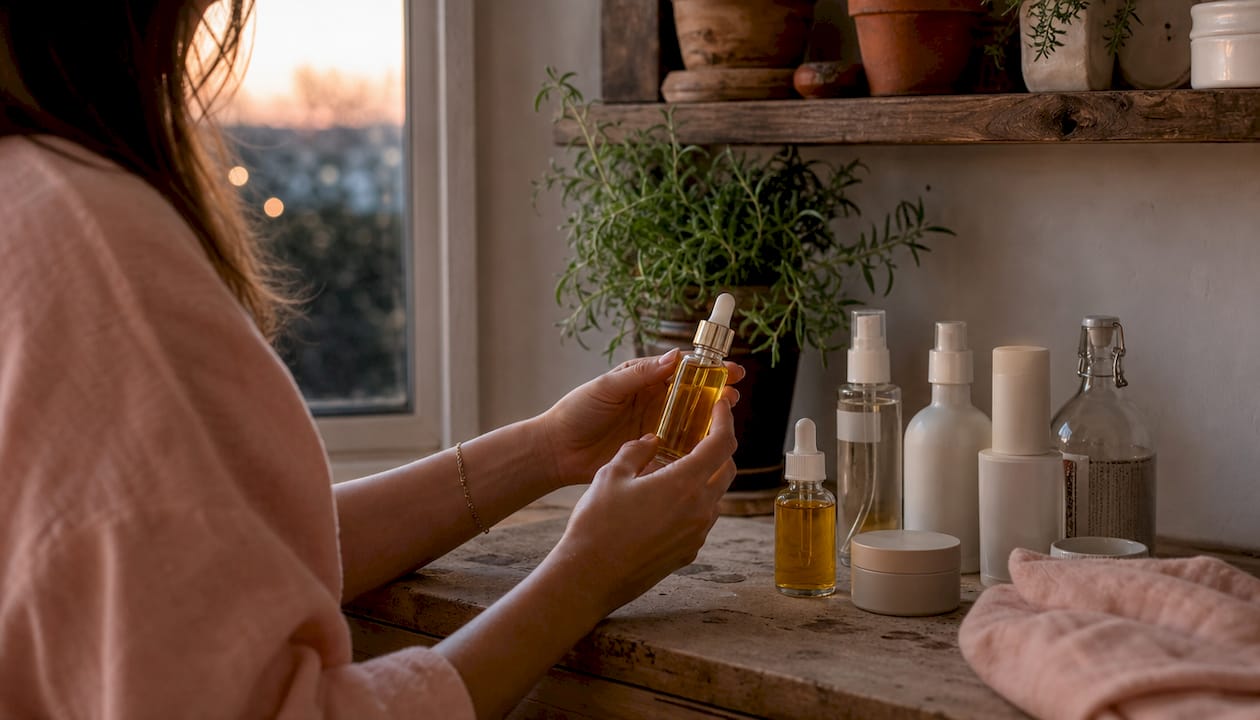
What does a safe, minimalist skincare routine look like?
Dermatologists now widely endorse “skin minimalism,” the practice of reducing your routine to only the products your skin genuinely needs. A simple routine is consistently more effective than a complicated one, especially for sensitive skin. Fewer products mean fewer chances for conflicting active ingredients to irritate your skin barrier.
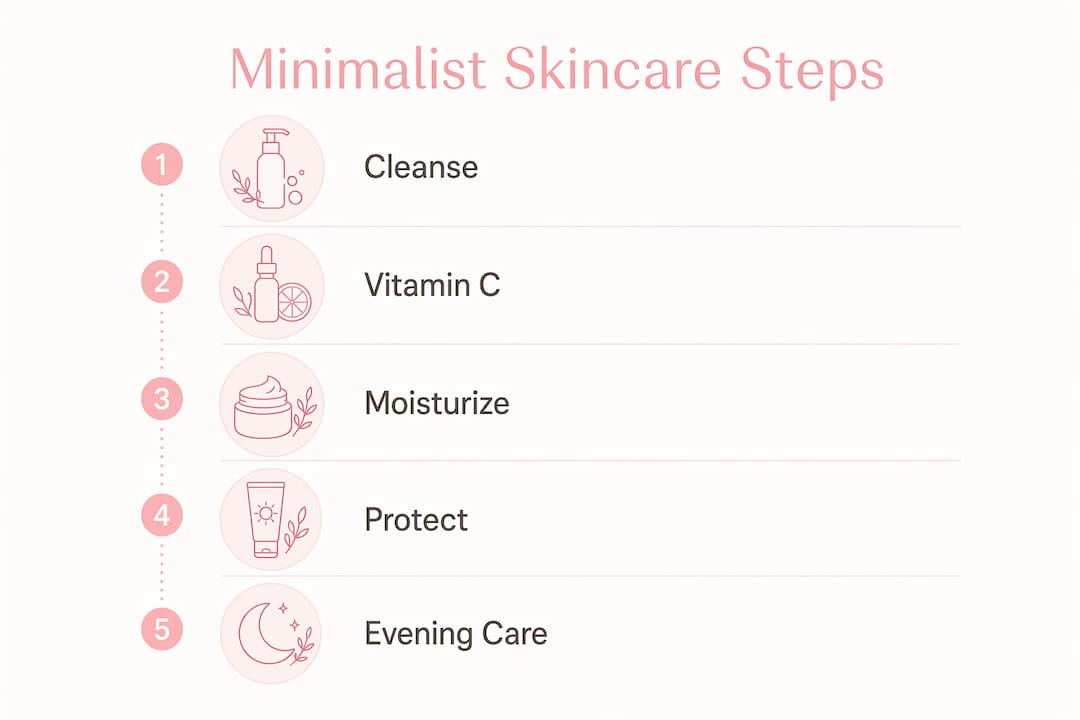
A clean morning routine requires only three steps. A clean evening routine requires two. The table below shows exactly what each step involves.
| Time of Day | Step | Product Type | Key Benefit |
|---|---|---|---|
| Morning | 1. Cleanse | Gentle, fragrance-free cleanser | Removes overnight buildup without stripping |
| Morning | 2. Treat | Vitamin C antioxidant serum | Protects against oxidative stress and brightens |
| Morning | 3. Protect | Moisturizer with SPF 30+ | Hydrates and shields from UV damage |
| Evening | 1. Cleanse | Same gentle cleanser | Removes makeup and daily pollutants |
| Evening | 2. Restore | Ceramide-rich moisturizer | Repairs and strengthens the skin barrier overnight |
Vitamin C serums are worth noting for one practical reason: they oxidize within 4–6 months of opening. Buy smaller bottles and replace them regularly to get the full antioxidant benefit. Affordable options around $20 work just as well as premium versions for most skin types.
Fragrance is the ingredient most likely to cause problems in an otherwise clean routine. Avoid products that list “fragrance” or “parfum” as an ingredient, even when the label says “natural.” A fragrance-free formulation protects the skin barrier far better than one scented with essential oils.
Pro Tip: If you want to build a clean beauty routine that actually sticks, write down your current steps and cross off anything you skip more than twice a week. What remains is your real routine.
What toxic ingredients should you avoid in beauty products?
The clean beauty space uses the term “toxic ingredients” broadly, and that can create unnecessary fear. Not all toxins carry equal risk. Some cause systemic concerns with long-term exposure, while others cause localized irritation that shows up immediately. Knowing the difference helps you make informed choices without anxiety.
The following ingredients appear most often on watchlists from dermatologists and environmental health researchers:
- Parabens (methylparaben, propylparaben): Synthetic preservatives linked to hormone disruption with prolonged exposure
- Phthalates: Plasticizing chemicals often hidden under “fragrance” on ingredient labels
- Synthetic fragrance / parfum: A catch-all term that can contain dozens of undisclosed chemicals
- Sodium laureth sulfate (SLES): A foaming agent that strips the skin’s natural oils and weakens the barrier
- Triclosan: An antimicrobial agent associated with antibiotic resistance and hormonal effects
- Formaldehyde-releasing preservatives (DMDM hydantoin, quaternium-15): Found in some shampoos and nail products
- Oxybenzone: A chemical sunscreen filter with potential hormone-disrupting properties
When you check a label, scan the full ingredient list, not just the front of the package. Marketing terms like “clean,” “green,” or “natural” carry no regulated definition in the United States. The Food and Drug Administration does not require pre-market approval for most cosmetic ingredients, which means the responsibility falls on you to read what is actually in the formula.
Natural does not automatically mean safe. Essential oils and plant extracts can trigger skin irritation and allergic reactions despite their botanical origin. The best clean beauty products prioritize barrier-friendly, fragrance-free formulations over “all-natural” marketing claims. Look for products with short, recognizable ingredient lists and no hidden fragrance compounds.
How do you detox your cosmetics gradually without burnout?
A gradual swap approach is more sustainable and budget-friendly than a total purge. Throwing everything out at once creates waste, financial stress, and the kind of decision fatigue that causes people to abandon the process entirely. A phased plan works better for your skin and your wallet.
Follow these steps to detox your cosmetics without overwhelm:
- Audit your current products. Pull everything out and sort into three groups: keep (clean and working well), replace soon (problematic ingredients but not yet empty), and toss (causing irritation or expired).
- Start with your highest-impact categories. Swap your daily moisturizer, sunscreen, and deodorant before anything else. These three products alone account for the majority of your daily chemical exposure.
- Replace as products run out. When a “replace soon” item empties, choose a cleaner version. This pacing keeps costs manageable and avoids waste.
- Introduce one new product at a time. Wait two weeks before adding the next swap. This window lets you identify any skin reactions clearly.
- Track your skin’s response. Note any changes in texture, breakouts, or sensitivity in a simple notes app or journal.
Excessive product use causes decision fatigue and often leads people to abandon their routines altogether. Simplicity is not a compromise. It is the strategy that actually works long-term.
“The goal of a beauty detox is not perfection. It is progress. Replacing one product with a cleaner option is a real win. Replacing all twelve at once and burning out is not.”
Pro Tip: Watch for “clean beauty burnout,” the exhaustion that comes from trying to make every product perfect at once. Set a realistic timeline of three to six months for a full routine detox and celebrate each swap as a genuine step forward.
How does internal health support your external beauty detox?
What you put inside your body shapes what shows up on your skin. External product swaps work best when paired with habits that support your body’s natural detox processes. Drinking plenty of water is the foundation of skin hydration and helps flush metabolic waste that would otherwise show up as dullness, congestion, or inflammation.
These internal habits directly support your skin’s ability to renew and repair:
- Hydration: Aim for consistent water intake throughout the day, not just when you feel thirsty
- Antioxidant-rich foods: Berries, leafy greens, and foods high in vitamins C and E support the skin barrier from within
- Sleep: Skin cell turnover peaks during deep sleep, making rest a non-negotiable part of any skin health plan
- Movement: Regular exercise increases circulation, which delivers oxygen and nutrients to skin cells and supports lymphatic drainage
- Stress management: Chronic stress elevates cortisol, which breaks down collagen and worsens conditions like eczema and acne
Skin minimalism and internal wellness reinforce each other. When you reduce the number of products on your skin and support your body with good nutrition and rest, your skin barrier strengthens on its own. You will likely find that you need fewer products over time, not more. That is the real payoff of a minimalist beauty routine.
Key Takeaways
Detoxifying your beauty routine works best as a gradual, informed process that prioritizes high-impact product swaps, a simplified skincare structure, and barrier-friendly ingredients over marketing claims.
| Point | Details |
|---|---|
| Prioritize by exposure | Swap daily, long-contact products like moisturizers, sunscreen, and deodorant first. |
| Use a 3-step morning routine | Cleanser, vitamin C serum, and SPF 30+ moisturizer cover all essential morning needs. |
| Read every ingredient label | “Clean” and “natural” have no regulated definition; check the full ingredient list yourself. |
| Replace products gradually | Swap items as they run out to avoid waste, burnout, and unnecessary spending. |
| Support skin from within | Consistent hydration, sleep, and antioxidant-rich foods strengthen the skin barrier alongside product changes. |
What I’ve learned from years of watching women detox their beauty shelves
The most common mistake I see is the all-or-nothing approach. Someone reads about parabens on a Tuesday, throws out $300 worth of products by Thursday, and then buys fifteen new things at once. Two weeks later, their skin is reacting to something, they cannot figure out what, and they are back to square one with an empty wallet and a full recycling bin.
The women whose skin actually improves are the ones who slow down. They swap their moisturizer first, live with it for a month, and then move to their foundation. They read labels without panic. They understand that informed choices reduce anxiety far more than a perfectly “clean” shelf does.
Sensitive skin, in particular, responds poorly to sudden change. Introducing too many new formulas at once makes it impossible to know what is helping and what is hurting. Simplifying to a core set of products lets you actually see what your skin needs. That clarity is worth more than any trending ingredient.
My honest advice: give yourself six months. Pick your three highest-impact swaps and do those first. Let your skin tell you what it thinks. Then keep going, one product at a time. Beauty detox is not a sprint. It is one of the quieter, more powerful acts of self-care you can build into your daily life.
— Kaitlyn
Clean beauty that works as hard as you do
Purelightbotanicalbeauty was built on the belief that your makeup should nourish your skin, not work against it. Every formula uses plant-based, barrier-friendly ingredients with no synthetic fragrance, no parabens, and no hidden fillers. Products like the Petal Perfect Lip Oil, Botanical Crème Blush, and Nourishing Lipstick are designed to replace the high-impact items in your routine first, the ones that sit on your skin longest and matter most.
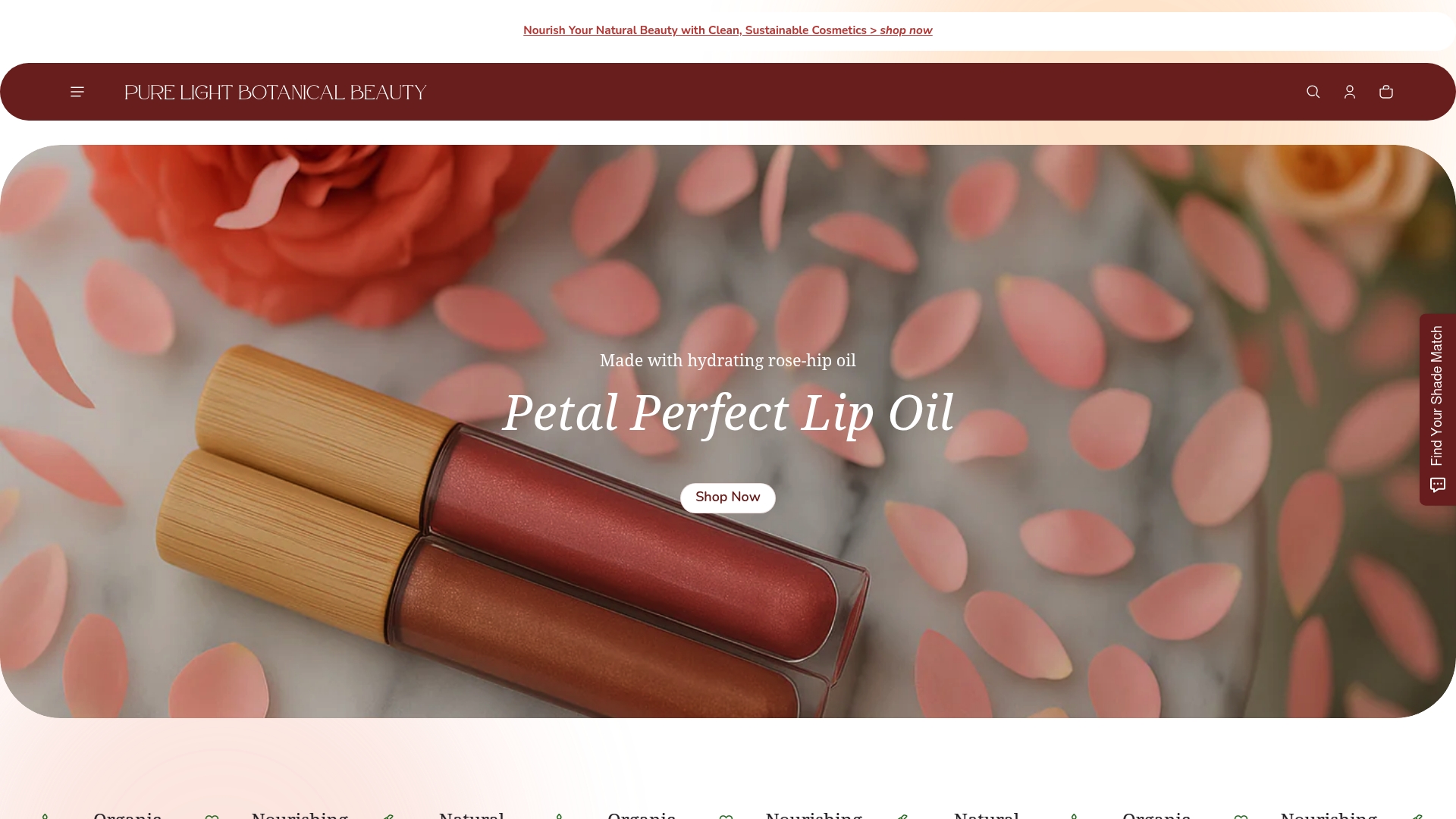
If you are ready to make your first clean swap, explore the full collection at Purelightbotanicalbeauty. Each product is formulated with sensitive skin in mind, making it a natural fit for anyone building a cleaner, simpler routine from the ground up.
FAQ
What does it mean to detoxify your beauty routine?
Detoxifying your beauty routine means replacing products that contain potentially harmful chemicals with cleaner, safer alternatives. The focus is on reducing daily exposure to ingredients like parabens, synthetic fragrance, and phthalates.
Which beauty products should I swap out first?
Start with daily-use, long-contact products: moisturizer, sunscreen, deodorant, and foundation. These carry the highest exposure risk because they cover large skin areas and stay on for hours.
Are natural beauty products always safer?
Not always. Essential oils and plant extracts can irritate sensitive skin despite their natural origin. Fragrance-free, barrier-friendly formulations are a more reliable standard than “all-natural” labeling.
How long does a full beauty detox take?
A realistic timeline is three to six months when replacing products gradually as they run out. This pacing protects your budget, reduces waste, and gives your skin time to adjust without triggering reactions.
Can a simpler skincare routine actually improve my skin?
Yes. A minimalist routine reduces the risk of irritation from conflicting active ingredients and improves consistency, which is the single most important factor in long-term skin health.