

TL;DR:
- A minimalist beauty routine relies on three to five core products that support skin health and natural features. This approach reduces product conflicts, minimizes waste, and promotes better skin balance over time.
A minimalist beauty routine is defined as a 3–5 product regimen focused on protecting the skin barrier, enhancing your natural features, and cutting out everything your skin does not actually need. The industry term for this approach is skinimalism, a portmanteau of “skin” and “minimalism” that dermatologists and editors at publications like Elle and Vogue have embraced as a genuine shift in how we think about skin health. Rather than layering a dozen products and hoping for the best, skinimalism asks a smarter question: what does your skin truly need to thrive? The answer, more often than not, is far less than your bathroom shelf suggests.
What is a minimalist beauty routine built from?
A minimalist beauty routine rests on four core products: a gentle cleanser, a moisturizer, a broad-spectrum sunscreen, and one optional targeted treatment. Each product earns its place by serving a clear, non-redundant function. Nothing sits on the shelf because of a trend or a persuasive ad.
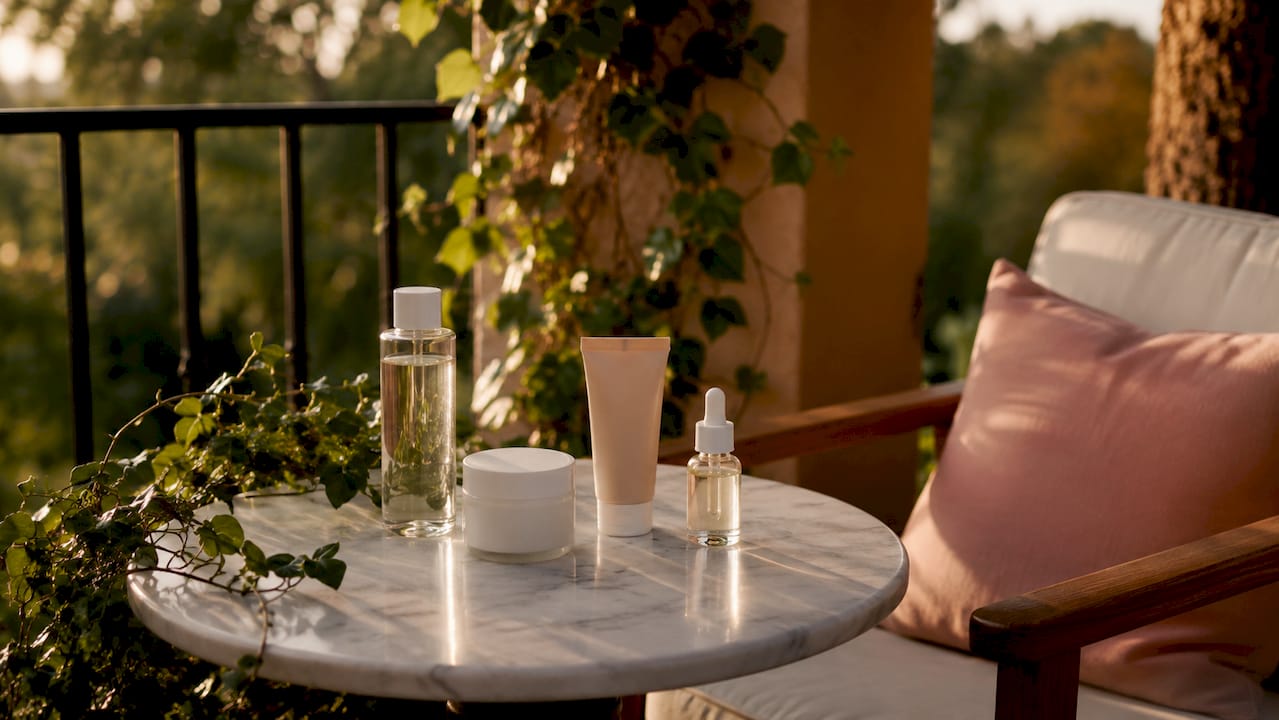
The cleanser removes daily buildup without stripping the skin’s natural oils. A sulfate-free, pH-balanced formula works for most skin types. Harsh cleansers are one of the most common causes of a compromised skin barrier, so choosing gently here sets the tone for everything that follows.
The moisturizer is the backbone of any simple beauty regimen. It seals in hydration, supports the lipid barrier, and keeps skin calm. Look for ingredients like ceramides, squalane, or shea butter. These are not trends. They are barrier-building workhorses with decades of clinical use behind them.
Sunscreen is non-negotiable. Daily SPF 30 or higher protects against UV-driven collagen breakdown, hyperpigmentation, and skin cancer. Skipping it undoes every other step in your routine.
The optional treatment is where you address one specific concern, whether that is niacinamide for uneven tone, hyaluronic acid for dehydration, or a gentle retinoid for texture. The key word is one. Stacking multiple actives is where most routines go wrong.
- Cleanser: pH-balanced, sulfate-free
- Moisturizer: ceramide or squalane-based
- SPF 30+: mineral or chemical, worn daily
- One targeted treatment: chosen for your primary skin concern
Well-formulated multifunctional products can address multiple concerns in a single step, which is exactly what Dr. Hadley King recommends for anyone wanting maximum benefit without added complexity. A moisturizer with built-in niacinamide, for example, collapses two steps into one without sacrificing results.
Pro Tip: Before buying a new product, ask yourself which existing step it replaces. If it does not replace anything, it does not belong in a minimalist routine.
Why do minimalist routines improve skin health?
The dermatological case for skinimalism is strong. Switching to a minimalist routine leads to fewer breakouts, less redness, and improved skin balance within weeks. The reason is straightforward: fewer products mean fewer chances for active ingredients to conflict with each other.
When you layer multiple serums, toners, and treatments, you create a chemistry experiment on your face. Some ingredients neutralize each other. Others increase sensitivity when combined. Vitamin C and retinol, for instance, can cause significant irritation when used together without careful timing. A minimalist approach removes that risk entirely.
“Skinimalism is smart, strategic care targeting actual skin needs rather than following trends.” — Dr. Pande, as cited by Only My Health
Your skin also has its own regulatory system. It produces sebum, sheds dead cells, and maintains a microbiome. Layering too many products can disrupt these processes, causing the skin to behave defensively rather than optimally. Stripping the skin with too many actives triggers excess oil production. Over-moisturizing can slow the skin’s natural cell turnover. Less interference often means better results.
The financial case is equally compelling. Only about 20% of purchased beauty products are actually used before they expire or get discarded. That means 80% of what most people buy goes to waste. A minimalist routine eliminates that waste almost entirely because you use every product you own.
How do you build a routine tailored to your skin type?
Building a personalized, easy beauty routine takes about two weeks of intentional observation. The process is methodical, not complicated.
- Identify your skin type and primary concern. Oily, dry, combination, and sensitive skin each respond differently to ingredients. Your primary concern, whether that is acne, dryness, or uneven tone, determines which optional treatment you add.
- Choose your four core products. Select a cleanser, moisturizer, and SPF suited to your skin type. Then choose one targeted treatment for your main concern. Nothing more.
- Introduce products one at a time. Gradual product introduction is the single most important step when transitioning to a minimalist routine. Start with the cleanser for three days, add the moisturizer, then the SPF, then the treatment. This way, if a reaction occurs, you know exactly which product caused it.
- Commit to a consistent daily schedule. A minimalist routine takes 5–10 minutes morning and evening. That consistency, more than any single ingredient, is what produces visible results over time.
- Adjust seasonally. Skin needs more moisture in winter and lighter formulas in summer. Swapping your moisturizer for a richer or lighter version is the only adjustment most people need to make.
Pro Tip: Keep a simple notes app log for the first month. Write down what you used and how your skin felt. Patterns become obvious within two weeks, and you will never second-guess a product again.
For those with sensitive skin or eczema, simplifying skincare is not just a preference. It is often the most effective path to genuine healing. Fewer ingredients mean fewer potential triggers, and that matters enormously when your skin barrier is already compromised.
Minimalist routines vs. traditional multi-step regimens
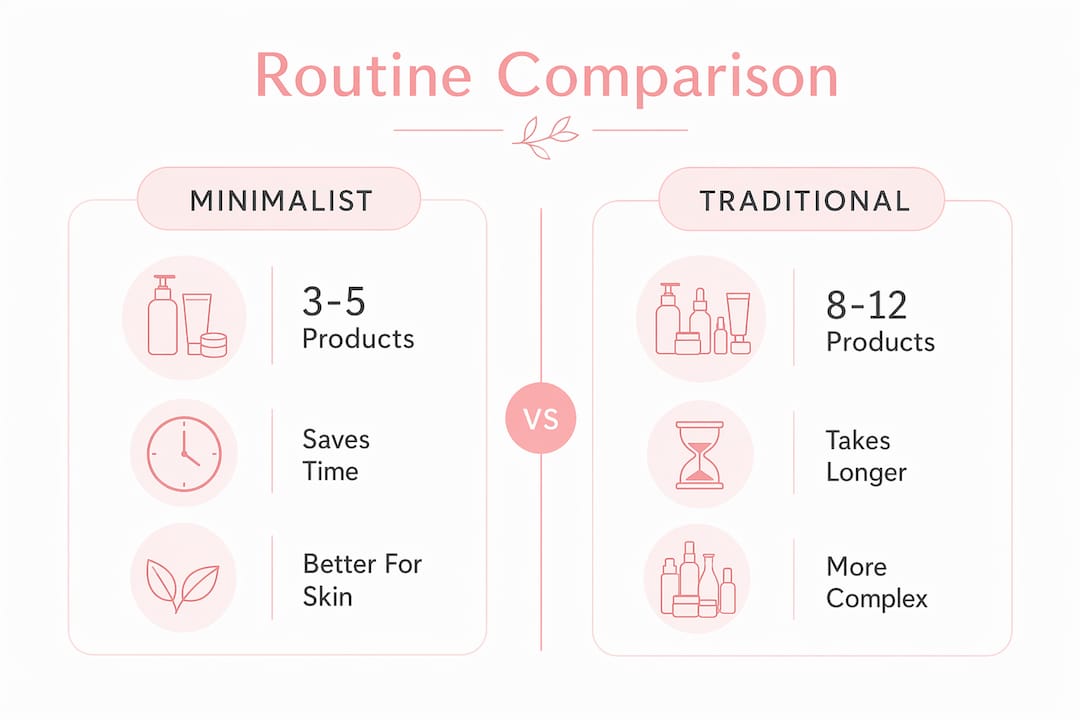
The 10-step Korean skincare routine became a cultural phenomenon in the early 2010s. It introduced Western audiences to double cleansing, essences, ampoules, and sheet masks. For some skin types in specific climates, it works beautifully. For most people, it is simply too much.
Multi-step routines fail because they do not account for lifestyle variability. Stress, sleep quality, diet, and climate all affect how skin responds to products. A rigid 10-step routine built for a calm, consistent lifestyle falls apart during a stressful week or a cross-country move. A minimalist routine, by contrast, adapts because there are fewer variables to manage.
| Feature | Minimalist routine | Traditional multi-step routine |
|---|---|---|
| Number of products | 3–5 | 8–12 |
| Daily time commitment | 5–10 minutes | 20–40 minutes |
| Risk of ingredient conflict | Low | High |
| Cost over time | Lower | Higher |
| Adaptability to lifestyle changes | High | Low |
| Skin barrier support | Prioritized | Variable |
The minimalist approach also reflects a more mature relationship with beauty. Trend-driven routines require constant purchasing and updating. A skinimalist routine is built once, refined slowly, and maintained with intention. That is a fundamentally different mindset, and it produces fundamentally different results.
Minimalist makeup follows the same logic. Instead of a full-coverage foundation, a tinted moisturizer with SPF handles three jobs at once: hydration, sun protection, and light coverage. Instead of a separate blush, bronzer, and highlighter, a botanical cream blush adds warmth and glow in a single swipe. The benefits of minimalist makeup are real: less product on the skin means less potential for clogged pores, irritation, and the kind of skin confusion that shows up as breakouts.
Key takeaways
A minimalist beauty routine built on 3–5 intentional products consistently outperforms complex multi-step regimens for skin health, cost efficiency, and long-term consistency.
| Point | Details |
|---|---|
| Core products only | A cleanser, moisturizer, SPF, and one treatment cover nearly every skin need. |
| Skin barrier first | Protecting the barrier reduces breakouts, redness, and sensitivity faster than adding more actives. |
| Introduce products gradually | Adding one product at a time lets you identify irritants and protect skin health. |
| Consistency beats complexity | A 5–10 minute daily routine done consistently outperforms a 10-step routine done sporadically. |
| Less waste, more value | Using fewer products means finishing what you buy and spending less overall. |
Why I believe less is genuinely more for your skin
I have watched the beauty industry cycle through trends for years, and the pattern is always the same. A new ingredient gets celebrated, a 12-step routine gets published, and consumers buy everything on the list. Six months later, their skin is confused, their bathroom is cluttered, and they are back to searching for the next solution.
The uncomfortable truth is that most skin problems are caused by too much product, not too little. I have seen women with genuinely healthy skin convince themselves they need a 10-step routine because the internet told them so. When they stripped it back to four products, their skin cleared up within a month. That is not a coincidence.
What I find most meaningful about skinimalism is that it asks you to trust your skin. Your skin is not broken. It does not need to be fixed with 15 products. It needs consistent, gentle support and the space to do what it was designed to do. That shift in perspective, from fixing to supporting, changes everything about how you approach beauty.
I also think there is something deeply freeing about a simple daily ritual that takes ten minutes and leaves you feeling genuinely cared for. Beauty does not have to be complicated to be meaningful. Sometimes the most powerful thing you can do for your skin is simply get out of its way.
— Kaitlyn
How Purelightbotanicalbeauty supports your minimalist routine
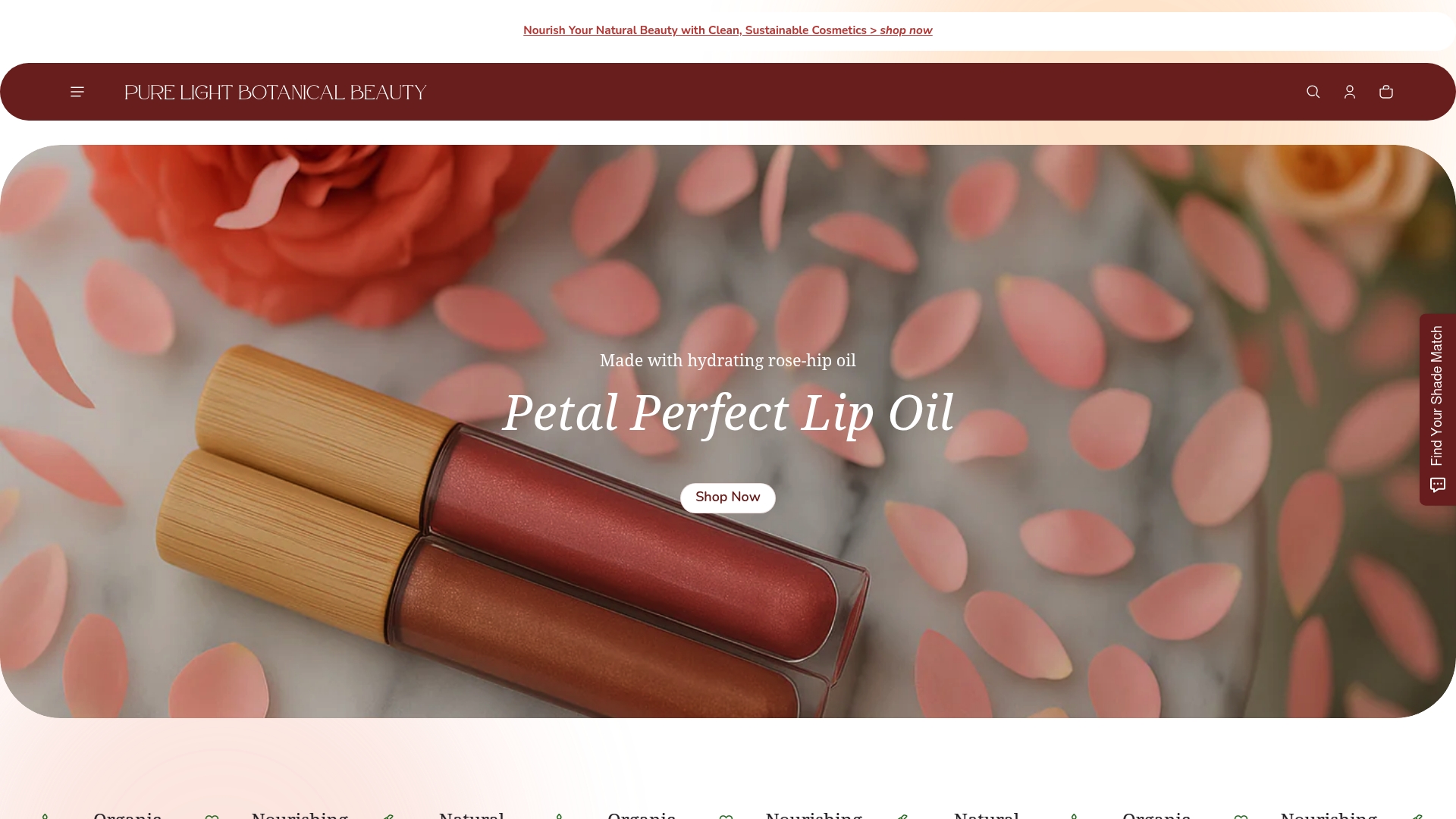
Purelightbotanicalbeauty was built around exactly this philosophy. Every product in the line is formulated to do more with less: clean, plant-based ingredients that support the skin barrier, enhance your natural features, and feel genuinely good to use. The Petal Perfect Lip Oil, Botanical Crème Blush, and Nourishing Lipstick each serve multiple purposes, so you never need to reach for a second product to finish the job. If you are ready to simplify your beauty routine with products that nourish as they perform, Purelightbotanicalbeauty is the place to start. Your skin deserves care that is thoughtful, clean, and beautifully simple.
FAQ
What is skinimalism?
Skinimalism is the practice of using only 3–5 essential skincare products to support the skin barrier and enhance natural beauty. Dermatologists describe it as strategic, needs-based care rather than trend-driven product accumulation.
How many products does a minimalist routine need?
A minimalist routine typically requires four products: a gentle cleanser, a moisturizer, a broad-spectrum SPF, and one targeted treatment for your primary skin concern.
Can a simple routine actually improve skin health?
Yes. Reducing product overlap lowers the risk of ingredient conflicts, and users commonly notice reduced redness and fewer breakouts within weeks of switching to a minimalist regimen.
Is a minimalist routine good for sensitive skin?
A minimalist routine is especially effective for sensitive skin because fewer ingredients mean fewer potential triggers. Gradual product introduction also helps identify and avoid irritants before they cause damage.
How long does a minimalist skincare routine take each day?
A well-structured minimalist routine takes 5–10 minutes morning and evening. That efficiency is one of its most consistent advantages over complex multi-step regimens.
Recommended
- How to create holistic beauty rituals for sensitive skin – Pure Light Botanical Beauty
- Why minimal beauty routines heal sensitive skin naturally – Pure Light Botanical Beauty
- Minimalism in Makeup: Healing Beauty for Sensitive Skin – Pure Light Botanical Beauty
- 7 Essential Steps for a Clean Beauty Checklist Routine – Pure Light Botanical Beauty