

TL;DR:
- Simplified skincare with three to four gentle, fragrance-free products effectively maintains skin health without irritation. A routine consisting of a gentle cleanser, a multi-tasking moisturizer with ceramides or hyaluronic acid, and broad-spectrum SPF provides essential protection and barrier support for sensitive skin. Consistent use over 8 to 12 weeks, with slow addition of targeted treatments, optimizes results and minimizes ingredient conflicts.
Simplified skincare is defined as a focused regimen of three to four essential products that maintain skin health without triggering irritation or barrier damage. For sensitive skin, knowing how to simplify skincare means choosing a gentle cleanser, a moisturizer with ceramides or hyaluronic acid, and a broad-spectrum SPF 30 or higher. Dermatologists like Dr. Hadley King and Dr. Whitney Hovenic consistently point to this stripped-back approach as the most effective path for reactive skin. A minimalist routine takes under 5 minutes daily and outperforms complex, multi-step regimens for most sensitive skin types. Fewer products mean fewer chances for your skin to react.
What are the essential products in a simplified skincare routine for sensitive skin?
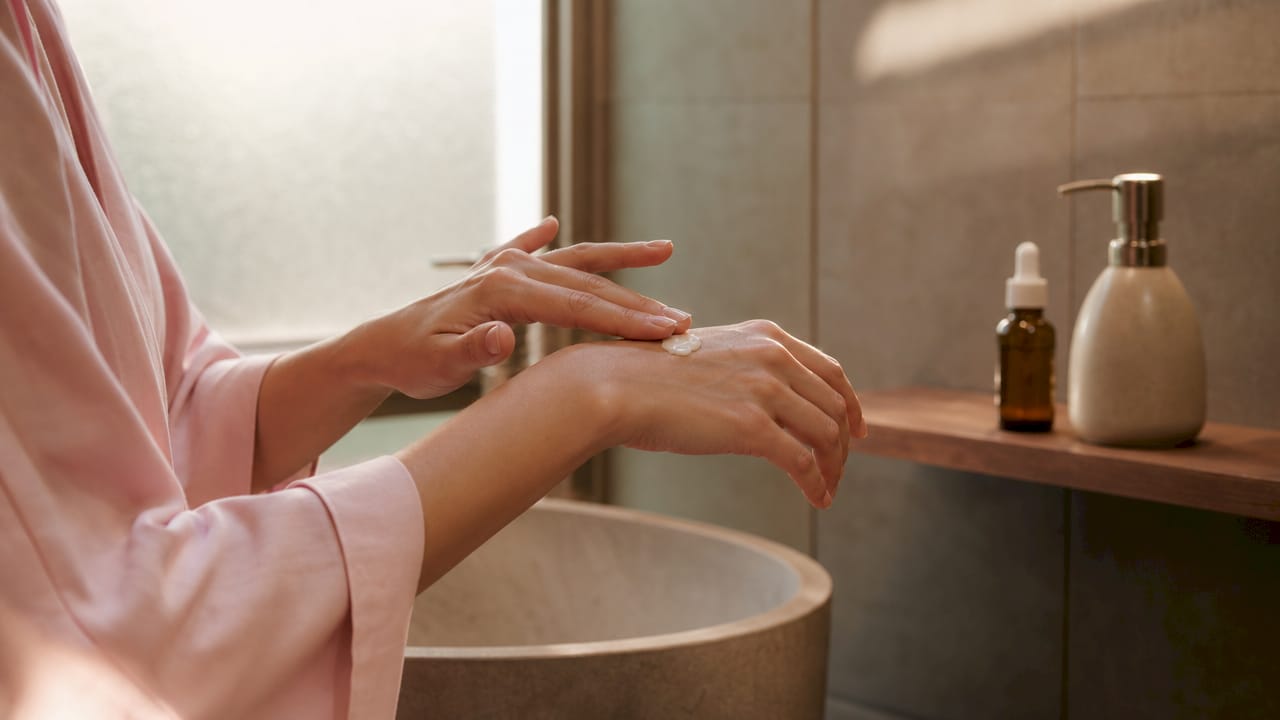
Skin minimalism reduces ingredient conflicts and lowers the risk of barrier disruption, which is the core reason a simplified routine works so well for sensitive skin. You do not need ten products to get results. You need the right three or four, chosen with care.
The three non-negotiable products
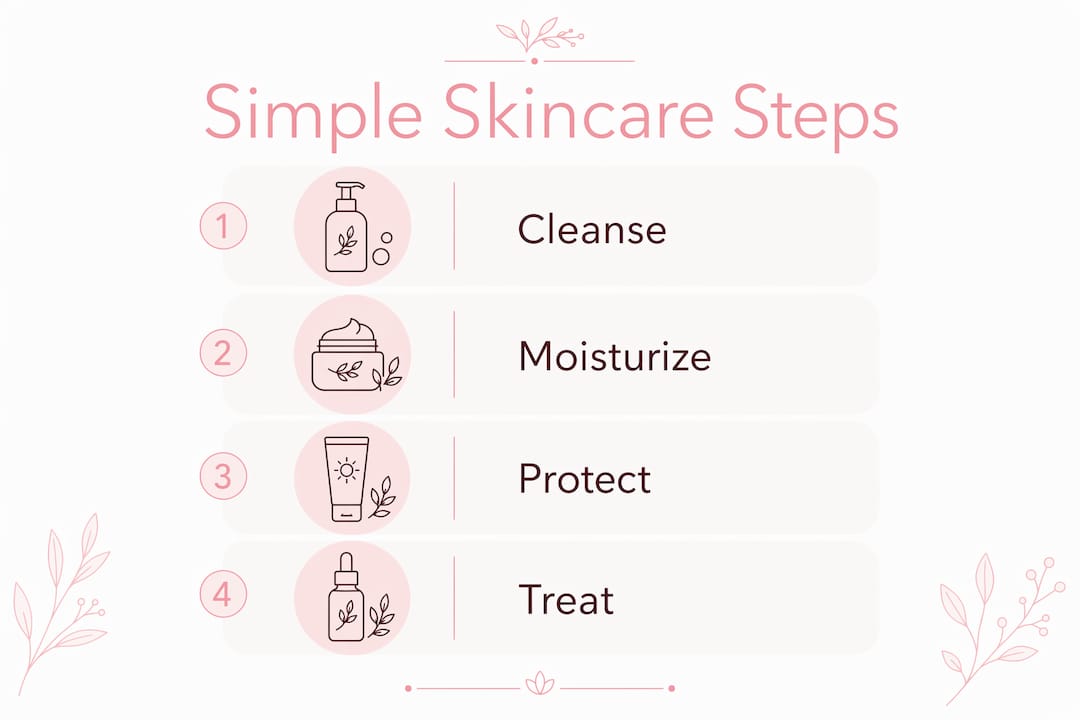
- Gentle cleanser. A fragrance-free cleanser that leaves skin soft rather than tight is the foundation of any easy skincare routine. Look for sulfate-free formulas with minimal ingredients. Brands like Vanicream and La Roche-Posay Toleriane offer reliable options that dermatologists recommend for reactive skin.
- Moisturizer with multi-tasking ingredients. A moisturizer that combines ceramides, niacinamide, and hyaluronic acid addresses hydration, barrier repair, and mild brightening in one step. CeraVe Moisturizing Cream and Paula’s Choice Skin Recovery Moisturizer are two widely cited examples. This is where multi-functional formulas save you the most steps.
- Broad-spectrum SPF 30 or higher. Sunscreen is the single most evidence-backed anti-aging and barrier-protection product available. EltaMD UV Clear and Neutrogena Sensitive Skin Sunscreen are both fragrance-free and non-comedogenic, making them well-suited to sensitive skin.
When to add a targeted treatment
A targeted serum, such as a vitamin C or niacinamide formula, can be added once your core three products are well-tolerated. Introduce only one new product at a time, spaced several weeks apart. This is not about having more products. It is about knowing exactly what each product does for your skin.
Pro Tip: If you want to address multiple concerns with fewer bottles, look for a moisturizer that already contains niacinamide. This ingredient calms redness, supports the barrier, and gently evens skin tone without the sensitivity risk of stronger actives like retinol or AHAs.
How to choose the right products to protect sensitive skin
Choosing products for a simplified skincare regimen comes down to one guiding principle: fewer, safer ingredients over trendy formulas. Sensitive skin reacts to what is in a product, not what the label promises.
Here is what to look for and what to avoid:
- Fragrance-free is non-negotiable. Fragrance is a top cause of contact dermatitis and irritation in sensitive skin. This includes “natural” fragrances and essential oils. Many botanical extracts can sensitize skin just as readily as synthetic fragrance.
- Avoid harsh acids in your first phase. Glycolic acid, salicylic acid, and high-concentration retinoids are effective but aggressive for reactive skin. Start with gentler actives like polyhydroxy acids (PHAs) or low-dose niacinamide before introducing anything stronger.
- Check for non-comedogenic and dermatologist-tested labels. These are not guarantees, but they signal that a formula was developed with sensitive or acne-prone skin in mind.
- Prioritize multi-functional formulas. A product that hydrates, repairs the barrier, and calms redness in one step reduces the total number of products you apply. Fewer applications mean less cumulative exposure to potential irritants.
- Patch test every new product. Apply a small amount to your inner forearm or behind your ear for 48 hours before using it on your face. This one step prevents a lot of unnecessary flare-ups.
Pro Tip: When reading an ingredient list, the first five ingredients make up the bulk of the formula. If water, glycerin, or a skin-identical lipid like ceramide NP appears near the top, you are looking at a hydration-focused product. If alcohol or fragrance appears in the first five, put it back.
The non-toxic product choices that work best for sensitive skin share a short, purposeful ingredient list. More ingredients is not more effective. It is more risk.
How to build a simple skincare routine step by step
A basic skincare guide for sensitive skin follows the same logical order morning and evening, with small adjustments between the two. The sequence matters because it determines how well each product absorbs and performs.
Morning routine
- Cleanse gently. Use lukewarm water and a fragrance-free, non-stripping cleanser. Morning cleansing removes overnight sebum and prepares skin for the products that follow.
- Apply moisturizer within 3 minutes. The 3-minute post-cleanse window is when your skin absorbs hydration most effectively. Applying moisturizer while skin is still slightly damp locks in that moisture before it evaporates.
- Apply sunscreen last. Use approximately two finger-lengths of product to achieve the labeled SPF protection. Applying less than this reduces effectiveness significantly, which defeats the purpose of wearing SPF at all.
Evening routine
- Double cleanse if you wore makeup or SPF. A gentle oil-based cleanser followed by your regular water-based cleanser removes product buildup without stripping the barrier.
- Apply any targeted treatment. Evening is the right time for actives like niacinamide or a low-dose retinoid, since UV exposure is not a factor.
- Seal with moisturizer. A slightly richer formula at night supports overnight barrier repair.
Morning vs. evening at a glance
| Step | Morning | Evening |
|---|---|---|
| Cleanse | Gentle water-based cleanser | Oil cleanser plus water-based cleanser |
| Treatment | Optional vitamin C serum | Niacinamide or low-dose retinoid |
| Moisturize | Lightweight formula | Richer, barrier-repair formula |
| Protect | Broad-spectrum SPF 30+ | No SPF needed |
Allow a minimum of 8 to 12 weeks of consistent use before evaluating whether a product is working. Skin cell turnover takes time, and switching products before that window closes is one of the most common reasons people never see results.
Common mistakes when simplifying skincare and how to avoid them
Most people who struggle with a simplified routine are not using the wrong products. They are making process errors that undermine even the best formulas.
- Over-cleansing. Washing your face more than twice a day, or using a cleanser that leaves skin feeling tight and squeaky, strips natural oils and triggers sensitivity. A healthy barrier feels soft and comfortable after cleansing, not dry or taut.
- Skipping or under-applying sunscreen. Many people apply a thin layer and assume it is enough. It is not. Insufficient sunscreen volume reduces SPF protection significantly, leaving skin exposed to UV damage that accelerates aging and inflammation.
- Introducing too many products at once. Adding three new products in the same week makes it impossible to identify which one caused a reaction. Introduce actives one at a time with at least two to three weeks between each new addition.
- Abandoning a routine too early. Skin does not transform in two weeks. Expecting visible results before the 8 to 12 week mark leads to constant product switching, which is the opposite of simplifying.
- Misreading “clean” as stripped. A common misconception is that skin should feel completely oil-free after cleansing. That squeaky feeling is a sign of barrier damage, not cleanliness.
“The best routine is the one you can actually stick with every day. Consistency beats complexity every time.” — dermatologist-backed guidance on sustainable skincare
The minimal beauty approach also makes it far easier to identify your personal triggers. When you are only using three products and your skin flares, you know exactly where to look.
Key takeaways
Simplified skincare for sensitive skin works because fewer products mean fewer ingredient conflicts, and a consistent three-step routine of cleanser, moisturizer, and SPF delivers measurable results within 8 to 12 weeks.
| Point | Details |
|---|---|
| Core products only | A cleanser, ceramide moisturizer, and SPF 30+ cover all daily skin needs. |
| Fragrance-free first | Avoid fragrance and sensitizing botanicals to protect the skin barrier. |
| Apply moisturizer fast | Use moisturizer within 3 minutes of cleansing to lock in hydration effectively. |
| Introduce actives slowly | Add one new active ingredient at a time, spaced several weeks apart. |
| Commit to 8 to 12 weeks | Skin cell turnover requires consistent use before results become visible. |
What I have learned from years of watching people overcomplicate their skin
I have watched so many people with genuinely reactive skin spend hundreds of dollars on elaborate routines, only to see their skin get worse. The pattern is almost always the same: too many products, too much hope placed in a single hero ingredient, and not enough patience.
What actually works is boring by comparison. A gentle cleanser. A good moisturizer. Sunscreen every single morning. That is it for most people, most of the time. The clean beauty routine that heals sensitive skin is not the one with the most thoughtful packaging. It is the one you do every day without thinking about it.
The most underrated benefit of a minimalist approach is diagnostic clarity. When your skin reacts and you are only using three products, you know exactly what to investigate. When you are using twelve, you are guessing. That guessing game is exhausting, and it keeps people stuck in a cycle of buying and discarding products that never get a fair chance.
My honest advice: resist the urge to add something new every time your skin has a rough week. Skin fluctuates with hormones, weather, stress, and sleep. A bad skin day is not always a product problem. Give your routine time to work, and trust that simplicity is not settling. It is strategy.
— Kaitlyn
How Purelightbotanicalbeauty supports your sensitive skin routine
For sensitive skin, the products you choose matter as much as the routine itself. Purelightbotanicalbeauty formulates every product with clean, plant-based ingredients specifically chosen to support skin health without triggering irritation.
The brand’s approach mirrors what dermatologists recommend: gentle, multi-functional formulas that do more with less. Whether you are looking for a nourishing daily product or a clean alternative to conventional makeup, Purelightbotanicalbeauty keeps ingredient lists purposeful and fragrance concerns front of mind. Explore the full range at Pure Light Botanical Beauty and find the products that fit your simplified, sensitive skin routine. Every formula is designed to feel as good as it looks, because your skin deserves both.
FAQ
What is the simplest skincare routine for sensitive skin?
A three-step routine of a fragrance-free cleanser, a ceramide moisturizer, and a broad-spectrum SPF 30 or higher covers all daily skin needs. This core three-product approach takes under five minutes and reduces the risk of irritation significantly.
How long before I see results from a simplified routine?
Allow 8 to 12 weeks of consistent daily use before evaluating results. Skin cell turnover cycles mean that changes at the cellular level take time to become visible on the surface.
Is fragrance-free the same as unscented?
No. Unscented products often contain masking fragrances that neutralize odor but still contain irritating compounds. Fragrance-free means no fragrance ingredients were added at all, making it the safer choice for sensitive skin.
Can I use makeup with a simplified skincare routine?
Yes, as long as the makeup is non-comedogenic and free of known sensitizers like fragrance and certain preservatives. Clean makeup formulas designed for sensitive skin, like those from Purelightbotanicalbeauty, complement a minimal skincare regimen without adding unnecessary irritants.
How do I know if a new product is causing a reaction?
Introduce one new product at a time and wait at least two to three weeks before adding another. If a reaction occurs, you will know exactly which product to remove. Patch testing on the inner forearm for 48 hours before full facial use adds an extra layer of protection.
Recommended
- How to Embrace Natural Beauty Naturally for Sensitive Skin – Pure Light Botanical Beauty
- Build a Self-Care Skincare Workflow for Sensitive Skin – Pure Light Botanical Beauty
- Holistic skincare tips for sensitive skin that truly work – Pure Light Botanical Beauty
- 7 Clean Beauty Routine Ideas for Sensitive Skin Relief – Pure Light Botanical Beauty