

TL;DR:
- Calming skincare ingredients like centella asiatica, niacinamide, and colloidal oatmeal effectively reduce inflammation, repair the skin barrier, and restore hydration at a cellular level. Sensory cooling agents such as menthol provide temporary relief but may worsen long-term sensitivity, so choosing ingredients backed by clinical evidence is essential. Consistent, properly formulated use over weeks with the right ingredients for your skin concern yields lasting results in managing sensitive and reactive skin.
Calming skincare ingredients are clinically supported actives that reduce inflammatory cytokines, repair the skin barrier, and restore hydration in sensitive or reactive skin. The most effective options include centella asiatica, panthenol, colloidal oatmeal, niacinamide, and bisabolol, all of which have measurable biological effects rather than just a temporary cooling sensation. If your skin flares, stings, or stays red after routine products, the right soothing skincare ingredients can change that pattern at a cellular level. This article covers ten of the best, how to choose between them, and how to use them correctly.
1. Centella asiatica
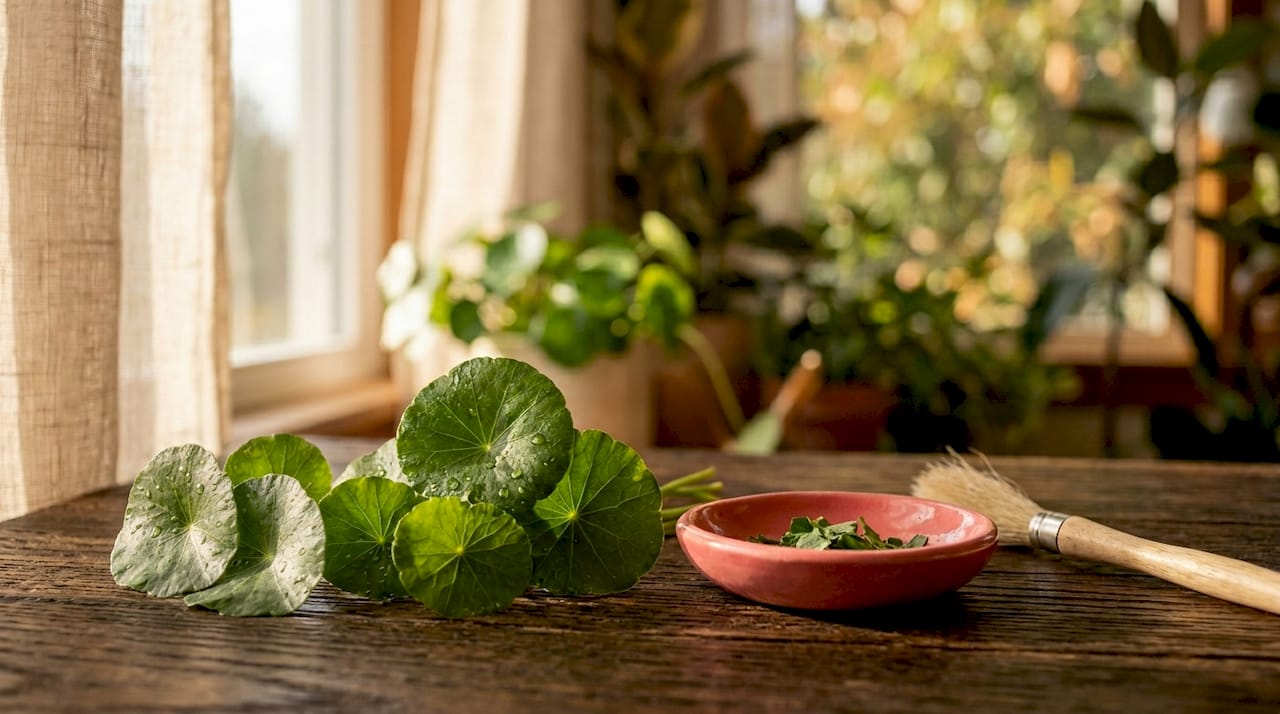
Centella asiatica, also called cica or tiger grass, is one of the most researched anti-inflammatory botanicals in modern skincare. Its active compounds, including asiaticoside and madecassoside, suppress pro-inflammatory cytokines and accelerate wound healing. Korean skincare brands have built entire product lines around this single ingredient, and clinical dermatology supports that reputation. For sensitive skin prone to redness or post-procedure irritation, centella asiatica is a first-line choice.
2. Niacinamide
Niacinamide is a water-soluble form of vitamin B3 that regulates sebum production, reduces redness, and strengthens the skin barrier. The niacinamide market reached $14.83 billion in 2025 with a 10.18% compound annual growth rate, reflecting the clinical confidence dermatologists and formulators place in it. That level of market adoption means it has been tested across skin types, including the most reactive ones, with consistent tolerability. It works at concentrations as low as 2% to 5% and layers well under most moisturizers.
3. Colloidal oatmeal
Colloidal oatmeal holds FDA skin protectant status at a 2% concentration, making it one of the few skincare ingredients with a formal regulatory designation for soothing irritated skin. It works by forming a physical barrier on the skin surface while its avenanthramide compounds actively reduce inflammation. This dual action makes it especially effective for eczema-prone skin, where both barrier disruption and immune overreaction are present. Purelightbotanicalbeauty formulates with ingredients like this precisely because the science behind them is not in question.
4. Bisabolol
Bisabolol is derived from chamomile and is one of the most skin-compatible soothing skincare components available. It reduces redness, strengthens the lipid barrier, and has a low sensitization rate, which makes it suitable even for skin that reacts to most botanicals. Formulators often use it as a carrier enhancer because it improves the penetration of other actives without disrupting the barrier. At concentrations between 0.1% and 0.5%, it delivers measurable calming effects without fragrance risk.
5. Beta-glucan
Beta-glucan, sourced from oats or yeast, is a polysaccharide that increases skin hydration by 27%, reduces wrinkles by 56%, and improves elasticity by 29% with topical application. Those numbers place it among the most data-supported hydrating actives in skincare. Beyond moisture, beta-glucan modulates immune response in the skin, calming overactive reactions without suppressing the skin’s natural defenses. It is particularly useful for skin that is both sensitive and showing early signs of aging.
6. Panthenol
Panthenol, the provitamin form of B5, converts to pantothenic acid in the skin and directly supports barrier repair. Panthenol at 3% to 5% concentration triggers measurable skin barrier repair in under two weeks. That speed matters for people dealing with active flares or post-treatment sensitivity. It also acts as a humectant, drawing moisture into the skin while the barrier rebuilds. Products containing panthenol in this range are worth prioritizing when your skin is in a reactive phase.
Pro Tip: When your skin is actively irritated, look for panthenol listed in the top five ingredients on a product label. That placement signals a concentration high enough to deliver real barrier support, not just trace amounts.
7. Allantoin
Allantoin is a naturally occurring compound found in comfrey root that soothes irritation, promotes cell turnover, and protects the skin from environmental stressors. It is well tolerated by nearly all skin types, including those sensitive to fragrance, alcohol, and preservatives. Formulators use it in products designed for post-shave, post-peel, and eczema-prone skin because it calms without adding complexity. At concentrations of 0.1% to 2%, it reliably reduces the sting and tightness that come with compromised skin.
8. Ceramides
Ceramides are lipid molecules that make up roughly 50% of the skin’s barrier structure. When the barrier is damaged by weather, harsh cleansers, or inflammatory conditions like eczema, ceramide levels drop and transepidermal water loss increases. Replenishing them topically with ceramide NP, AP, or EOP restores barrier integrity and reduces the skin’s reactivity to outside triggers. The best calming oils and barrier creams for sensitive skin almost always include ceramides as a foundational ingredient.
9. Mugwort extract
Mugwort (Artemisia vulgaris) is a staple of traditional East Asian medicine that has earned its place in contemporary skincare through its antioxidant and anti-inflammatory properties. It contains flavonoids and terpenes that neutralize free radicals and calm reactive skin, particularly skin stressed by pollution or UV exposure. K-beauty brands have popularized mugwort toners and essences for sensitive skin, and the ingredient pairs well with centella asiatica in multi-active calming formulas. For environmentally reactive skin, mugwort is one of the more underrated natural stress-relief ingredients available.
10. Ectoin
Ectoin is a bioengineered amino acid derivative originally discovered in extremophile bacteria living in high-stress environments. Ectoin at 5.5% to 7% concentration improves dryness, pruritus, and dermatitis scores by stabilizing the skin barrier and reducing transepidermal water loss. It protects skin cells from UV radiation, heat, and chemical stress by forming a hydration shell around them. For people whose skin reacts to seasonal changes, air conditioning, or pollution, ectoin offers a level of cellular protection that most botanical actives cannot match.
How to choose calming ingredients for your skin type
Not every soothing ingredient works the same way for every skin concern. Matching the active to your specific trigger is what separates real results from a product that just feels nice.
| Skin concern | Best calming ingredients |
|---|---|
| Chronic dryness | Ceramides, panthenol, colloidal oatmeal |
| Redness and flushing | Bisabolol, centella asiatica, niacinamide |
| Environmental stress | Ectoin, beta-glucan, mugwort extract |
| Hormonal sensitivity | Niacinamide, allantoin |
| Eczema-prone skin | Colloidal oatmeal, ceramides, panthenol |
One critical distinction: true calming is a biological response that reduces inflammatory markers, not a sensation of cooling or relief. Ingredients like menthol and eucalyptus create a sensory distraction but can worsen long-term sensitivity by disrupting the barrier. Choosing actives that target inflammation and barrier repair at a cellular level is the only approach that produces lasting results.
For redness-prone skin, bisabolol and centella asiatica address vascular reactivity directly. Guaiazulene, the blue compound from chamomile used widely in K-beauty, regulates capillary permeability and reduces structural redness rather than masking it. That mechanism makes it one of the more specific skin irritation soothing elements for people dealing with persistent facial redness.
Pro Tip: If your skin reacts to most products, start with a single-active formula containing only colloidal oatmeal or panthenol before adding multi-ingredient products. This makes it easier to identify what your skin tolerates.
Natural vs. synthetic calming skincare ingredients
The distinction between natural and synthetic calming actives matters less than most people think, but it is worth understanding. Many of the most effective soothing botanicals are naturally derived. Centella asiatica, bisabolol, mugwort, and colloidal oatmeal all come directly from plants with long histories of therapeutic use. Their safety profiles are well established, and their mechanisms are documented in peer-reviewed research.
Some synthetic or bioengineered actives, however, offer precision that plant extracts cannot always deliver. Panthenol is synthesized rather than extracted, yet it converts identically to the naturally occurring form in skin tissue. Ectoin is produced through bacterial fermentation under controlled conditions, which allows for consistent concentration and purity. The argument for synthetic actives is not that they are better than natural ones. It is that consistency and concentration are easier to control.
Complex blends carry a higher risk of reaction for sensitive skin. Practitioners consistently recommend simplified formulas with a small number of well-studied calming actives rather than products with twenty or more ingredients. The clean beauty trends gaining traction in 2025 and 2026 reflect this shift toward fewer, better-understood ingredients rather than more.
Expert tips for getting the most from calming skincare
Getting results from calming skin care ingredients requires more than buying the right product. Application method, concentration, and consistency all determine whether an ingredient actually performs.
- Use clinically supported concentrations. Panthenol works at 3% to 5%. Colloidal oatmeal is effective at 2%. Ectoin performs at 5.5% to 7%. Products that list these ingredients without disclosing concentration may not contain enough to produce results.
- Commit to at least two to eight weeks. Barrier repair takes time. Expecting visible results in three days leads to product-switching before any ingredient has had a chance to work. Consistency over weeks is what produces lasting reduction in sensitivity.
- Layer correctly. Apply antioxidant serums first, then barrier-repair occlusives on top. Layering antioxidants before heavier creams maximizes protection for environmentally reactive skin.
- Patch test complex formulas. Apply a new product to the inner arm for three to five days before using it on your face. This is especially relevant for products with botanical extracts, which can occasionally trigger contact sensitivity.
- See a dermatologist for persistent sensitivity. If your skin remains reactive after eight weeks of a simplified, calming routine, a professional assessment can identify underlying conditions like rosacea or contact dermatitis that require targeted treatment.
Pro Tip: Apply your barrier repair cream while skin is still slightly damp after cleansing. Panthenol and ceramides absorb more effectively when there is residual moisture to work with.
Key takeaways
The most effective calming skincare ingredients reduce inflammation at a cellular level, repair the skin barrier, and maintain hydration. Sensory cooling agents do not qualify.
| Point | Details |
|---|---|
| Biological calming beats sensory cooling | Choose actives that reduce cytokines and repair barrier, not just create a cooling sensation. |
| Concentration determines results | Panthenol at 3% to 5% and colloidal oatmeal at 2% are the clinically supported thresholds. |
| Match ingredient to skin concern | Ceramides for dryness, bisabolol for redness, ectoin for environmental stress. |
| Simpler formulas work better | Fewer well-studied actives reduce reaction risk for sensitive skin. |
| Consistency is non-negotiable | Barrier repair requires two to eight weeks of daily use before results are measurable. |
Why I stopped trusting products that “feel” calming
I spent years reaching for anything that felt immediately soothing on my skin. Cooling mists, menthol-laced gels, eucalyptus-heavy balms. They all felt like relief in the moment. None of them actually made my skin less reactive over time. If anything, my skin became more dependent on that sensation while the underlying sensitivity got worse.
What changed my approach was understanding that calming is measurable. It is a reduction in inflammatory markers, a restoration of barrier lipids, a decrease in transepidermal water loss. None of those things produce a dramatic sensation. They produce skin that gradually stops reacting to everything.
The ingredients that actually moved the needle for me were the unglamorous ones: panthenol, ceramides, colloidal oatmeal. No beautiful blue color, no botanical scent, no tingling finish. Just skin that, after six weeks, stopped flushing at the slightest provocation. I also learned that fewer ingredients meant fewer variables. When I stripped my routine to three products with five ingredients between them, I finally knew what was working.
My honest advice: read the label before you trust the marketing. If a product promises instant calm but lists menthol or alcohol denat in the first five ingredients, it is selling sensation, not repair. The ingredients that genuinely support sensitive skin are the ones backed by clinical data, not the ones that feel impressive in the first thirty seconds.
— Kaitlyn
Discover calming botanicals from Purelightbotanicalbeauty
Purelightbotanicalbeauty builds every formula around the principle that makeup and skin healing belong together. Products like the Botanical Crème Blush and Nourishing Lipstick are crafted with plant-based actives that support skin health while delivering real color payoff. For those with sensitive or eczema-prone skin, that means you never have to choose between wearing makeup and protecting your barrier. Explore the full collection at Pure Light Botanical Beauty and find formulas designed to work with your skin, not against it.
FAQ
What are the best calming skincare ingredients for eczema?
Colloidal oatmeal at 2% holds FDA skin protectant status and is one of the most clinically validated options for eczema-prone skin. Ceramides and panthenol at 3% to 5% are also first-line choices for restoring the compromised barrier common in eczema.
How long does it take for calming ingredients to work?
Barrier repair from actives like panthenol and ceramides typically requires two to eight weeks of consistent daily use. Expecting faster results often leads to unnecessary product changes before the ingredients have had time to perform.
Is niacinamide good for sensitive skin?
Niacinamide is one of the most broadly tolerated actives for sensitive skin, regulating sebum, reducing redness, and supporting barrier function at concentrations as low as 2% to 5%. Its clinical track record across skin types makes it a reliable starting point for reactive skin.
Can natural calming ingredients cause reactions?
Yes. Even well-tolerated botanicals like centella asiatica or bisabolol can occasionally trigger contact sensitivity in highly reactive individuals. Patch testing any new formula on the inner arm for three to five days before facial use reduces that risk significantly.
What ingredients should sensitive skin avoid?
Menthol, eucalyptus, and high concentrations of alcohol denat create a sensory cooling effect but can worsen long-term sensitivity by disrupting the skin barrier. True calming requires biological activity at the cellular level, not nerve distraction.
Recommended
- 7 Soothing Oils Every Sensitive Skin Seeker Should Know – Pure Light Botanical Beauty
- Best soothing skincare ingredients: 30% fewer flare-ups – Pure Light Botanical Beauty
- How to choose calming cosmetics for sensitive skin – Pure Light Botanical Beauty
- 7 Essential Clean Beauty Trends 2025 for Sensitive Skin – Pure Light Botanical Beauty