

TL;DR:
- Handling makeup for allergies requires selecting allergen-free formulations and testing new products before application.
- Patch testing and ingredient awareness enable allergy-prone skin users to wear makeup comfortably and safely.
Handling makeup for allergies means choosing formulations free of known cosmetic allergens and testing every new product before wearing it on your face. Allergic contact dermatitis is the clinical term for what most people call a “makeup allergy,” and it is a type-IV delayed hypersensitivity reaction. That distinction matters because symptoms like redness, itching, and inflammation can appear days after exposure, making the trigger hard to identify without a system. The good news is that with ingredient literacy, patch testing, and the right application habits, you can wear makeup comfortably even with allergy-prone skin.
What ingredients in makeup commonly cause allergic reactions?
The four most frequent cosmetic allergens are fragrances, formaldehyde-releasing preservatives, nickel contamination, and sunscreen filters. Each one appears across product categories you might not expect. Fragrance shows up in lip balms, foundations, and setting sprays. Formaldehyde releasers like DMDM hydantoin and quaternium-15 appear in mascaras and liquid foundations as preservatives.
The delayed nature of allergic contact dermatitis creates a real identification problem. Because symptoms may appear days after use, most people blame the last product they applied rather than the one they started using a week ago. Keeping a written log of every new product you introduce, and introducing only one at a time, cuts through that confusion.
Marketing labels add another layer of confusion. Terms like “hypoallergenic” and “fragrance-free” are not stringently regulated, so a product carrying those labels can still contain your personal triggers. Reading the full ingredient list is the only reliable filter. Cross-reference it against your known sensitivities before you buy.
Common symptoms to watch for include:
- Burning or stinging on contact
- Itching, redness, or swelling
- Blisters or peeling skin appearing 24–72 hours after use
- Dry, flaky patches that persist beyond normal dryness
Pro Tip: Use the INCI (International Nomenclature of Cosmetic Ingredients) name database to decode ingredient labels. Searching the chemical name rather than the marketing name gives you accurate allergy information.
One more point worth knowing: even natural or botanical ingredients can cause allergic reactions. Essential oils, plant extracts, and herbal actives are common sensitizers. “Natural” does not mean safe for allergy-prone skin. Read every label with the same scrutiny, regardless of how clean the branding looks.
How do you perform a patch test for new makeup products?
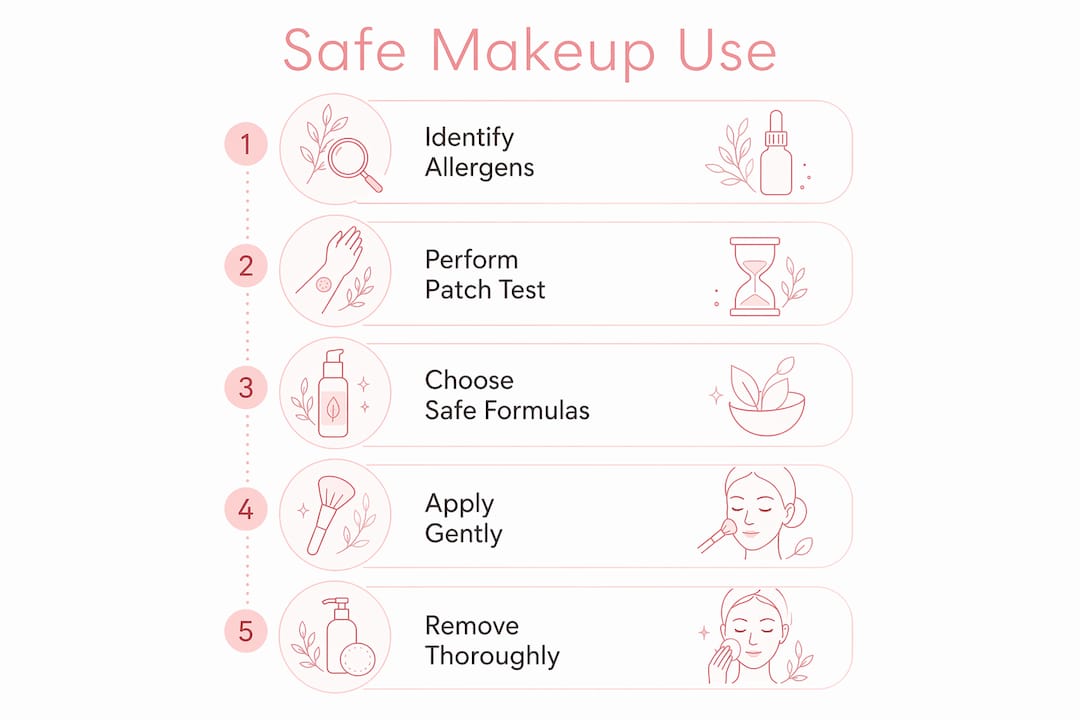
Patch testing is the most reliable method for catching a reaction before it spreads across your face. The process is straightforward, but patience is non-negotiable because of how delayed allergic reactions work.
Follow these steps each time you introduce a new product:
- Apply a small amount of the product to the inside of your wrist or behind your ear. These areas have thin skin that reacts similarly to facial skin.
- Leave it undisturbed for 24 to 48 hours. Do not wash the area during this window.
- Check for reactions at the 24-hour mark and again at 48 hours. Look for redness, swelling, itching, or any texture change.
- Wait the full period even if the 24-hour check looks clear. Delayed hypersensitivity reactions often show up closer to the 48-hour mark.
- Record the result in your product diary. Note the product name, ingredients, test location, and any reaction observed.
- Consult a dermatologist if you experience a strong reaction or cannot identify your trigger after systematic testing. Formal patch testing, where a clinician applies standardized allergens to your back and reads results over multiple days, provides a precise diagnosis.
Clinicians also use a method called the Repeated Open Application Test (ROAT), which mimics real-life product use by applying a product to the same skin area twice daily for one to two weeks. ROAT is especially useful for confirming a suspected allergen when standard patch testing is inconclusive.
Pro Tip: Test products in the order you would layer them. A reaction to your full routine could come from any layer, so test your moisturizer first, then primer, then foundation, one at a time.
What application techniques reduce irritation for allergy-prone skin?
Safe application starts before you open a single product. Your skin barrier is your first line of defense, and a compromised barrier absorbs more allergens. A gentle, fragrance-free moisturizer applied before makeup creates a physical buffer between your skin and the formula.
“Mineral-based and silicone-based makeup products are generally better tolerated by sensitive and allergy-prone skin than cream or liquid formulas containing fragrances or preservatives. Mineral powders and tinted mineral sunscreens reduce allergen exposure while still delivering coverage and sun protection.”
That principle shapes every product choice you make. Here is how to apply it in practice:
- Choose mineral or silicone-based formulas for foundation and concealer. These sit on top of the skin rather than penetrating it, which reduces allergen absorption.
- Layer lightly. Thick product buildup increases the concentration of any allergen on your skin. Two thin layers of coverage cause less irritation than one heavy application.
- Use clean tools every session. Brushes and sponges harbor bacteria and old product residue. Both can trigger or worsen a reaction independent of the formula itself.
- Select waterproof eye makeup selectively. Waterproof formulas often contain stronger film-forming agents and require oil-based removers, both of which can irritate sensitive eyes. Reserve them for occasions when smudging is a real concern.
- Store products correctly. Heat and humidity degrade preservatives, which increases bacterial growth and raises irritation risk. Keep products away from your bathroom’s steam and direct sunlight.
For covering redness specifically, a green-tinted mineral primer applied before a light mineral foundation neutralizes discoloration without requiring heavy product buildup. This technique works well for skin affected by rosacea or eczema flares. Purelightbotanicalbeauty’s Botanical Crème Blush, for example, uses plant-based pigments designed to add color without the synthetic dyes that frequently appear on allergen lists.
Removing makeup thoroughly at the end of the day is as important as how you apply it. Residual product left overnight extends allergen contact time and increases the chance of a reaction developing. Use a gentle, oil-free micellar water or a fragrance-free cleansing balm, and follow with your barrier-supporting moisturizer.
Common mistakes that make makeup allergies worse
The most frequent mistake is trusting marketing language over ingredient lists. A product labeled “dermatologist-tested” or “for sensitive skin” has no regulatory standard behind those claims. Your skin does not respond to labels. It responds to chemistry.
Other mistakes that worsen reactions include:
- Introducing multiple new products at once. When a reaction appears, you cannot identify which product caused it. Introduce one product per week at most.
- Skipping makeup removal. Leaving foundation or eye makeup on overnight is one of the fastest ways to trigger or worsen allergic contact dermatitis.
- Ignoring a changing skin condition. Skin that tolerated a product for years can develop a new sensitivity. Repeated exposure to an allergen can eventually cause sensitization even in skin that showed no prior reaction.
- Dismissing mild symptoms. Slight itching or a faint rash is your skin signaling a problem. Continuing to use the product while symptoms are present increases sensitization risk.
- Relying on memory instead of records. A reaction diary that logs product names, ingredients, and skin responses gives you and any dermatologist a clear pattern to work from.
Many people who believe they have sensitive skin actually have undiagnosed allergic contact dermatitis. That distinction matters because the fix is different. Sensitive skin needs gentler products. Allergic contact dermatitis requires identifying and removing the specific trigger. Correct diagnosis leads to significantly better outcomes. If your skin does not improve after switching to gentler formulas, see a dermatologist for formal allergy testing.
For guidance on rebuilding your routine after a reaction, starting from a clean slate with one product at a time gives your skin the reset it needs.
Key Takeaways
Safe makeup use with allergies depends on knowing your triggers, testing every new product, and choosing formulas with minimal, well-understood ingredients.
| Point | Details |
|---|---|
| Know the top allergens | Fragrances, formaldehyde releasers, nickel, and sunscreen filters cause most cosmetic reactions. |
| Patch test every new product | Apply to the wrist or behind the ear and wait the full 48 hours before facial use. |
| Read labels, not claims | “Hypoallergenic” is unregulated; only the ingredient list tells you what is actually in the product. |
| Choose mineral-based formulas | Mineral and silicone-based products sit on the skin and reduce allergen absorption compared to cream formulas. |
| Keep a reaction diary | Logging products and symptoms is the fastest way to identify your personal triggers. |
What I’ve learned from years of watching people fight their own skin
Most people come to allergy-friendly beauty backwards. They react, they panic, they throw out everything and start over with whatever says “sensitive” on the label. Then they react again, feel defeated, and conclude that makeup simply is not for them. That conclusion is almost always wrong.
What I have seen work, consistently, is slowing down. The skin is not being difficult. It is being specific. A systematic patch testing approach is not just a clinical recommendation. It is the only way to stop guessing and start knowing. Once you know your triggers, the whole process gets easier and less frightening.
The other thing I would push back on is the assumption that “natural” equals safe. I have seen people with genuine botanical allergies switch to plant-based lines and react just as strongly. Chamomile, lavender, and tea tree oil are all common sensitizers. The ingredient source matters less than the ingredient itself and how your immune system responds to it.
What genuinely works is building a short, tested routine with formulas you understand. Purelightbotanicalbeauty approaches this well by centering transparency about ingredients and keeping formulas clean without hiding behind vague wellness language. That kind of honesty is what allergy-prone skin actually needs. You can find expert makeup selection advice that applies this thinking directly to product choices.
Proactive allergy management does not just protect your skin. It gives you back confidence. When you know what works and why, getting ready in the morning stops feeling like a risk.
— Kaitlyn
Makeup made for skin that deserves better
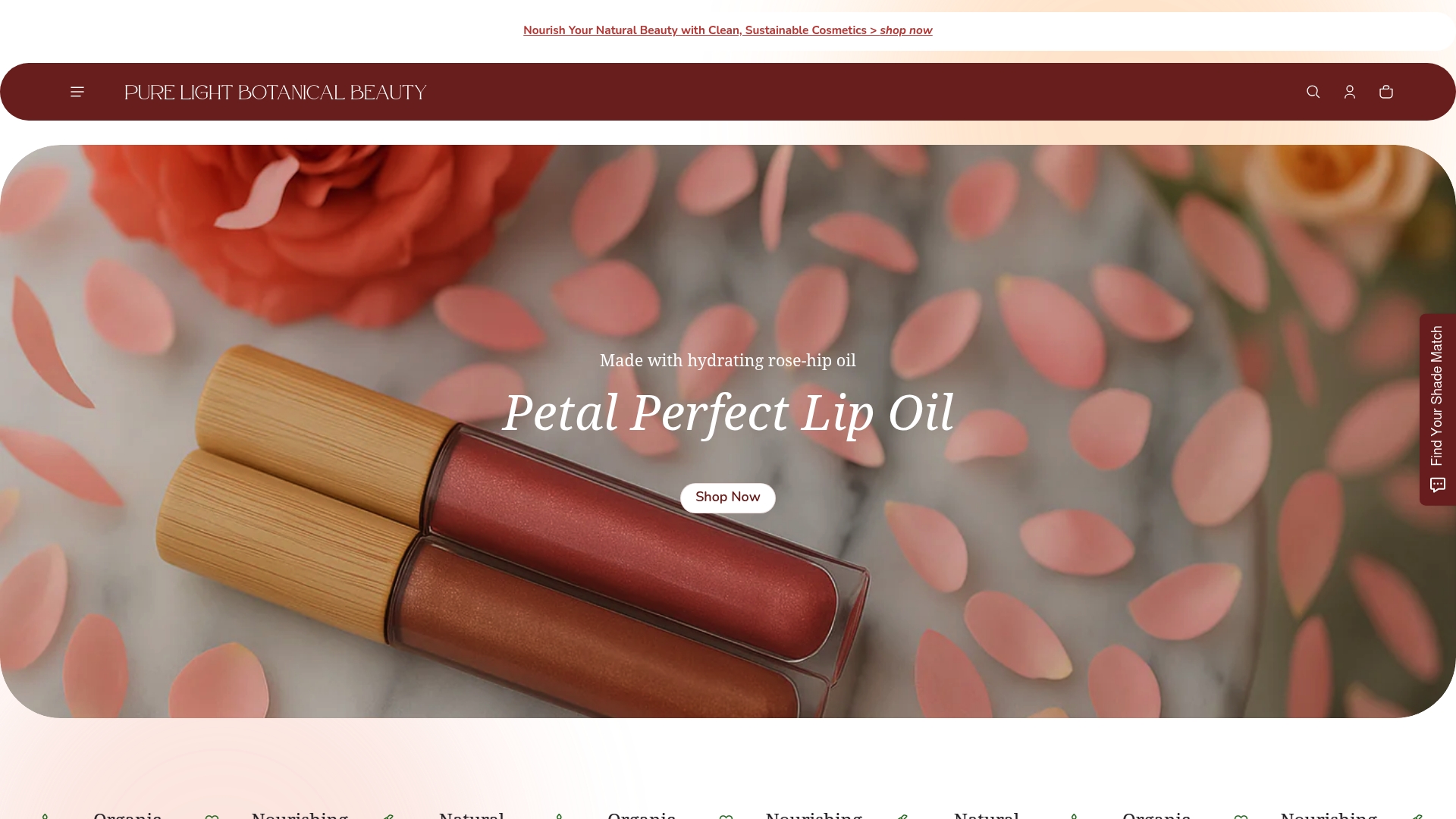
Purelightbotanicalbeauty was built around one belief: your makeup should never work against your skin. Every product in the line, from the Petal Perfect Lip Oil to the Botanical Crème Blush and Nourishing Lipstick, is formulated with clean, plant-based ingredients chosen for both performance and skin compatibility. The brand prioritizes fragrance-free, minimal-ingredient formulas that are especially suited for sensitive and allergy-prone skin. If you are ready to build a routine you can trust, explore the full collection and find products that work with your skin, not against it.
FAQ
What are the most common makeup allergens to avoid?
Fragrances, formaldehyde-releasing preservatives, nickel, and sunscreen chemical filters are the most frequent triggers of cosmetic allergic reactions. Checking ingredient lists for these specific compounds is more reliable than trusting marketing labels.
How do you test makeup for allergies at home?
Apply a small amount of the product to the inside of your wrist or behind your ear, then wait 24–48 hours without washing the area. Any redness, itching, or swelling during that window indicates a likely reaction.
Is hypoallergenic makeup actually safer for sensitive skin?
The term “hypoallergenic” carries no regulatory standard, so it does not guarantee a product is free of your specific triggers. Reading the full ingredient list and cross-referencing it against your known sensitivities is the only reliable approach.
What is the best type of makeup for allergy-prone skin?
Mineral-based and silicone-based formulas are generally better tolerated by allergy-prone skin because they sit on the skin’s surface rather than penetrating it. Fragrance-free, minimal-ingredient products from allergy-friendly lines reduce overall allergen exposure.
When should you see a doctor about a makeup reaction?
See a dermatologist if symptoms include blistering, severe swelling, or reactions that spread beyond the application area. Formal patch testing identifies your specific allergens with precision and guides safer product choices going forward.
Recommended
- 7 Essentials for a Clean Makeup Checklist for Sensitive Skin – Pure Light Botanical Beauty
- Skin-Friendly Makeup Tips: Complete Expert Guide – Pure Light Botanical Beauty
- What Causes Makeup Allergies: Symptoms and Prevention – Pure Light Botanical Beauty
- Your Guide to Clean Makeup Swaps for Sensitive Skin – Pure Light Botanical Beauty