

TL;DR:
- A clean makeup routine involves selecting products without harmful ingredients, focusing on transparency and certifications like EWG Verified. Starting with complexion products and gradually replacing others helps reduce exposure and adjust skin, while proper skin preparation enhances performance. Transitioning to clean makeup requires patience, awareness of shelf life, and managing expectations about performance differences.
A clean makeup routine is a thoughtfully assembled collection of products that avoid harmful ingredients and actively support skin health without sacrificing performance or finish. Knowing how to build a clean makeup routine means more than swapping one foundation for another. It means understanding ingredient labels, recognizing trustworthy certifications like EWG Verified and COSMOS, and transitioning gradually so your skin can adjust without setbacks. This guide walks you through every step, from reading labels to applying your first clean base.
How to identify truly clean makeup products
The phrase “clean beauty” has no universal legal definition. Any brand can print “natural” or “non-toxic” on a label without meeting a single regulated standard. That gap is exactly why ingredient literacy matters more than marketing copy.
Start by learning which ingredients to avoid. The most common offenders are parabens, phthalates, synthetic fragrance, heavy metals, and talc. Each of these carries documented concerns: parabens and phthalates act as endocrine disruptors, and synthetic fragrance is the leading cause of allergic contact dermatitis. That last point trips up many shoppers because “unscented” and “fragrance-free” are not the same thing. Unscented products may still contain masking fragrances. Fragrance-free means no fragrance compounds were added at all.
Here are the key ingredients to flag on any label:
- Parabens (methylparaben, propylparaben): synthetic preservatives linked to hormone disruption
- Phthalates: plasticizers often hidden inside the word “fragrance”
- Synthetic fragrance: a single ingredient that can contain hundreds of undisclosed chemicals
- Heavy metals (lead, arsenic, mercury): sometimes found in pigments and lip products
- Talc: linked to contamination concerns, particularly in loose powders
Third-party certifications cut through the noise. EWG Verified, COSMOS, and MADE SAFE each require brands to disclose ingredients and meet defined safety thresholds. A certification badge is not a guarantee of perfection, but it is a reliable shorthand when you do not have time to research every ingredient yourself. Purelightbotanicalbeauty publishes its ingredient lists openly, which is the baseline standard any clean brand should meet.
Pro Tip: Use the EWG Skin Deep database or the Think Dirty app to check individual products before you buy. Both tools score ingredients by safety concern level and flag hidden hazards.
What are the essential clean makeup products to start with?
Experts recommend starting with complexion products like foundation, concealer, and primer. These cover the largest surface area of your skin and stay on the longest, so they have the greatest contact exposure. Replacing them first delivers the most meaningful reduction in daily ingredient load.
Once your base is clean, add frequently used products next as your older conventional items expire naturally. This approach reduces waste and gives your skin time to respond to each new formula before you add another.
- Complexion base first. Replace foundation, tinted moisturizer, or BB cream before anything else. Look for formulas that list squalane, jojoba oil, or rosehip oil for dry skin. For oily skin, arrowroot powder and kaolin clay absorb excess sebum without clogging pores.
- Concealer and primer second. These products sit directly on skin for hours. A clean primer with aloe vera or hyaluronic acid preps skin without synthetic silicones.
- Mascara and eyeliner third. Eye products have the shortest shelf life and the most direct contact with mucous membranes. Replacing them early is both a safety and a hygiene priority.
- Lip products last. Lipstick and lip gloss are ingested in small amounts throughout the day. Purelightbotanicalbeauty’s Nourishing Lipstick and Petal Perfect Lip Oil use plant-based waxes and oils that condition while they color.
- Blush and bronzer when ready. Cream-based options like Purelightbotanicalbeauty’s Botanical Crème Blush double as cheek and eye color, which supports a minimalist beauty routine without buying extra products.
Pro Tip: Patch test new products behind the ear or on the inner forearm for 24–48 hours before applying to your face. Even clean formulas can trigger reactions in sensitive skin.
How does skin preparation affect clean makeup performance?
Clean makeup performs best on well-prepared skin. Proper hydration and gentle cleansing before application are not optional steps. They are the foundation that determines how evenly your base sits and how long it lasts.

Aggressive cleansers strip the skin barrier, which causes redness and flaking that no foundation can fully cover. Over-moisturizing with heavy occlusives before a lightweight clean formula causes pilling. The goal is a balanced, calm surface: clean, lightly hydrated, and free of excess oil.
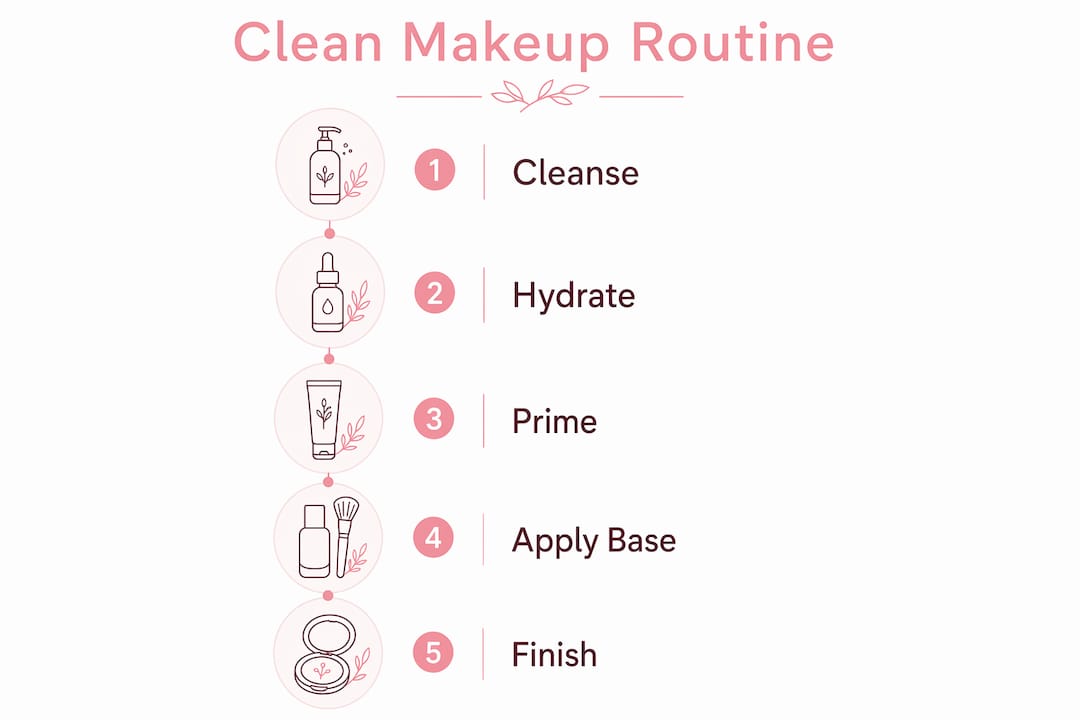
Follow these steps for the best clean makeup application:
- Cleanse gently. Use a sulfate-free cleanser or micellar water. Pat dry, never rub.
- Apply a lightweight moisturizer. Let it absorb for two minutes before applying any base product.
- Apply foundation or tinted moisturizer. Use a damp sponge or clean fingers for a natural, skin-like finish. Clean formulas blend better with warmth from your hands.
- Layer blush and highlighter. Cream formulas blend directly over a clean base without a separate brush. Tap with fingertips for a natural flush.
- Finish with mascara and liner. Apply mascara from root to tip in one slow stroke to avoid clumping with water-based clean formulas.
Clean makeup prioritizes comfort and a natural finish over 16-hour wear, which is an honest trade-off worth knowing upfront. For humid climates or oily skin types, a clean gripping primer or a light setting spray extends wear without compromising your ingredient standards.
What are the most common pitfalls when switching to clean makeup?
Switching to a clean routine comes with real challenges that most guides skip over. Knowing them in advance saves you frustration and money.
- Shorter shelf life is real. Clean formulas use alternative preservative systems, which means they expire faster than conventional products. Check the PAO symbol (the open jar icon on the packaging) and replace mascara every three months and creams within six to twelve months of opening.
- Natural does not mean non-irritating. Essential oils, botanical extracts, and nut-derived ingredients are among the most common allergens in clean beauty. A product being plant-based does not make it safe for every skin type.
- Performance expectations need adjusting. Clean mascara rarely matches the volume of a conventional formula with synthetic polymers. Clean foundations may not offer the same full coverage. These are real differences, not failures.
- Switching everything at once causes skin shock. Your skin needs time to adapt to new preservative systems, textures, and active botanicals. Changing your entire routine in one week makes it impossible to identify what caused a reaction if one occurs.
“Clean beauty is more a philosophy about ingredient transparency and balance than an absolute safety guarantee. Performance and comfort matter alongside safety.” — Clean Beauty Makeup Guide 2026
Pro Tip: Start with two or three swaps and use each product for at least two weeks before adding more. This gives your skin time to respond and gives you clear data on what works.
Key Takeaways
Building a clean makeup routine works best when you prioritize ingredient transparency, replace products gradually starting with complexion base items, and match formulas to your specific skin type.
| Point | Details |
|---|---|
| Start with complexion products | Foundation and concealer cover the most skin, so replace them before other items. |
| Read labels, not claims | “Natural” and “non-toxic” have no legal definition; rely on EWG Verified or COSMOS certifications instead. |
| Match formula to skin type | Dry skin needs squalane or jojoba; oily skin performs better with arrowroot or kaolin clay. |
| Patch test every new product | Test behind the ear for 24–48 hours before full application, even with clean formulas. |
| Expect a shorter shelf life | Clean preservative systems expire faster; check PAO symbols and replace products on schedule. |
What I’ve learned from years of building clean routines
The biggest mistake I see is treating clean beauty as a binary. People assume that once a product carries a certification badge, it is automatically safe, effective, and right for their skin. That is not how it works. I have tried certified clean foundations that broke me out and conventional-adjacent formulas that my skin loved. The label is a starting point, not a verdict.
What actually works is paying attention to your own skin over time. When I started swapping products gradually, I noticed my skin calmed down within a few weeks. Not because every ingredient was “safer” in some abstract sense, but because I was finally using fewer ingredients overall and giving my barrier a chance to breathe. A clean beauty certification tells you a brand has done the work to be transparent. What it cannot tell you is whether a specific formula suits your unique skin chemistry.
The other thing I wish someone had told me earlier: performance anxiety is normal. Your first clean mascara will probably not perform like the one you have used for ten years. Give it a week. Your eye adjusts, your application technique adjusts, and most of the time the formula grows on you. The products I was most skeptical about are now the ones I reach for without thinking.
Clean makeup is not about perfection. It is about making more informed choices, one product at a time, and building a routine that feels as good as it looks.
— Kaitlyn
Purelightbotanicalbeauty: where clean formulas meet real skin
Purelightbotanicalbeauty was built on one belief: that makeup and skin care should work together, not against each other. Every formula in the line, from the Petal Perfect Lip Oil to the Botanical Crème Blush and Nourishing Lipstick, uses plant-based ingredients chosen for both color payoff and skin benefit. The brand publishes full ingredient lists and formulates specifically for sensitive skin and conditions like eczema, so you are never left guessing what you are putting on your face.
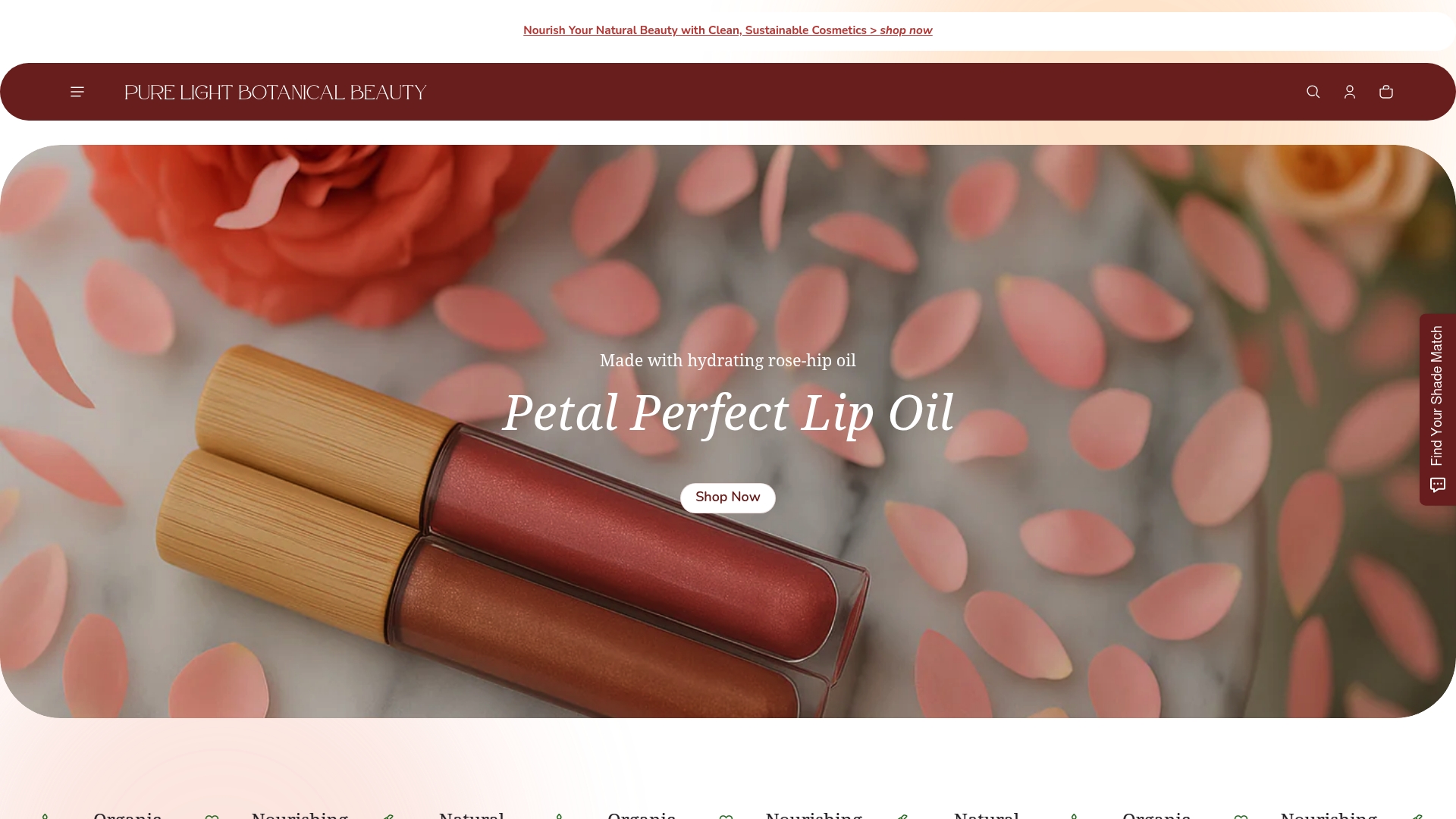
If you are ready to start or expand your clean routine with products you can actually trust, visit Purelightbotanicalbeauty to browse the full collection. Each product page lists every ingredient with its purpose, so you can make informed choices from the very first click.
FAQ
What does “clean makeup” actually mean?
Clean makeup refers to products formulated without ingredients linked to health concerns, such as parabens, phthalates, synthetic fragrance, and heavy metals. Because the term has no legal definition, look for third-party certifications like EWG Verified or COSMOS as reliable benchmarks.
How do I choose clean makeup for sensitive skin?
Choose fragrance-free formulas and check for common botanical allergens like essential oils and nut-derived ingredients. Patch test every new product behind the ear for 24–48 hours before applying it to your face.
Where should I start when building a natural makeup routine?
Start with complexion products like foundation and concealer, since they cover the most skin surface and stay on the longest. Replace other products gradually as they expire to reduce waste and give your skin time to adjust.
How long do clean makeup products last?
Clean formulas often have a shorter shelf life than conventional products because they use alternative preservative systems. Check the PAO symbol on the packaging and replace mascara every three months and cream products within six to twelve months of opening.
Does clean makeup perform as well as conventional makeup?
Clean makeup delivers strong results for everyday wear, though it typically prioritizes a natural finish over maximum coverage or 16-hour hold. Using a clean primer or setting spray improves longevity, especially for oily skin or humid conditions.
Recommended
- How to Transition to Clean Makeup Without Irritating Sensitive Skin – Pure Light Botanical Beauty
- How to Switch to Natural Makeup Naturally for Radiant Skin – Pure Light Botanical Beauty
- Your Guide to Clean Makeup Swaps for Sensitive Skin – Pure Light Botanical Beauty
- Clean Makeup’s Impact: Enhance Beauty and Skin Well-Being – Pure Light Botanical Beauty