

Liquid concealer is a fluid, pigmented formula used to brighten under-eyes, cover blemishes, and correct discoloration without settling into fine lines the way heavier creams can. If your under-eyes lean dry or mature, start with a hydrating, serum-like liquid concealer built on glycerin and squalane. If you’re managing oily skin or breakouts, reach for an oil-free, satin-to-matte liquid concealer that resists transfer through the day.
Plant-based, non-irritating versions of both exist, and they matter more than most beauty guides let on, especially if your skin reacts to fragrance or harsh preservatives. We’ll walk through exactly where those formulas fit later in this guide.
Here’s the quick-reference version before we go deeper:
- Dry or mature under-eyes: choose a hydrating, serum-based liquid concealer with humectants like hyaluronic acid.
- Oily skin or active blemishes: choose an oil-free, matte or satin liquid concealer with light film-forming polymers.
- Sensitive or eczema-prone skin: look for fragrance-free, plant-derived formulas with a short, transparent ingredient list.
- Color correction needs: pair a corrector (peach or orange tones) underneath your concealer, not instead of it.
Key Takeaways
Choosing the right liquid concealer means matching formula and finish to skin type first, then shade, since ingredients determine comfort and coverage determines the result.
| Point | Details |
|---|---|
| Match formula to skin type | Hydrating serum formulas suit dry or mature under-eyes; oil-free matte formulas suit oily or blemish-prone skin. |
| Build coverage in layers | Apply thin layers and let each one settle before adding more to avoid a cakey finish. |
| Shade one tone lighter for brightening | Going lighter than your foundation works for under-eyes, but two shades lighter creates an ashy cast. |
| Check ingredients for sensitive skin | Watch for fragrance and certain alcohols, and prioritize glycerin, hyaluronic acid, and squalane. |
| Pair with plant-based color | Purelightbotanicalbeauty’s Botanical Crème Blush™ ~ Ruby and Nourishing Lipstick™ ~ Rose Quartz complete a gentle, plant-based routine. |
Table of Contents
- What Types of Liquid Concealer Formulas Exist?
- Which Finish and Coverage Level Is Right for Your Skin?
- How Do You Find Your Correct Shade and Undertone?
- How Do You Apply Liquid Concealer for a Natural Finish?
- How Long Does Liquid Concealer Actually Last on Skin?
- Which Ingredients Matter Most for Sensitive or Eczema-Prone Skin?
- What Should You Check Before Buying a Liquid Concealer?
- How Much Should You Expect to Pay for Liquid Concealer?
- Which Concealers Work Best for Different Skin Types?
- How Long Does Liquid Concealer Last Before It Expires?
- What Are the Most Common Liquid Concealer Mistakes?
- How Do You Remove Liquid Concealer Without Irritating Your Skin?
- What Actually Matters When Choosing a Concealer
- Complete Your Look With Purelightbotanicalbeauty
- Sources and Further Reading
What Types of Liquid Concealer Formulas Exist?
Concealer isn’t one product with one job. It’s a category, and the formula you pick determines whether you get a natural glow or a chalky mask by 2 PM. Independent testing programs like Wirecutter and Byrdie evaluate concealers across shade range, coverage, formula, finish, application, and wear, and those six criteria are a genuinely useful shopping framework even if you never read a single review.
Liquid and serum concealers are thinner, more fluid formulas designed to sit into skin rather than on top of it. They’re generally the better pick for under-eyes because they move with the skin instead of cracking along fine lines.
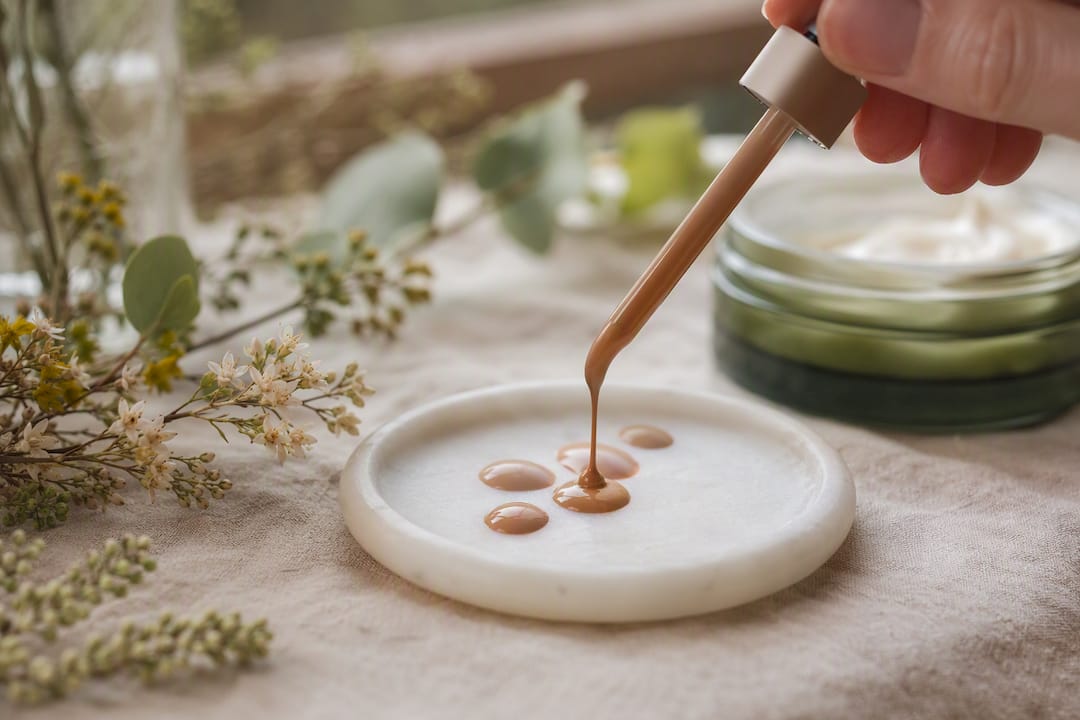
Cream concealers are thicker and denser. They deliver more pigment per swipe, which makes them a strong choice for covering blemishes, dark spots, or areas that need heavier camouflage.
Stick concealers are a solid, portable version of cream. They’re convenient for touch-ups but can feel heavy under the eye if you don’t warm the product first.
Pen and click concealers dispense a small, controlled amount, which makes them precise for spot-treating a single blemish or broken capillary without overloading the area.
Formula choice by use case:
- Under-eyes: liquid or serum concealer, applied thin and built up in layers.
- Blemishes and discoloration: cream or stick concealer for denser, longer-lasting coverage.
- Precision spot correction: a pen or click applicator.
- All-over color evening: a liquid concealer with a damp sponge for a diffused, skin-like finish.
For tools, a damp makeup sponge gives the softest, most blended result. A small synthetic concealer brush offers more control for precise placement. Fingertips work fine in a pinch. Your body heat actually helps the product melt into skin, but they deposit more product than a sponge, so use less than you think you need.
Pro Tip: Warm cream or stick concealer between your fingers for a few seconds before applying. It softens the formula so it blends without dragging or tugging at delicate under-eye skin.
Which Finish and Coverage Level Is Right for Your Skin?
Finish should follow skin texture, not trend. That’s the single biggest gap between what people buy and what actually works for them.
If you have mature, crepe-prone, or dry under-eye skin, a radiant or serum-like finish is your friend. Matte formulas tend to grip onto texture and emphasize fine lines rather than smoothing them, according to product analysis from Allure covering concealers for dark circles and redness. A radiant, hydrating finish reflects light instead of sitting flat, which reads as smoother skin even when the texture underneath hasn’t changed.
If you have oily skin or breakout-prone areas, satin or matte formulas hold up better. They typically rely on oil-absorbing ingredients or lightweight film-forming polymers that resist sliding around as your skin produces more sebum through the day.
Coverage builds in three general tiers:
- Sheer: evens tone slightly, lets real skin show through, best for light discoloration.
- Medium: covers most dark circles and mild blemishes while still looking like skin.
- Full: conceals significant redness, scarring, or deep pigmentation, often in one or two layers.
Shade range and buildability rank among the most important attributes in independent testing panels, largely because a concealer that only looks good in one thin layer fails half its potential users. The smarter approach is always to build coverage in thin layers rather than applying one thick layer up front. One heavy pass is the fastest route to a cakey, obvious finish; two or three light passes, each blended before the next, gives you control and a result that still moves like skin.
Avoid piling product directly into deep creases, which only makes them more visible. Instead, apply a thin layer, pat gently, let it set for a few seconds, then add more only where you genuinely need it.
How Do You Find Your Correct Shade and Undertone?
Shade mismatch is the most visible concealer mistake, and it’s almost always avoidable with three or four minutes of testing before you buy.
- Start with your foundation shade as a baseline. For blemish or all-over coverage, match it exactly. For brightening under-eyes, go one shade lighter, never two, or you’ll create a chalky, reverse-raccoon effect.
- Test undertone on your jawline, not your hand. Your wrist and jawline often carry different undertones than your face; the jawline blends into your neck and gives the truest read.
- Check the shade in natural daylight. Indoor lighting, especially warm bulbs or fluorescents, distorts how pigment looks against skin. Step near a window before committing.
- Swipe two or three candidate shades side by side. The one that seems to “disappear” into skin, rather than sitting as a visible stripe, is your match.
- Reach for a color corrector only when discoloration is severe. Peach and orange correctors neutralize deep blue or purple under-eye circles before concealer goes on top; they’re a step before concealer, not a substitute for it.
Undertones generally fall into cool (pink or blue base), warm (yellow or golden base), and neutral (a balance of both). If you’re unsure, neutral shades are the safer starting point since they blend acceptably across more skin tones than a strongly warm or cool formula.
How Do You Apply Liquid Concealer for a Natural Finish?
Application technique matters as much as the product itself. Rubbing product in aggressively is the fastest way to undo a good formula, and gentle, deliberate placement is what separates a seamless finish from a tired, patchy one.
- Start with clean, moisturized skin. Cleanse, then apply a hydrating eye cream and let it fully absorb, ideally two or three minutes before you start makeup.
- Prime only if your skin runs oily or your concealer tends to crease. A thin layer of primer on the lid or under-eye area gives the formula something even to grip.
- Dot small amounts in a triangle shape under the eye, rather than a single line along the crease. This targets the darkest areas while avoiding excess product where you don’t need it.
- For blemishes, apply a small dot directly onto the spot, not a broad swipe across surrounding skin, which only draws attention to the area.
- Blend with a tapping motion, not rubbing. How-to guidance from brands like No7 recommends gently patting concealer with a damp sponge or fingertip rather than dragging it, since tapping keeps the product in place and prevents it from sliding into creases.
- Layer thin coats and let each one settle for a few seconds before deciding whether you need more.
- Set strategically, not everywhere. A light dusting of translucent powder only where you applied concealer locks it in without dulling the glow you built into the rest of your base.
Midday touch-ups work best when you blot oil first with a tissue, then pat on the smallest amount of fresh concealer rather than adding another full layer on top of what’s already there. That approach avoids the buildup that causes creasing by 4 PM.
Pro Tip: Keep a small pot of setting powder and a mini sponge in your bag. A 15 second touch up at your jawline mirror check beats reapplying a full face of concealer later.
How Long Does Liquid Concealer Actually Last on Skin?
Wear time depends on three factors: your skin’s oil production, the humidity around you, and how much your eye area moves through the day. All three work against concealer sitting still.
Setting method matters more than most people realize. Translucent powder is the most reliable option for oily skin or all-day wear, since it absorbs surface oil and locks pigment in place. Setting spray works better for dry or mature skin, where powder can look chalky or accentuate texture. Cream-to-powder is a middle ground worth trying if you want a soft matte finish without a fully powdery feel.
Formulas built with film-forming polymers or oil-absorbing ingredients tend to hold up longest on oily skin, since they create a light, flexible barrier that resists transfer rather than sitting loosely on the surface.
Common wear problems and quick fixes:
- Creasing: usually means too much product or not enough hydration underneath; go thinner next time and add a hydrating eye cream first.
- Flaking: often a sign the formula is too matte or drying for your skin; switch to a more emollient, glycerin-rich version.
- Fading by midday: typically oil breaking down pigment; blot first, then reapply a thin layer rather than piling on more.
- Patchy separation: frequently caused by skipping moisturizer or applying over unprimed, dry patches of skin.
Which Ingredients Matter Most for Sensitive or Eczema-Prone Skin?
Ingredient choice isn’t a side note for sensitive skin. It’s the whole decision.
Hydrating, barrier-supporting ingredients to look for include glycerin, hyaluronic acid, and squalane, all humectants and emollients that help concealer stay flexible and avoid settling into fine lines, particularly around the eyes where skin is thinnest. Some skincare-forward concealers now combine these actives with caffeine or peptides, functioning almost as a treatment product that happens to offer buildable coverage.
Ingredients worth double-checking if your skin reacts easily include added fragrance, certain denatured alcohols, and specific preservative classes that can trigger irritation on compromised or eczema-prone skin.
Purelightbotanicalbeauty builds every formula around plant-based actives and full ingredient transparency for exactly this reason. Sensitive skin doesn’t need less makeup; it needs makeup that doesn’t fight against the skin barrier while it works. That philosophy shapes how we think about pairing concealer with the rest of a routine, including gentle botanical ingredients suited to reactive skin.
Plant-based actives and humectants let skincare-forward concealers deliver hydration and reduce creasing while still providing real coverage, a combination that used to require choosing between makeup and treatment.
Before committing to a new concealer, run a simple patch test: apply a small amount to your inner forearm, wait 24 hours, and watch for redness or itching before using it on your face. On the label, check for “dermatologist tested,” “non-comedogenic,” and a specific note on preservatives rather than a vague “gentle formula” claim, which means nothing on its own. A short ingredient list you can actually read is often a better signal than any marketing phrase on the front of the bottle.
What Should You Check Before Buying a Liquid Concealer?
Shopping smart takes four minutes if you know what to check first.
- Identify your primary use case. Are you brightening under-eyes, covering blemishes, or both? This determines formula weight before anything else.
- Confirm the shade range fits your actual skin tone, not just a general category. Brands with narrow ranges quietly signal who they didn’t design for.
- Match finish to skin type: radiant or serum-based for dry and mature skin, satin or matte for oily and blemish-prone skin.
- Scan the ingredient list for irritants if you have sensitive or eczema-prone skin, specifically fragrance and certain alcohols.
- Check the return or sample policy before buying online, since shade and finish are nearly impossible to judge from a screen alone.
Red flags worth walking away from: a shade range that stops at four or five options, ingredient lists hidden behind a “proprietary blend” label, and product pages with no mention of finish or coverage level at all.
How Much Should You Expect to Pay for Liquid Concealer?
Liquid concealer spans a wide price range, and cost doesn’t always track with performance the way you’d expect.
Drugstore and mass-market formulas typically sit at the lower end and often perform well for sheer to medium coverage, especially for everyday wear over healthy skin. Mid-range formulas, frequently found at specialty beauty retailers, tend to add more sophisticated ingredient blends, wider shade ranges, and better buildability for fuller coverage needs. Prestige and skincare-hybrid concealers sit at the top of the price spectrum, often justified by added actives like peptides or plant-derived humectants rather than pigment alone.
The real value question isn’t “how much did it cost” but “how much did I need to use.” A concealer that requires three thin layers to look natural often ends up cheaper per wear than one that looks flawless in one swipe but costs three times as much upfront, simply because you use less product over time with a well-formulated option. Sample sizes, when available, are worth the small added cost if they save you from returning a full-size product that doesn’t match your undertone.
Clean, plant-based formulas sometimes carry a modest premium over conventional mass-market options, largely reflecting sourcing and ingredient quality rather than packaging or marketing spend.
Which Concealers Work Best for Different Skin Types?
No single formula wins across every skin type, which is exactly why matching finish and formula to your specific concern matters more than chasing a single “best” pick.
For oily or acne-prone skin, look for oil-free, satin-to-matte liquid concealers built with lightweight film-forming ingredients that resist transfer through the day. These formulas typically sit closer to the “medium to full coverage” end and hold up well through heat and humidity.
For dry or mature skin, hydrating, serum-like formulas with glycerin, hyaluronic acid, and squalane are the stronger choice. They stay flexible over texture instead of settling into lines, and a radiant finish reads as healthier skin rather than covered skin.
For sensitive or eczema-prone skin, prioritize plant-based, fragrance-free formulas with short, transparent ingredient lists over heavily marketed “long-wear” claims, which often lean on ingredients that irritate reactive skin.
For combination skin, a satin finish concealer used selectively, matte in the T-zone areas prone to oil, more hydrating under the eyes, often works better than forcing one formula to do both jobs.
How Long Does Liquid Concealer Last Before It Expires?
Most liquid concealers carry a shelf life of about 12 months once opened, though this varies by formula and preservative system. Check the small jar icon on the packaging, often printed near the barcode, for the manufacturer’s specific “period after opening” guidance.
A few storage habits extend usable life meaningfully. Keep the cap tightly closed between uses to limit air exposure, which speeds up oxidation and can shift both texture and scent over time. Store concealer away from direct sunlight and heat, a bathroom shelf near a hot shower is actually a worse spot than a cool drawer, since heat breaks down emulsions faster and can separate oil and water phases in liquid formulas.
Watch for signs a concealer has expired even within its stated window: a sour or off smell, visible separation that doesn’t blend back in with shaking, a change in texture toward clumpy or watery, or a shift in how the shade oxidizes on skin. Using expired concealer near the eyes carries a higher irritation risk than most other makeup, given how thin and sensitive that skin is, so when in doubt, replace it rather than risk it.
What Are the Most Common Liquid Concealer Mistakes?
A few repeat mistakes account for most concealer complaints, and nearly all of them are fixable with a small adjustment in technique.
- Applying too much product at once. Heavy, single-layer application is the top cause of cakey, obvious concealer. Build in thin layers instead.
- Choosing a shade too light for brightening. One shade lighter works for under-eyes; two shades lighter creates a visible gray or ashy cast once it oxidizes.
- Skipping hydration underneath. Applying concealer directly onto dry skin, with no eye cream or moisturizer first, is a near guarantee of creasing within a few hours.
- Rubbing instead of tapping. Dragging product across skin pushes it into fine lines and pulls at delicate under-eye tissue.
- Setting the entire face when only certain areas need it. Over-powdering skin that didn’t need setting creates a flat, dull finish and can actually emphasize dryness elsewhere.
- Ignoring undertone in favor of matching depth alone. Two concealers can be the same shade number and look completely different once they oxidize, depending on undertone.
How Do You Remove Liquid Concealer Without Irritating Your Skin?
Removal deserves as much care as application, especially around the eyes, where skin is thinner and more prone to irritation from harsh rubbing or stripping cleansers.
Start with a gentle, oil-based cleanser or micellar water rather than a foaming cleanser first, since oil-based formulas dissolve pigment and long-wear polymers more effectively without requiring friction. Press a soaked cotton pad against closed eyes for several seconds before wiping, this gives the product time to break down instead of forcing you to scrub it off.
Wipe gently outward and downward in the direction skin naturally falls, never scrubbing back and forth, which can cause micro-irritation or contribute to premature fine lines over time. Follow with a mild, fragrance-free cleanser to remove any remaining residue, then apply a hydrating moisturizer while skin is still slightly damp to help lock in moisture.
If you’re removing full-coverage or long-wear formulas built with film-forming polymers, a double cleanse, oil-based first, then a gentle water-based cleanser, tends to clear residue more completely than a single pass, without needing to rub harder to compensate.
What Actually Matters When Choosing a Concealer
Most concealer advice treats coverage and wear time as the whole story, and that’s where it falls short. Formula and finish decide whether your skin looks healthier or simply hidden, and that distinction should come before shade, before price, before anything on a brand’s marketing page.
The conventional wisdom skips straight to “buy full coverage for reliability,” but full coverage on the wrong texture just draws attention to itself. A radiant, hydrating formula in medium coverage often reads more convincingly than a heavy matte one pushed past its limits.
If you take one thing from this guide, prioritize ingredients before finish, and finish before shade name. A concealer that irritates sensitive skin or settles into every line by noon isn’t a bargain no matter what it costs. Start with what your skin can tolerate, then work outward from there.
Complete Your Look With Purelightbotanicalbeauty
Concealer does the correcting, but the rest of your face still needs color that won’t fight a sensitive skin barrier. That’s where Purelightbotanicalbeauty fits into your routine, not as another concealer, but as the plant-based finishing touch that keeps the rest of your makeup as gentle as the coverage you just built.
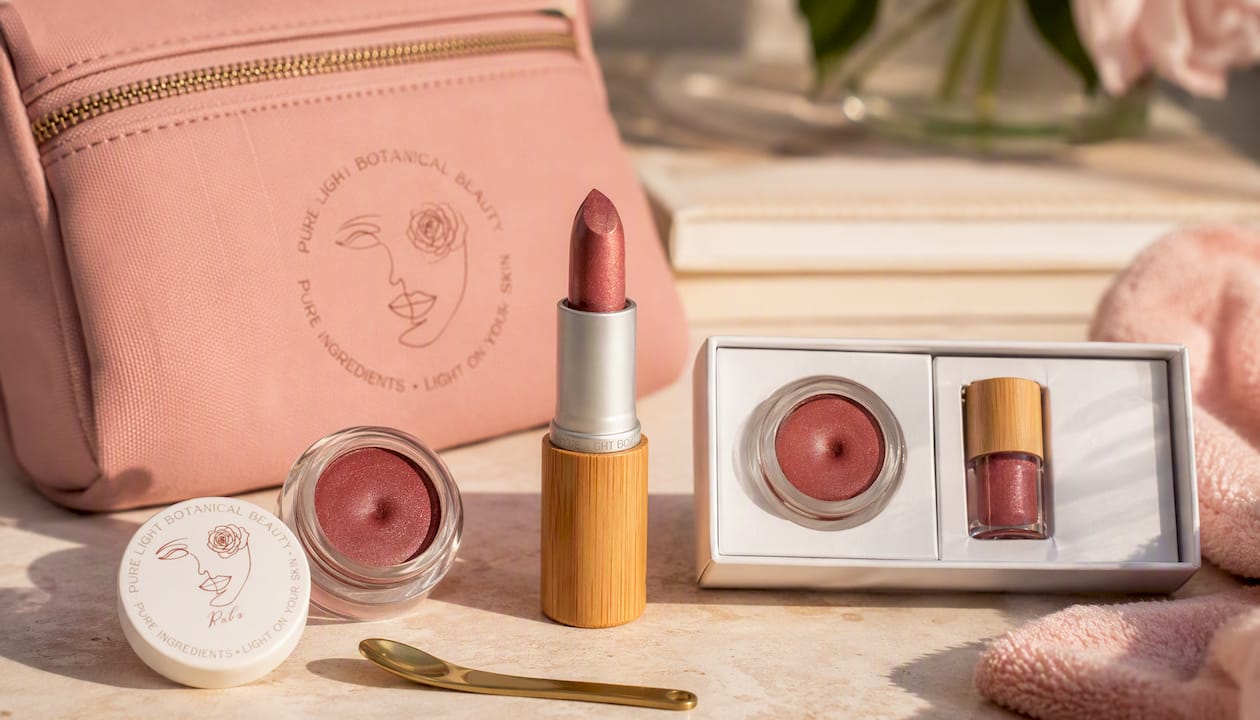
Our Botanical Crème Blush™ ~ Ruby is designed to sit lightly over freshly concealed skin without dragging or settling into texture, giving cheeks a natural flush that complements rather than competes with your base. Pair it with Nourishing Lipstick™ ~ Rose Quartz for a balanced finish that pulls the whole look together with the same clean, plant-derived ingredients you already trust around your eyes. If you’re building a full routine, the Botanical Crème Blush™ and Petal Perfect Lip Oil™ Duo offers both in one purchase, a practical way to complete your look without juggling separate products from separate brands.
Ready to see how a plant-based routine feels on your skin? Shop the Ruby crème blush and pair it with your concealer today.
Sources and Further Reading
- Wirecutter, “The 4 Best Concealers”
- Allure, “10 Best Concealers for Dark Circles, Redness, and Blemishes”
- Byrdie, “The 15 Best Concealers of 2026, Tested and Reviewed”
Recommended
- What Do You Need for a Natural Makeup Look: Easy Steps – Pure Light Botanical Beauty
- Blend Natural Makeup Flawlessly for Sensitive Skin Health – Pure Light Botanical Beauty
- How to Choose Makeup for Eczema: 2026 Guide – Pure Light Botanical Beauty
- Complete Guide to Mindful Makeup Application – Pure Light Botanical Beauty