

TL;DR:
- Vegan cosmetics contain no animal-derived ingredients and often include soothing plant-based ingredients.
- Scientific research shows plant-based formulas can reduce eczema symptoms and support skin barrier repair effectively.
- Patch testing and understanding ingredient lists are essential for safe and effective use of vegan skincare on sensitive skin.
Not every product labeled “gentle” or “natural” is safe for your skin. If you live with eczema or sensitive skin, you’ve likely picked up a bottle that promised to be kind, only to find your skin red, itchy, and inflamed the next morning. The truth is, the beauty aisle is full of well-intentioned labels that don’t tell the whole story. Vegan cosmetics offer a different starting point, one rooted in plant-based formulations that work with your skin rather than against it. This guide breaks down what vegan cosmetics actually are, what science says about their impact on sensitive and eczema-prone skin, and how to choose them wisely.
Table of Contents
- What makes vegan cosmetics different?
- Vegan cosmetics and sensitive skin: What the science says
- How to choose vegan cosmetics safely (even with allergies)
- Common myths and reality checks: Is vegan always better?
- Why skin health, not just trends, should drive your choice
- Nourish your sensitive skin with a trusted vegan beauty routine
- Frequently asked questions
Key Takeaways
| Point | Details |
|---|---|
| Plant-based is powerful | Vegan cosmetics use plant ingredients that can calm sensitive or eczema-prone skin. |
| Evidence supports relief | Clinical research shows some vegan creams reduce irritation and eczema severity. |
| Patch test is vital | Always test new products, even vegan ones, to avoid reactions from natural allergens. |
| Vegan is not always best | Not every vegan product is safe or superior—learn which ingredients and blends fit your needs. |
| Science over trends | Choose products based on both clinical evidence and personal experience, not just labels. |
What makes vegan cosmetics different?
The word “vegan” in beauty doesn’t just mean cruelty-free. Many people use those terms interchangeably, but they describe different things. A cruelty-free product means it wasn’t tested on animals. A vegan product means it contains no animal-derived ingredients whatsoever. That includes things like beeswax, lanolin (from sheep’s wool), carmine (a red dye made from crushed beetles), collagen from animal tissue, and keratin from hair or feathers. If you’ve ever had a reaction to a lip balm or foundation and couldn’t figure out why, an animal byproduct hidden in the ingredient list could have been the culprit.
Conventional cosmetics, even those marketed as “natural,” routinely include animal derivatives for texture, color, or preservation. Vegan cosmetics replace these with plant-derived alternatives that are often gentler on reactive skin. Plant-based beauty benefits go beyond ethics — they translate into real, tangible differences for women whose skin doesn’t tolerate traditional formulas.
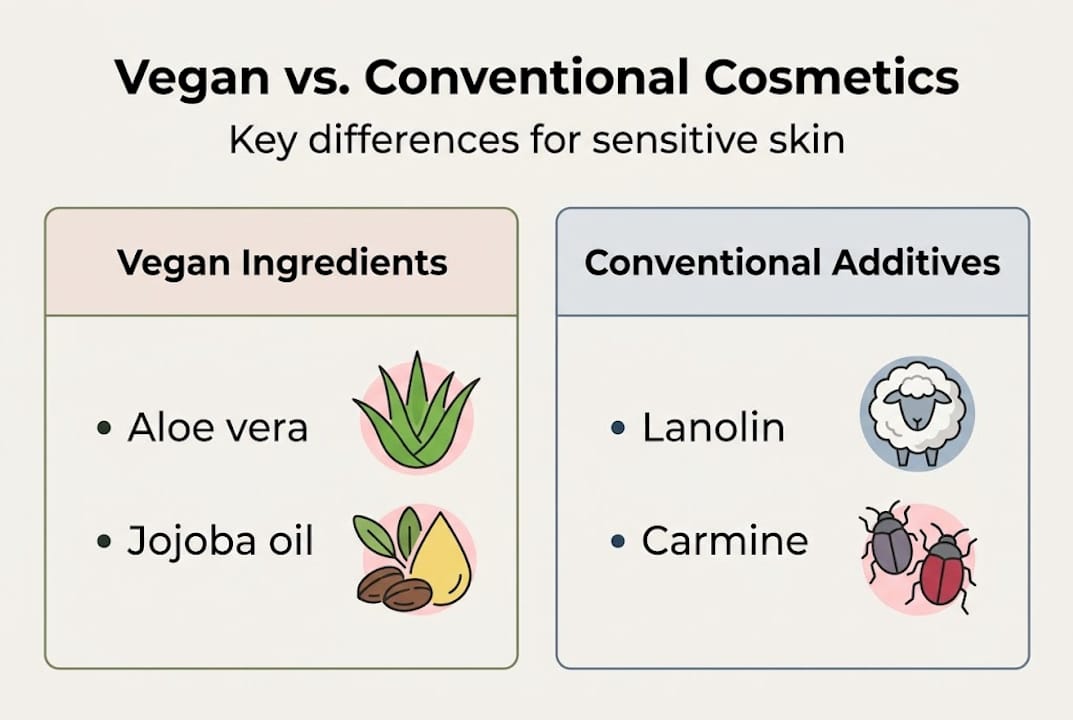
So what do vegan cosmetics actually contain? Ingredients like aloe vera, chamomile, calendula, jojoba oil, and shea butter appear regularly in plant-based formulas. These aren’t just trend ingredients. Vegan skincare for sensitive skin shows that plant-based ingredients provide antioxidants, anti-inflammatory effects, and support for the skin barrier function, all of which directly reduce irritation for eczema-prone skin. When your skin barrier is functioning well, it keeps moisture in and irritants out. That’s exactly what sensitive skin needs.
The distinction between vegan, natural, and conventional matters when you’re reading labels. Here’s a quick breakdown of common plant-based ingredients and what they do for your skin:
| Ingredient | Key property | Benefit for sensitive skin |
|---|---|---|
| Aloe vera | Anti-inflammatory, hydrating | Soothes redness and calms irritation |
| Calendula extract | Wound-healing, antimicrobial | Supports barrier repair in eczema |
| Chamomile | Antioxidant, anti-inflammatory | Reduces redness and skin reactivity |
| Jojoba oil | Mimics skin’s natural sebum | Moisturizes without clogging pores |
| Shea butter | Emollient, fatty acid-rich | Restores suppleness in dry, eczema-prone skin |
| Green tea extract | High in polyphenols | Protects against oxidative skin stress |
When you explore botanical ingredients for sensitive skin, you’ll notice how purposefully each one is chosen. These aren’t fillers. They’re functional ingredients with documented skin benefits.
As a sensitive-skin consumer, here’s what to look for and what to avoid:
- Look for: Aloe, calendula, oat extract, chamomile, hyaluronic acid (plant-derived), jojoba, rosehip seed oil
- Avoid: Synthetic fragrance (listed as “parfum”), alcohol denat., parabens, sodium lauryl sulfate, and surprisingly, some essential oils in high concentrations
- Check for: Certifications like PETA Vegan, Leaping Bunny, or EWG Verified
- Read the full list: Ingredients near the top of the list appear in the highest concentrations
Vegan cosmetics and sensitive skin: What the science says
Now that you know what vegan cosmetics contain, see how scientific research backs their safety and results for women with sensitive or eczema-prone skin.
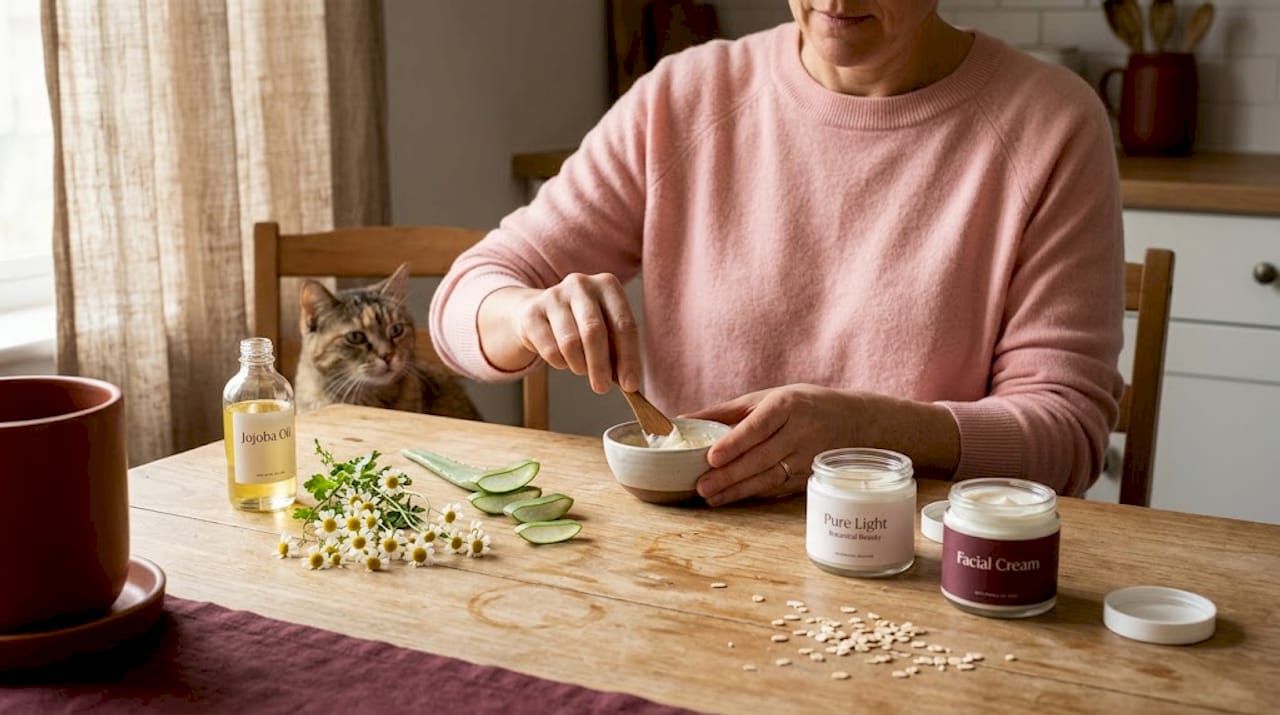
The science here is encouraging and genuinely specific. We’re not talking about vague claims. Actual clinical trials have measured what plant-based formulas do to eczema-affected skin, and the numbers are striking.
One standout finding: a natural plant-based emulsion reduced the Total Irritation Score (TIS) by 79.74% and the Eczema Area and Severity Index (EASI) by 30.87% in just 14 days. In the same body of research, kanuka oil at a 3% concentration outperformed 1% hydrocortisone cream using the Investigator’s Static Global Assessment (ISGA) scale, with statistical significance at p=0.0082. That’s not anecdotal. That’s a plant-based ingredient outperforming a pharmaceutical-grade steroid in a measured clinical setting.
Why does this matter for you? Because most women with eczema are told steroids are their main option. These results suggest plant actives can not only match but exceed steroid outcomes in mild to moderate cases, and they do so without the known side effects of long-term steroid use, including skin thinning and rebound flares.
Here’s a comparison of plant-based versus conventional topical approaches:
| Factor | Plant-based formula | Conventional steroid/treatment |
|---|---|---|
| Eczema severity reduction | Up to 79.74% (TIS) in 14 days | Effective short-term, lower long-term tolerance |
| Side effect risk | Very low with appropriate use | Skin thinning, rebound inflammation |
| Barrier support | Active (calendula, shea) | Often passive or absent |
| Allergen profile | Lower (fragrance-free, animal-free) | Often contains preservatives, lanolin |
| Suitable for daily use | Yes, most formulas | Limited with steroids |
Research published on plant actives also shows that calendula extract accelerated skin barrier recovery by measurably lowering transepidermal water loss (TEWL), a clinical marker of how well your skin is sealing in moisture. Lower TEWL means your skin is repairing itself. Higher TEWL, which is common in eczema-affected skin, means your barrier is compromised and letting in irritants.
“While no large-scale randomized controlled trials have directly compared vegan versus non-vegan cosmetics head-to-head, the evidence on specific plant actives is compelling: calendula, kanuka oil, and similar botanicals match or exceed steroid results in mild cases, with a significantly cleaner safety profile.”
This is important context. The science isn’t saying “vegan equals perfect.” It’s saying that specific plant ingredients have documented, measurable efficacy for sensitive and eczema-prone skin. That’s a meaningful distinction, and one worth holding on to when you’re sorting through marketing claims.
You can learn more about which botanical extracts for sensitive skin have the strongest evidence base, so you can make choices rooted in data, not just packaging.
How to choose vegan cosmetics safely (even with allergies)
While plant-based beauty offers many benefits, understanding how to choose and use these products is essential for truly sensitive or allergy-prone users.
Here’s an uncomfortable truth: plant-based doesn’t automatically mean hypoallergenic. Some of the most reactive ingredients in skincare are botanical. Lavender essential oil, tea tree oil, ylang-ylang, and certain nut-derived oils can all cause real allergic reactions, sometimes worse than their synthetic counterparts. Vegan skincare for sensitive skin confirms that high essential oil concentrations or allergens like nuts and legumes in plant-based products can irritate reactive skin, making patch testing non-negotiable.
This doesn’t mean you should avoid plant-based beauty. It means you should approach it with the same care you’d apply to any new skincare product.
Here’s a step-by-step approach to introducing new vegan cosmetics safely:
- Start with one product at a time. Don’t overhaul your entire routine overnight. Introduce one new item every one to two weeks so you can track reactions accurately.
- Patch test before full use. Apply a small amount to the inside of your wrist or behind your ear. Wait 24 to 48 hours. No reaction? Proceed. Redness, itching, or swelling? Skip it.
- Read the full ingredient list. If you know you react to certain nuts (like coconut or almond), scan for their oils. If fragrance triggers your skin, confirm the formula is truly fragrance-free, not just labeled “unscented.”
- Introduce to a non-eczema area first. If you’re trying a new foundation, test it on your jaw or neck, not directly on an inflamed or broken-skin area.
- Give it two to three weeks. Skin adapts. Some light purging or adjustment can happen in the first week. However, if irritation persists past week two, the product isn’t right for your skin.
- Consult a dermatologist if reactions are recurring. If you’re consistently reacting to plant-based products, a patch allergy test with a dermatologist can pinpoint exactly which botanical compounds you’re sensitized to.
When you’re ready to explore using botanical oils safely, the learning curve is manageable. You just need a system.
Pro Tip: When evaluating a brand, ask directly whether their products are formulated without common sensitizers like synthetic fragrance, high essential oil concentrations, and alcohol denat. Look for certifications such as EWG Verified, COSMOS Natural, or PETA Vegan. A transparent brand will readily share their full ingredient philosophy and won’t hide behind vague “natural” claims.
“Even the gentlest plant-based ingredient can become an irritant in high concentrations or for an already sensitized skin barrier. The formula matters as much as the ingredient list.”
This reminder is worth keeping close. It shifts the focus from single ingredients to the whole formula, which is where real skin compatibility lives.
Common myths and reality checks: Is vegan always better?
Even with all the advantages, the vegan cosmetics world is not without its nuances. Let’s separate publicity from facts.
The “vegan equals safe” equation is one of the most common misconceptions in the clean beauty space. It’s understandable. Vegan products avoid many conventional irritants, so it’s easy to assume they’re universally superior. But the reality is more layered than that.
Let’s look at some persistent myths alongside what the evidence actually says:
-
Myth: Vegan cosmetics are always more effective than conventional ones. Fact: Some vegan formulas perform as well as or better than conventional ones, especially for sensitive skin. But efficacy depends on formulation quality, not the vegan label alone.
-
Myth: If it’s plant-based, it can’t cause a reaction. Fact: Poison ivy is plant-based. Many common allergens come from botanical sources. Plant origin does not equal safe for all skin types.
-
Myth: Vegan makeup can fully replicate every traditional formula. Fact: Some challenges remain. Replicating animal-derived collagen in cosmetics is genuinely difficult, and some makeup brush enthusiasts still prefer natural hair brushes for certain application textures, though synthetic brushes are generally better for sensitive skin users to reduce bacterial buildup and irritation risk.
-
Myth: The more natural, the better. Fact: Some synthetic ingredients are safer and more stable than their natural counterparts, particularly in preservative systems that prevent bacterial growth in products.
-
Myth: Vegan certification guarantees skin safety. Fact: Vegan certification verifies ingredient sourcing, not skin compatibility. A product can be fully vegan and still contain fragrances or preservatives that trigger eczema.
The goal isn’t to choose vegan cosmetics because of a label. It’s to choose formulas with purposeful, well-sourced ingredients that your skin can actually tolerate and benefit from. That’s a subtler, more empowering approach.
Pro Tip: When a brand leans heavily on “vegan” or “natural” as their only selling point, look deeper. What specific ingredients do they use? What does their formulation philosophy look like? Great brands can tell you exactly why each ingredient is in their formula and what it does for your skin.
When you’re exploring natural makeup for sensitive skin, this discernment becomes one of your most valuable tools.
Why skin health, not just trends, should drive your choice
Here’s something the clean beauty conversation rarely says plainly: the word “vegan” has become a marketing shorthand, and that’s both its strength and its weakness. It signals values. It implies safety. But it doesn’t guarantee either.
What we know at Pure Light Botanical Beauty, through both formulation experience and the science we study, is that truly supporting sensitive or eczema-prone skin requires more than sourcing plant-based ingredients. It requires understanding why specific botanicals work, at what concentrations, in what delivery systems, and for which skin profiles.
Real empowerment in beauty isn’t about following a trend. It’s about pairing knowledge with personal experience. You learn what your skin responds to. You read the evidence. You make a choice grounded in both.
The benefits of plant-powered beauty for women with sensitive skin are real and documented. But those benefits only show up when the formula is thoughtfully designed, not just vegan by label. That’s the bar worth holding every product to, including ours. The movement toward plant-based beauty is meaningful. Just make sure you’re letting science and self-knowledge lead, not packaging.
Nourish your sensitive skin with a trusted vegan beauty routine
You’ve done the reading. You understand the difference between vegan and simply “natural.” You know how to patch test, what to look for on an ingredient list, and why some plant-based actives outperform steroids in clinical settings. Now it’s time to put that knowledge into a routine that actually feels good on your skin.
At Pure Light Botanical Beauty, every product is formulated with your skin’s health as the priority, not just color payoff or trend alignment. From the Petal Perfect Lip Oil to the Botanical Crème Blush, each formula is built around ingredients chosen for their documented skin benefits and their gentleness on reactive, eczema-prone skin. If you’re ready to treat your beauty routine as a true act of self-care, rooted in both science and soul, explore the full collection and find the ritual that feels like it was made for you.
Frequently asked questions
Are vegan cosmetics always safe for people with allergies?
No, some plant-based ingredients can still cause reactions; always patch test first to ensure safety before applying a new product to your full face or a sensitive area.
Do vegan cosmetics help reduce eczema symptoms?
Clinical studies show certain plant-based creams can significantly reduce eczema severity, in some cases outperforming traditional steroids, without the side effects associated with long-term steroid use.
What ingredients should I avoid in vegan cosmetics if I have sensitive skin?
Avoid products with high concentrations of essential oils, nut-based oils, or legume derivatives; these plant-based allergens can irritate reactive skin even in otherwise clean formulas.
Is vegan makeup less effective without animal-derived ingredients?
Some formulation challenges exist, particularly with replicating animal collagen, but many vegan options perform equally well or better, especially for sensitive skin users who benefit from synthetic brush fibers and cleaner ingredient profiles.
Recommended
- Top 5 Plant-Based Beauty Products for 68% Better Skin Barrier – Pure Light Botanical Beauty
- Plant-Powered Beauty Tips: Nourish Sensitive Skin Naturally – Pure Light Botanical Beauty
- Plant-based beauty tips for sensitive skin and growth – Pure Light Botanical Beauty
- Plant-Based Beauty: Transformative Benefits for Sensitive Skin – Pure Light Botanical Beauty