

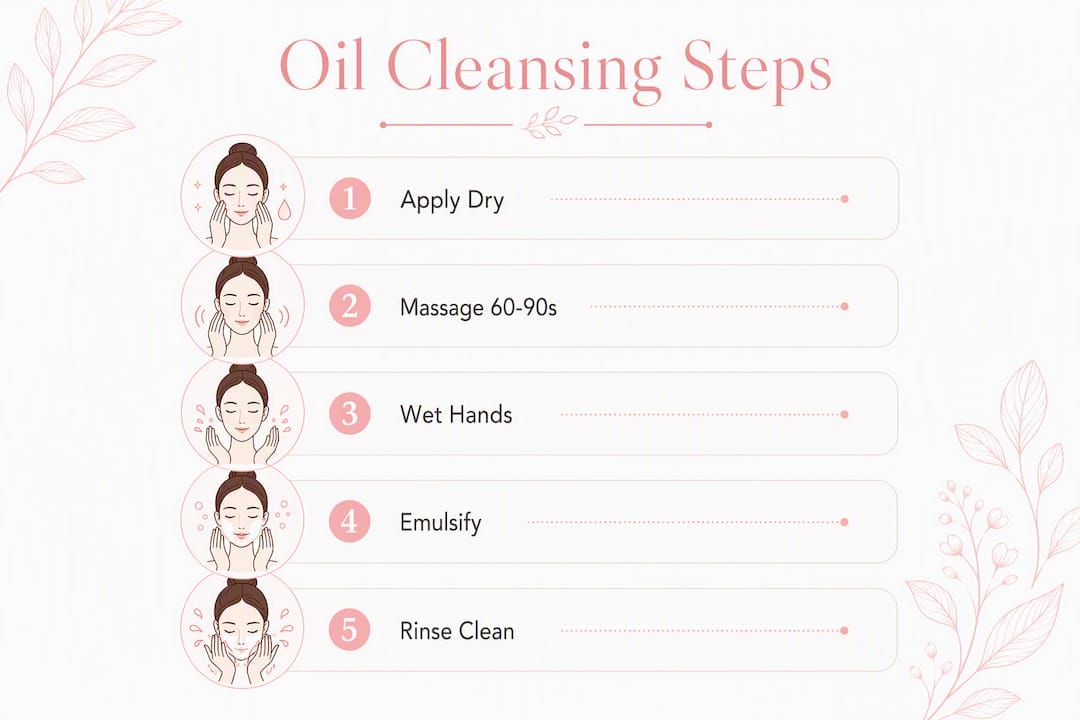
Apply Bobbi Brown Soothing Cleansing Oil to completely dry skin, massage for 60–90 seconds, then wet your hands and continue massaging until the oil turns milky white. Rinse thoroughly with lukewarm water. That is the complete method, backed by both the product’s own directions and dermatologist guidance on preserving your skin barrier.
Three things to hold onto before you begin: patch-test on your inner arm before the first full-face use, stop immediately if redness or stinging appears, and resist the urge to cleanse twice daily. Your barrier is worth protecting.
Table of Contents
- How to Use Bobbi Brown Soothing Cleansing Oil: Step by Step
- When should you double-cleanse vs. stop at one?
- How to adapt this routine for sensitive or eczema-prone skin
- What ingredients should you watch for on the label?
- Two ready-to-use routines for different makeup days
- How to fix the most common oil-cleansing problems
- Make your cleanse feel like a healing ritual
- Key Takeaways
- Oil cleansing as an act of self-care
How to Use Bobbi Brown Soothing Cleansing Oil: Step by Step
The method is simple, but the details matter. Oil cleansers work on the principle that oil dissolves oil, breaking down makeup, sunscreen, and sebum far more gently than foaming formulas. Getting each step right is what separates a clean, hydrated face from a greasy film.
- Start with dry hands and a dry face. Water deactivates the emulsification process before it can work. Pat your face dry if you have just washed your hands.
- Dispense the right amount. For a full face with light makeup, two to three pumps (or roughly a nickel-sized pool in your palm) is sufficient. Heavy waterproof makeup warrants a slightly more generous amount.
- Apply and begin massaging. Press the oil into your cheeks first, then work inward across your nose, up to your forehead, and down to your jaw. Use gentle, circular motions with the pads of your fingers, not your nails.
- Give it time. Massage for a full 60–90 seconds. This is where the cleansing oil benefits actually happen: the oil is dissolving pigment, SPF residue, and oxidized sebum. Rushing this step is the most common mistake.
- Emulsify. Wet your fingertips with a small amount of lukewarm water and continue massaging. Watch for the oil to shift from clear and glossy to an opaque, milky texture. That transformation signals the emulsifiers are activating and the formula is ready to rinse clean.
- Rinse thoroughly. Splash lukewarm water across your face several times until no slickness remains. Hot water can irritate; cold water does not rinse oil cleanly.
- Pat dry, then layer. Because the Bobbi Brown formula conditions and softens as it cleanses, you may find you need a lighter moisturizer than usual. Follow with a toner or serum if your routine calls for it, then seal with a moisturizer suited to your skin type.
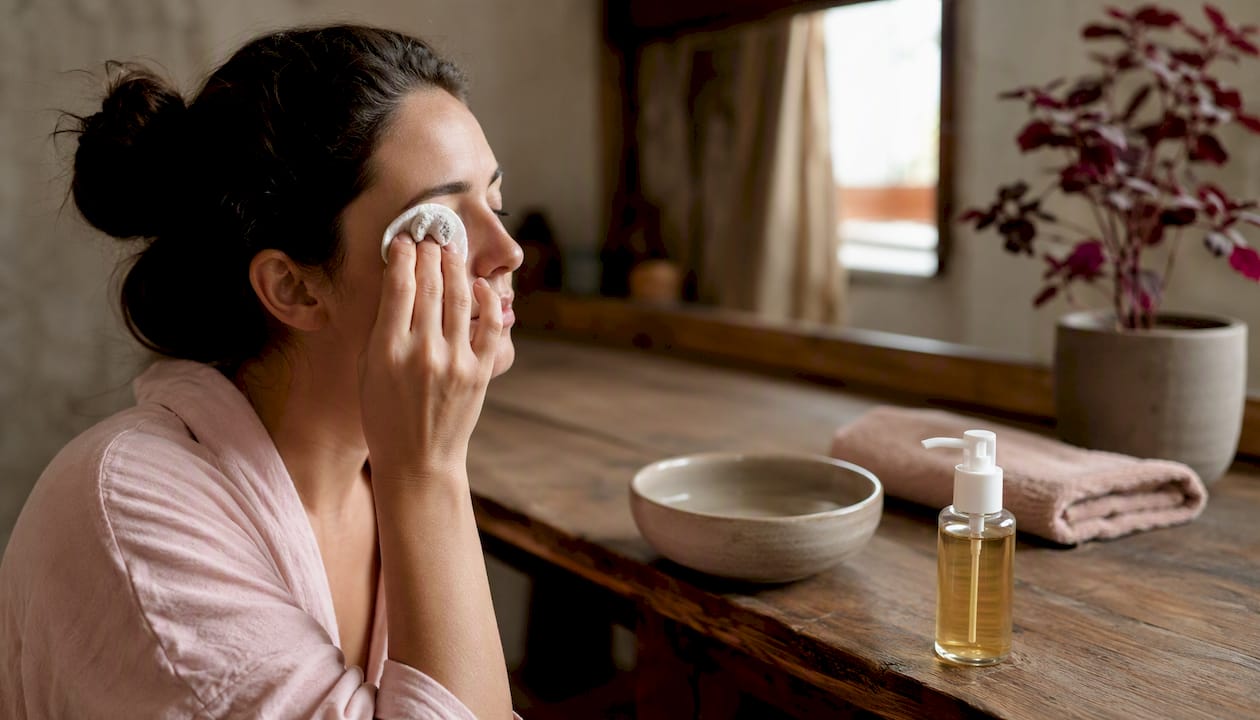
Pro Tip: For waterproof mascara or liner, soak a cotton pad with a few drops of the cleansing oil and hold it gently over your closed eyelid for 10–20 seconds. Then sweep downward once. This dissolves the pigment without any tugging, which protects the delicate skin around your eyes.
When should you double-cleanse vs. stop at one?
Not every evening calls for a second cleanser. Dermatologists are clear that double-cleansing is useful when residue remains, but doing it nightly when it is not needed can strip the barrier over time. Use this table to decide:
| Situation | Recommended approach | Rationale |
|---|---|---|
| Light makeup or no makeup | Single oil cleanse | Skin feels soft; no visible residue |
| Daytime SPF only | Single oil cleanse | Oil dissolves most mineral and chemical SPFs cleanly |
| Full-coverage foundation + SPF | Double-cleanse | Heavy pigment and sunscreen filters need a second pass |
| Waterproof mascara + liner | Double-cleanse | Wax-based formulas may leave trace residue |
| Bare skin, evening refresh | Single oil cleanse or skip | Barrier preservation takes priority |
The feel test is your most reliable guide. After rinsing, press a clean fingertip to your cheek. Soft and comfortable means you are done. Tight or slightly filmy means either your emulsification was incomplete or a second gentle water-based cleanser is warranted.
If you use retinoids or exfoliating acids, a thorough single oil cleanse followed by a gentle second cleanser helps those actives penetrate without interference from leftover SPF or makeup film.
How to adapt this routine for sensitive or eczema-prone skin
Sensitive skin deserves a slower, more deliberate introduction to any new product, including one as gentle as a cleansing oil. The steps below reflect a safety-first approach that botanical oil use for reactive skin types consistently supports.
- Patch-test first. Apply a small amount of the oil to your inner forearm. Wait 24–48 hours and watch for redness, itching, or swelling before using it on your face.
- Start with evenings only, two to three times per week. Let your skin tell you whether it tolerates the formula before committing to nightly use.
- Shorten the massage window. Begin with 30–45 seconds rather than a full 90. If your skin responds well after two weeks, gradually extend to the full duration.
- Avoid broken or actively inflamed skin. Never massage over open eczema patches, active breakouts, or compromised areas. Work around them.
- Use minimal pressure around the eyes. The periorbital skin is thinner and more reactive; let the oil do the work rather than your fingers.
One important note: if you have seborrheic dermatitis, consult a dermatologist before using oil-based cleansers. Certain yeasts that contribute to that condition can feed on oils, potentially worsening flares.
Pro Tip: If you use a topical active like a retinoid, apply your oil cleanse at least 20 minutes before layering the active. A clean, residue-free surface allows the treatment to absorb evenly without the oil acting as a barrier.
What ingredients should you watch for on the label?
Reading a cleansing oil label is a skill worth developing, especially for sensitive skin makeup users who prioritize healing formulations. Most cleansing oils are built on three categories: carrier oils (jojoba, squalane, sunflower seed oil), esters that give the formula slip, and emulsifiers that trigger the milky transformation when water is added. These are generally well-tolerated and support barrier health.
The categories to watch are fragrance (listed as “parfum”), high concentrations of citrus or mint essential oils, and astringent alcohols. These appear in many botanical formulas and can irritate reactive skin even when the base formula is gentle. A “noncomedogenic” claim on the label is a useful signal for acne-prone users, but it does not guarantee the formula is fragrance-free.
One honest caution: marketing language like “100% natural” or “pure botanical” does not automatically mean non-irritating. Poison ivy is botanical. Prioritize ingredient transparency and your own patch-test results over any claim on the front of the bottle.
Two ready-to-use routines for different makeup days
Light-makeup evening ritual
Oil cleanse with two to three pumps, massage 60–90 seconds, emulsify, rinse. Follow with a hydrating toner, a lightweight serum, and a ceramide-containing moisturizer. Because the Bobbi Brown formula conditions as it cleanses, a heavier cream is rarely needed. A few drops of a botanical face oil pressed over your moisturizer makes a calming finish.
Heavy-makeup or sunscreen-heavy day
Oil cleanse with a slightly more generous amount, full 90-second massage, emulsify well, rinse. Follow immediately with a gentle water-based cleanser to complete the double-cleanse. Then proceed with your treatment products: serum, eye cream, and moisturizer as usual. Skip the oil cleanse in the morning on these days; a splash of water or a gentle micellar rinse is enough.
A note on timing: oil cleansing belongs in the evening. Morning oil cleansing is only worth considering if your skin feels very dry and tight on waking, and even then, a single quick pass is sufficient.
How to fix the most common oil-cleansing problems
Residue or greasy film after rinsing:
- Re-wet your hands and massage again until the oil fully emulsifies to a milky texture.
- Rinse with more water and slightly warmer temperature (still not hot).
- Use a damp microfiber cloth to gently remove remaining film.
- If residue persists regularly, follow with a water-based cleanser.
Pilling when you layer serums or moisturizers:
Pilling usually means residual oil is sitting on the surface and interfering with the next product. Extend your emulsification time, rinse more thoroughly, and switch to a lighter follow-up moisturizer. Silicone-heavy serums applied over any oil residue are especially prone to balling up.
New breakouts or increased congestion:
Stop double-cleansing immediately and shorten your massage time. Try a less occlusive moisturizer afterward. If congestion continues after two weeks of adjustments, patch-test each product in your routine individually to identify the trigger.
Persistent irritation or worsening eczema:
Discontinue use and consult a dermatologist. Persistent redness, stinging, or spreading inflammation are signals that require professional evaluation, not more product adjustments.
Make your cleanse feel like a healing ritual
The cleanse itself can be the most restorative moment in your evening. Before you begin, place a warm damp towel over your face for 30 seconds to soften the skin and open the experience with intention. During the massage, breathe slowly and deliberately. That 60–90 seconds of focused, gentle touch is genuinely calming to the nervous system, not just the skin.
Store your cleansing oil away from direct sunlight and heat sources. Botanical formulas are sensitive to oxidation, and a bottle left near a sunny window or a hot radiator will degrade faster than one kept in a cool cabinet.
Pro Tip: After cleansing, reach for barrier-repair products rather than heavy creams: squalane oil, a ceramide moisturizer, or a simple hyaluronic acid serum. These support the skin’s recovery without overwhelming it. A clean beauty routine built around barrier repair tends to outperform one built around hydration volume.
Key Takeaways
Using Bobbi Brown Soothing Cleansing Oil correctly means applying it to dry skin, massaging fully, emulsifying with water until the formula turns milky, and rinsing clean — double-cleansing only when makeup load or residue genuinely demands it.
| Point | Details |
|---|---|
| Apply to dry skin always | Water before emulsification deactivates the formula and prevents a clean rinse. |
| Emulsify completely | Massage until the oil turns milky white; skipping this step leaves a greasy film. |
| Double-cleanse selectively | Use a second water-based cleanser only for heavy makeup or sunscreen days. |
| Patch-test for sensitive skin | Test on your inner arm for 24–48 hours before full-face use. |
| Watch for fragrance on the label | “Parfum” and high-concentration essential oils are the most common sensitizers in botanical formulas. |
Oil cleansing as an act of self-care
There is something quietly powerful about choosing to cleanse gently. So much of conventional skincare is built on the idea that skin needs to be corrected or controlled, stripped back and rebuilt. Oil cleansing asks something different of you: slow down, trust the process, and let a thoughtfully formulated product do its work without force.
What I find most meaningful about this method is that it rewards presence. The 60–90 seconds of massage are not a chore to rush through. They are an opportunity to reconnect with your skin, to notice how it feels, and to respond with care rather than habit. That is the spirit behind everything Purelightbotanicalbeauty creates: beauty as a practice of healing, not performance.
If you are building a routine around sensitive or eczema-prone skin, the oil cleanse is one of the gentlest foundations you can start with. Pair it with clean, plant-based formulas that respect your barrier, and give your skin the time it needs to respond. You can explore botanical skincare for sensitive skin through Purelightbotanicalbeauty’s full range of resources and products designed with exactly that intention.
Recommended
- How to Use Face Oils for Sensitive Skin Naturally – Pure Light Botanical Beauty
- Sensitive skin makeup: calm, clean steps for radiant results – Pure Light Botanical Beauty
- How to Use Botanical Oils for Sensitive Skin Relief – Pure Light Botanical Beauty
- Step by Step Mindful Makeup for Sensitive Skin Glow – Pure Light Botanical Beauty