

Beauty care is often treated as a private matter, something you figure out alone in your bathroom, trial by error, one irritated flare-up at a time. But for women with sensitive skin, that isolation can make the journey harder, lonelier, and far less effective than it needs to be. What if the missing ingredient in your skincare ritual wasn’t a new serum, but a circle of women who truly understand your skin? Community has quietly become one of the most powerful forces in holistic beauty and emotional wellness, and the evidence behind it is both surprising and deeply encouraging.
Table of Contents
- Why community matters in beauty
- The science behind shared rituals and wellness
- Beauty salons and community support: More than a service
- Community storytelling: Healing, resilience, and identity
- Why community-driven beauty is the future of sensitive skin care
- Continue your community-inspired beauty journey
- Frequently asked questions
Key Takeaways
| Point | Details |
|---|---|
| Community builds trust | Women with sensitive skin find emotional and practical support through sharing in beauty-focused groups. |
| Shared rituals enhance wellness | Group beauty routines improve skin outcomes and foster mental well-being for sensitive individuals. |
| Storytelling supports healing | Open sharing of personal beauty journeys fosters identity recovery and emotional resilience. |
| Salons offer holistic care | Beauty salons act as hubs for social connection and health guidance, especially for sensitive skin care. |
Why community matters in beauty
Sensitive skin doesn’t follow a neat, predictable script. What soothes one person can trigger another. That unpredictability makes trusted community knowledge genuinely invaluable. When you’re surrounded by women who’ve navigated the same frustrations, you gain something no product label can offer: lived wisdom.
The psychological benefits run just as deep as the practical ones. Feeling seen and understood by others who share your experience reduces the isolation that often comes with managing reactive or eczema-prone skin. Over time, that sense of belonging builds real confidence. You stop second-guessing every product and start approaching your beauty rituals for sensitive skin with more calm and intention.
Practically speaking, communities also function as living ingredient libraries. Members share which botanicals calm redness, which fragrances to avoid, and which formulas feel like a second skin rather than a burden. That kind of collective intelligence shortens the learning curve dramatically.
Skincare brands recognize this too. Brands build communities through forums, social media, events, and educational content to create trust, emotional support, and lasting loyalty. It’s not just marketing strategy. It reflects a genuine human need to share, learn, and grow together.
Here’s what community consistently offers women with sensitive skin:
- Emotional validation: Knowing others share your experience reduces anxiety around flare-ups and product decisions.
- Curated product knowledge: Real reviews from people with similar skin types carry more weight than generic claims.
- Routine accountability: Shared rituals encourage consistency, which is essential for sensitive skin healing.
- Early warning systems: Community members often flag new irritants or problematic ingredients before they become widespread issues.
- Confidence building: Encouragement from peers reinforces self-worth beyond what any mirror can reflect.
“Healing skin is not just about what you put on it. It’s about who holds space for you while you figure it out.”
Exploring holistic sensitive skin care through a community lens shifts the entire experience from reactive to restorative.
The science behind shared rituals and wellness
There’s real science behind why doing things together feels better and works better. When women engage in beauty rituals as a group, whether in person or through an online community, the habit tends to stick. Accountability, encouragement, and shared enthusiasm all reinforce consistent practice, and consistency is exactly what sensitive skin needs to heal and thrive.
Community settings also create natural safety nets. When someone in your circle mentions that a popular ingredient caused a reaction, you’re far less likely to try it blindly. Female friendships and shared beauty rituals enhance habit adherence, reduce irritation risks for sensitive skin, and promote mental wellness. That’s not a small thing. That’s the difference between a painful setback and a protected routine.
The emotional dimension is equally significant. Research into cosmetic therapy shows measurable improvements in mood, motivation, comfort, and overall satisfaction when beauty rituals are practiced in a supportive group context. These aren’t just feel-good results. They reflect genuine shifts in emotional regulation and self-perception.
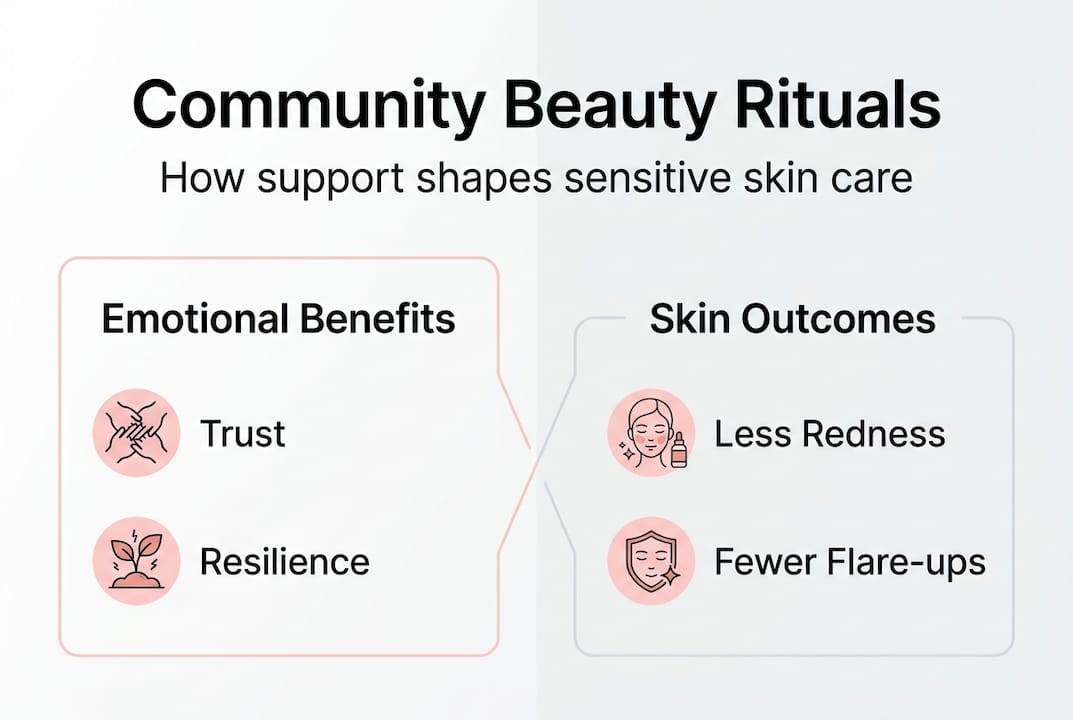
Exploring wellness in shared beauty rituals reveals how these benefits compound over time, creating a positive feedback loop between skin health and emotional well-being.
| Ritual type | Solo practice | Community practice |
|---|---|---|
| Habit consistency | Moderate | High |
| Irritant awareness | Limited | Expanded through shared experience |
| Emotional uplift | Mild | Significantly stronger |
| Product confidence | Trial and error | Guided by trusted peers |
| Long-term skin outcomes | Variable | More stable and sustained |
Pro Tip: Try incorporating a weekly check-in with a small group of women who share your skin type. Even a 15-minute virtual conversation about what’s working can dramatically improve your routine and your mood.
The link between wellness in shared beauty rituals and emotional healing is not coincidental. It’s biological, psychological, and deeply human.
Beauty salons and community support: More than a service
A good salon appointment is never just about the treatment. It’s about the conversation, the trust, the feeling of being cared for by someone who notices what your skin is telling them. For women with sensitive skin, that relational layer can be genuinely therapeutic.
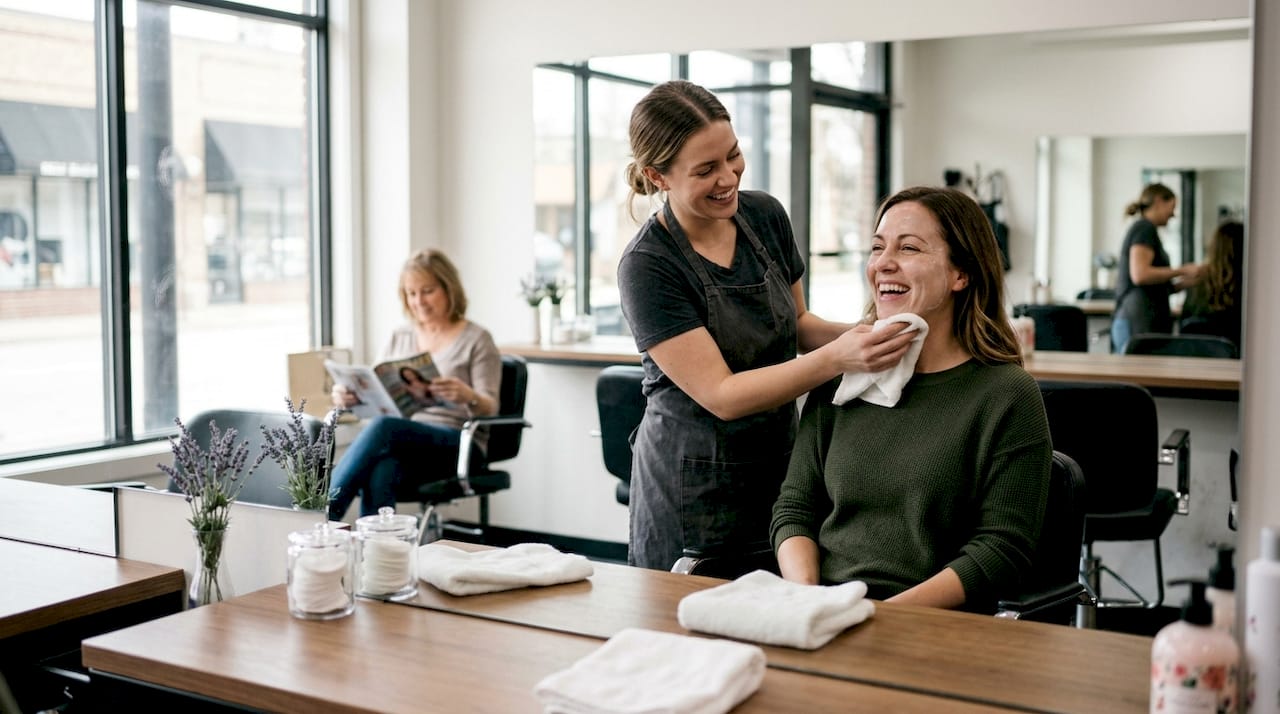
Beauty salons act as community hubs for health promotion, emotional support, and skin condition referrals, fostering social connectivity and well-being. This reframes the salon not as a luxury space but as a legitimate part of your wellness ecosystem.
Think about what happens in a good salon relationship over time. Your esthetician learns your triggers. They remember that you react to certain preservatives, that stress shows up on your cheeks first, and that your skin needs extra gentleness in winter. That continuity of care is something a single product purchase can never replicate.
Here’s how community-centered salon experiences support sensitive skin care:
- Open conversations about triggers: A trusted esthetician creates space to discuss what’s aggravating your skin, from diet to stress to product ingredients.
- Informed product choices: Professionals in community-focused spaces guide you toward clean beauty guidance that genuinely suits your skin.
- Referral networks: Salons often collaborate with dermatologists, nutritionists, and wellness practitioners to offer more complete care.
- Emotional resilience: Regular visits build social bonds that provide comfort and confidence, especially during difficult skin periods.
- Routine reinforcement: Professional check-ins keep your sensitive skin salon routines on track and evolving with your skin’s needs.
The numbers reflect this reality. Studies show that women who receive consistent, community-informed beauty care report higher satisfaction with their skin health and greater emotional resilience compared to those who manage their routines entirely alone.
Salons that embrace this community-hub model aren’t just offering better services. They’re offering a fundamentally different relationship with beauty, one rooted in care, continuity, and genuine human connection.
Community storytelling: Healing, resilience, and identity
Stories are how we make sense of difficult experiences. For women who’ve navigated skin conditions, trauma, or periods of low self-worth, sharing those stories within a trusted community can be profoundly healing. It’s not just cathartic. It’s identity-building.
Community sharing of experiences shapes beauty choices, aiding emotional healing from trauma via rituals that reclaim identity and build support. When you hear someone describe the exact shame spiral you’ve lived through, and then watch them emerge with confidence and a gentle routine that works, something shifts inside you. You begin to believe that shift is possible for you too.
The contrast between healing alone and healing within community is striking:
| Approach | Emotional experience | Skin outcomes | Identity impact |
|---|---|---|---|
| Solo healing | Isolating, slow, prone to self-doubt | Inconsistent | Fragile self-image |
| Community healing | Supported, encouraged, validated | More consistent | Stronger, reclaimed identity |
Beauty rituals become anchors in this process. Choosing a botanical lip oil, applying a nourishing blush, or simply taking five minutes to care for your skin can feel like a declaration: I am worth tending to. When shared with others, that declaration becomes a chorus.
Here’s what community storytelling does for women on a healing journey:
- Normalizes struggle: Hearing others’ experiences reduces shame and self-blame around skin conditions.
- Provides a roadmap: Real stories offer practical paths forward, not just inspiration.
- Strengthens identity: Reclaiming beauty choices after trauma or illness is a powerful act of self-authorship.
- Builds lasting bonds: Shared vulnerability creates deep, lasting connections that support ongoing wellness.
Exploring reclaiming beauty identity and understanding beauty for emotional healing can help you see your own story as part of something much larger and much more beautiful than you might have imagined.
Why community-driven beauty is the future of sensitive skin care
Here’s the perspective that most beauty marketing still misses: sensitive skin care is not a solo optimization project. The idea that the right routine, discovered independently, will finally fix everything is a story that keeps women stuck in cycles of frustration and self-blame.
What we’ve seen, again and again, is that the most lasting transformations happen in relationship. Not because the products change, but because the context changes. When you feel emotionally safe, when your choices are informed by real community wisdom, and when your healing is witnessed by others who care, your skin responds differently. Stress decreases. Inflammation follows.
The conventional beauty industry is slowly catching up to what women with sensitive skin have always known intuitively: healing is relational. Routines become rituals when they’re shared. Products become meaningful when they’re chosen with intention and community support.
Investing in beauty for inner growth isn’t a soft, optional add-on. It’s the foundation. The future of sensitive skin care isn’t a better serum. It’s a better circle.
Continue your community-inspired beauty journey
You don’t have to figure this out alone. At Pure Light Botanical Beauty, we’ve built more than a product line. We’ve created a space where women with sensitive skin can find clean, botanical formulas alongside the stories, guidance, and community wisdom that make real healing possible.
Whether you’re just beginning to explore gentle, nourishing beauty or you’re ready to deepen a ritual that already feels right, our resources are here for you. Discover sensitive skin routines crafted with community insight and botanical integrity. Every product, every story, and every conversation we share is rooted in one belief: that beauty and healing come from the same source, and that source is always stronger together.
Frequently asked questions
How does joining a beauty community benefit women with sensitive skin?
Being part of a beauty community provides emotional support, product recommendations, and trusted routines that help reduce irritation and boost confidence. Brands build communities through forums, events, and educational content specifically to meet these emotional and practical needs.
Are there specific beauty rituals proven to improve emotional well-being?
Yes. Shared skincare routines and cosmetic therapy have been shown to significantly uplift mood, boost motivation, and create comfort, especially when practiced in a supportive group setting.
Do beauty salons really offer more than skin treatments?
Absolutely. Salons function as community hubs that provide social support, health information, and referrals for sensitive skin care, going well beyond the treatment table.
How do shared experiences help with healing after trauma or setback?
Sharing stories in a supportive group setting promotes emotional recovery and resilience. Community sharing shapes beauty choices and aids healing from trauma by helping women reclaim identity through meaningful rituals.
Recommended
- Transformational Beauty Habits for Sensitive Skin – Pure Light Botanical Beauty
- Why Beauty Rituals Matter for Sensitive Skin Wellness – Pure Light Botanical Beauty
- 7 Holistic Beauty Routines for Sensitive Skin Wellness – Pure Light Botanical Beauty
- Why beauty rituals matter for mental health in sensitive skin – Pure Light Botanical Beauty