

Sensitive skin can turn even simple routines into daily challenges, especially in cities where pollution and stress often trigger flare-ups like eczema. For women who want wellness without compromising on values, eco-conscious beauty stands out by marrying gentle care with environmental responsibility. This article sorts truth from myth, spotlights ethical practices, and helps you discover how sustainable choices support both your confidence and your skin’s delicate needs.
Table of Contents
- Eco-Conscious Beauty Explained And Common Myths
- Types Of Eco-Conscious Practices In Cosmetics
- How Eco-Friendly Beauty Nurtures Sensitive Skin
- Ingredient Transparency And Ethical Sourcing
- Risks, Limitations, And Greenwashing In Beauty
- Comparing Eco-Beauty To Conventional Products
Key Takeaways
| Point | Details |
|---|---|
| Eco-Conscious Beauty Emphasis | Eco-conscious beauty prioritizes sustainable ingredient sourcing and ethical manufacturing to support personal wellness and environmental sustainability. |
| Ingredient Transparency | Consumers should seek brands that provide detailed ingredient lists and third-party certifications to ensure genuine commitment to sustainability. |
| Addressing Common Myths | Natural does not always equate to safer or more effective; both natural and synthetic ingredients require rigorous testing for safety. |
| Understanding Greenwashing | Consumers must remain vigilant against greenwashing tactics and seek verifiable proof of brands’ sustainability claims to make informed purchasing decisions. |
Eco-conscious beauty explained and common myths
The beauty landscape is transforming, with eco-conscious beauty emerging as a powerful movement that goes beyond surface-level aesthetics. This approach recognizes that our skincare choices impact both personal wellness and global environmental sustainability. Modern consumers increasingly seek products that align with ethical standards, prioritizing ingredients that are kind to skin and gentle on our planet.
Eco-conscious beauty represents a holistic philosophy where product development considers multiple dimensions: ingredient sourcing, environmental impact, manufacturing processes, and overall ecological footprint. Unlike traditional cosmetic approaches, this strategy emphasizes clean beauty standards that eliminate harmful synthetic chemicals while promoting transparency and responsible production. Key characteristics include:
- Sustainable ingredient sourcing
- Ethical manufacturing practices
- Minimal environmental waste
- Transparency in ingredient selection
- Commitment to biodiversity preservation
Common myths about eco-conscious beauty often stem from misunderstandings about natural ingredients and product effectiveness. Contrary to popular belief, natural does not automatically mean safer or more effective. Scientific research indicates that both synthetic and natural ingredients require careful formulation and rigorous testing. The goal is not to completely eliminate synthetic components but to create intelligent, balanced formulations that prioritize skin health and environmental responsibility.
Pro tip: When exploring eco-conscious beauty products, research ingredient lists and look for certifications from recognized environmental and safety organizations to ensure genuine commitment to sustainable practices.
Types of eco-conscious practices in cosmetics
The cosmetics industry is undergoing a profound transformation, with eco-conscious practices becoming increasingly sophisticated and comprehensive. Sustainable beauty approaches now extend far beyond simple ingredient selection, encompassing entire product lifecycles and environmental impact considerations. Brands are reimagining every aspect of cosmetic development to create more responsible and environmentally friendly solutions.
Key eco-conscious practices in the cosmetics industry include:
-
Green Chemistry Techniques
- Developing non-toxic, biodegradable formulations
- Reducing harmful chemical processing
- Minimizing synthetic petrochemical ingredients
-
Sustainable Ingredient Sourcing
- Ethical wild harvesting
- Supporting local agricultural communities
- Protecting biodiversity during ingredient collection
-
Responsible Manufacturing
- Reducing carbon footprint
- Implementing energy-efficient production
- Minimizing water consumption
Packaging represents another critical dimension of eco-conscious cosmetics. Innovative brands are transitioning from traditional plastic containers to recyclable, biodegradable, or refillable packaging solutions. This approach dramatically reduces waste and demonstrates a commitment to comprehensive environmental responsibility. By integrating circular economy principles, cosmetic companies can significantly minimize their ecological impact.

Pro tip: When evaluating eco-conscious cosmetic brands, look beyond marketing claims and examine their comprehensive sustainability reports and third-party certifications.
How eco-friendly beauty nurtures sensitive skin
Sensitive skin requires a nuanced and gentle approach to care, and eco-friendly beauty offers a revolutionary solution for those struggling with skin irritation and reactivity. Eco-friendly beauty swaps provide a holistic strategy that goes beyond traditional skincare, focusing on ingredients that heal and protect rather than potentially harm delicate skin systems. By prioritizing natural, non-toxic formulations, these products create a protective barrier that supports skin’s intrinsic healing mechanisms.
The core principles of nurturing sensitive skin through eco-friendly beauty involve several critical strategies:
-
Ingredient Purity
- Eliminating harsh synthetic chemicals
- Avoiding known skin irritants
- Selecting hypoallergenic botanical extracts
-
Microbiome Support
- Maintaining natural skin pH balance
- Promoting healthy bacterial ecosystems
- Reducing inflammatory responses
-
Barrier Restoration
- Strengthening skin’s protective layer
- Reducing moisture loss
- Calming reactive skin responses
Scientific research demonstrates that eco-friendly beauty products specifically designed for sensitive skin offer remarkable benefits. These formulations carefully select ingredients that minimize potential allergic reactions while providing essential nutrients. By avoiding common irritants like parabens, sulfates, and synthetic fragrances, these products create a gentle environment that allows sensitive skin to heal and regenerate naturally. The emphasis on transparency allows consumers to understand exactly what they’re applying to their skin, empowering them to make informed choices about their skincare routine.
Pro tip: Always perform a patch test with new eco-friendly skincare products and introduce them gradually to allow your sensitive skin to adapt.
Ingredient transparency and ethical sourcing
In the evolving landscape of eco-conscious beauty, ingredient transparency has become more than a marketing trend—it’s a fundamental commitment to consumer trust and environmental responsibility. Transparency in beauty represents a profound shift from opaque manufacturing practices to a clear, comprehensive understanding of product origins, ingredients, and environmental impact. This approach empowers consumers to make informed choices that align with their personal health and ecological values.
Key components of ingredient transparency and ethical sourcing include:
-
Sourcing Practices
- Traceable ingredient origins
- Sustainable harvesting methods
- Supporting local farming communities
-
Supply Chain Ethics
- Fair compensation for workers
- Minimizing environmental disruption
- Preventing exploitation
-
Certification Standards
- Third-party verification
- Rigorous quality assessments
- Documented sustainability metrics
Greenwashing continues to plague the beauty industry, making genuine transparency more critical than ever. Ethical brands go beyond superficial claims, providing detailed documentation about their ingredient sources, manufacturing processes, and environmental commitments. This level of openness requires comprehensive supply chain audits, direct relationships with ingredient producers, and a commitment to continuous improvement in sustainability practices. By prioritizing transparency, brands build trust and demonstrate a genuine commitment to both consumer wellness and planetary health.
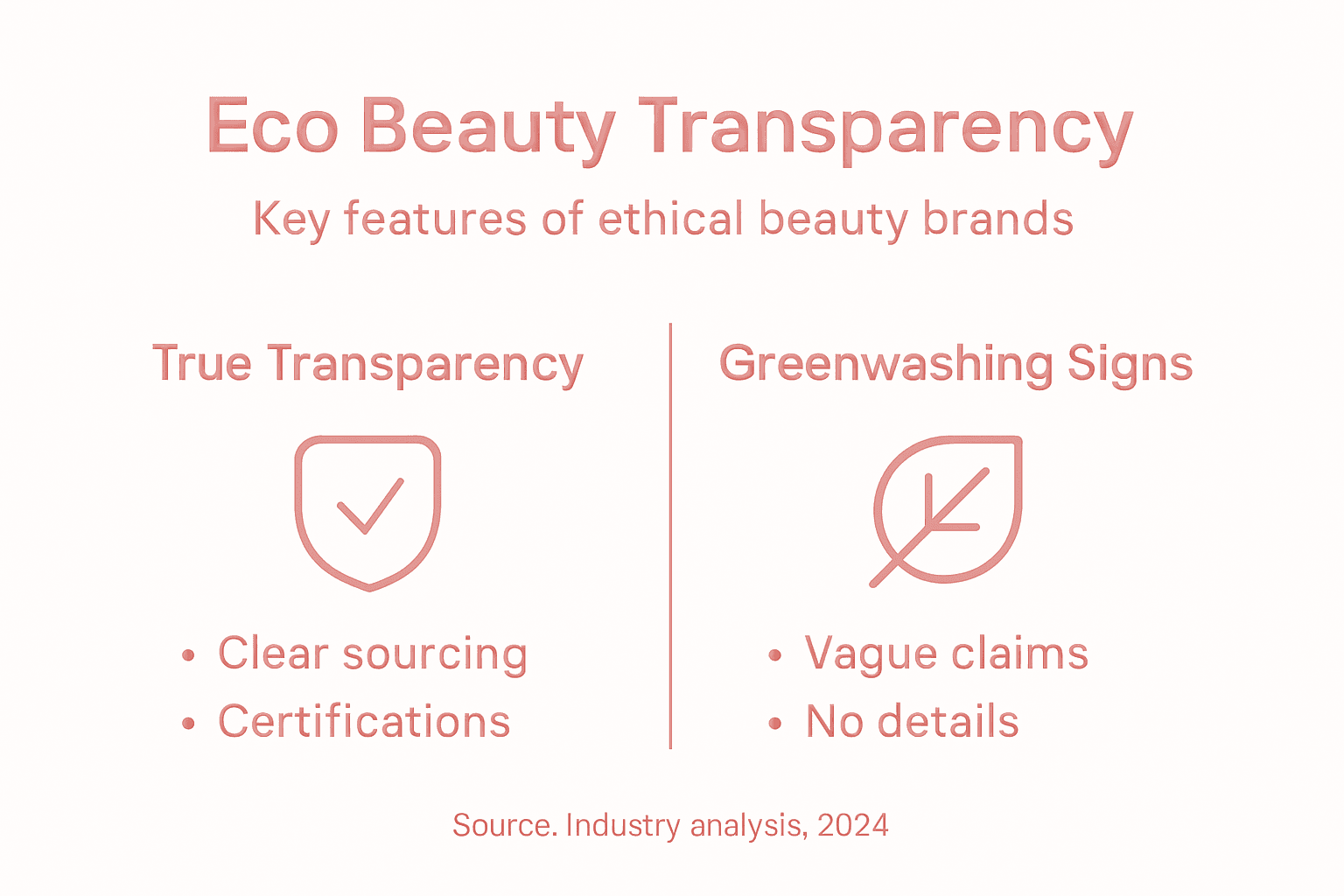
Here is a summary comparing transparent and non-transparent beauty brands:
| Aspect | Transparent Brands | Non-Transparent Brands |
|---|---|---|
| Ingredient Disclosure | Full, traceable lists | Limited or vague lists |
| Sourcing Details | Provide detailed origins | Rarely share sourcing info |
| Certifications | Obtain 3rd-party validation | Rely on self-made claims |
| Consumer Trust | Build strong loyalty | Experience skepticism |
Pro tip: Request detailed ingredient origin information from beauty brands and look for comprehensive certification labels that validate their sustainability claims.
Risks, limitations, and greenwashing in beauty
Greenwashing represents a critical challenge in the contemporary beauty landscape, where marketing often obscures genuine environmental commitments. Clean beauty certification has become increasingly vital as consumers seek to navigate complex claims about product sustainability and ethical production. The beauty industry’s rapid transformation has created a fertile ground for misleading marketing tactics that capitalize on environmental consciousness without substantive change.
Key risks and limitations in eco-conscious beauty include:
-
Marketing Deception
- Vague environmental claims
- Misleading sustainability language
- Selective data presentation
-
Consumer Vulnerability
- Limited scientific understanding
- Emotional manipulation
- Complexity of verification
-
Regulatory Challenges
- Weak enforcement mechanisms
- Inconsistent international standards
- Gaps in legal definitions
The consequences of greenwashing extend beyond mere consumer disappointment. Such practices undermine genuine sustainability efforts, erode consumer trust, and create significant barriers for brands truly committed to environmental responsibility. Companies employing deceptive marketing strategies not only risk potential legal repercussions but also damage their long-term reputation in an increasingly conscientious market. Consumers are becoming more sophisticated, demanding comprehensive proof of environmental claims and holding brands accountable for their stated commitments.
This table highlights the main types of greenwashing tactics and ways consumers can identify them:
| Greenwashing Tactic | Example Claim | How to Spot It |
|---|---|---|
| Vague Buzzwords | “Eco-friendly packaging” | Lacks clear explanation |
| Selective Data Sharing | “Made from natural extracts” | No info on full ingredients |
| Visual Green Messaging | Earthy colors, leaf logos | No genuine third-party proof |
| Outdated Certifications | Old or expired labels | Verify current certification |
Pro tip: Develop a personal checklist of credible sustainability indicators, including third-party certifications, detailed ingredient transparency, and verifiable environmental impact reports.
Comparing eco-beauty to conventional products
The landscape of beauty products is experiencing a transformative shift, with eco-beauty challenging long-established conventional cosmetic paradigms. Advantages of clean cosmetics reveal a profound difference in philosophical approach, ingredient selection, and environmental impact. While traditional products have dominated the market for decades, eco-beauty represents a holistic approach that considers not just aesthetic outcomes, but broader implications for personal and planetary health.
Key differences between eco-beauty and conventional products include:
-
Ingredient Composition
- Eco-beauty: Natural, biodegradable ingredients
- Conventional: Synthetic, petrochemical-based components
- Eco-beauty: Minimal processing
- Conventional: Complex chemical manipulations
-
Environmental Impact
- Eco-beauty: Sustainable sourcing
- Conventional: High carbon footprint
- Eco-beauty: Biodegradable packaging
- Conventional: Plastic-heavy packaging
-
Health Considerations
- Eco-beauty: Avoids known irritants
- Conventional: May contain controversial chemicals
- Eco-beauty: Transparency in formulation
- Conventional: Limited ingredient disclosure
Performance comparisons reveal nuanced trade-offs. Eco-beauty products have historically struggled to match the sensory experience and long-term stability of conventional cosmetics. However, recent technological advances in green chemistry have dramatically improved product efficacy, shelf life, and consumer experience. Modern eco-beauty formulations now compete directly with traditional products, offering comparable performance while maintaining superior ethical and environmental standards.
Pro tip: When transitioning to eco-beauty, introduce products gradually and pay attention to how your skin responds to more natural ingredient compositions.
Embrace Eco-Conscious Beauty That Truly Nurtures Your Skin and the Planet
The journey toward eco-conscious beauty is about more than choosing products that look good. It is about finding skincare solutions that heal sensitive skin, honor ingredient transparency, and protect the environment at every step. If you have ever struggled with skin irritation or felt lost in greenwashing claims, Pure Light Botanical Beauty offers a clear path forward. Our thoughtfully crafted formulations blend clean, plant-based ingredients with scientific care to create gentle, effective products that support skin health while minimizing environmental impact.
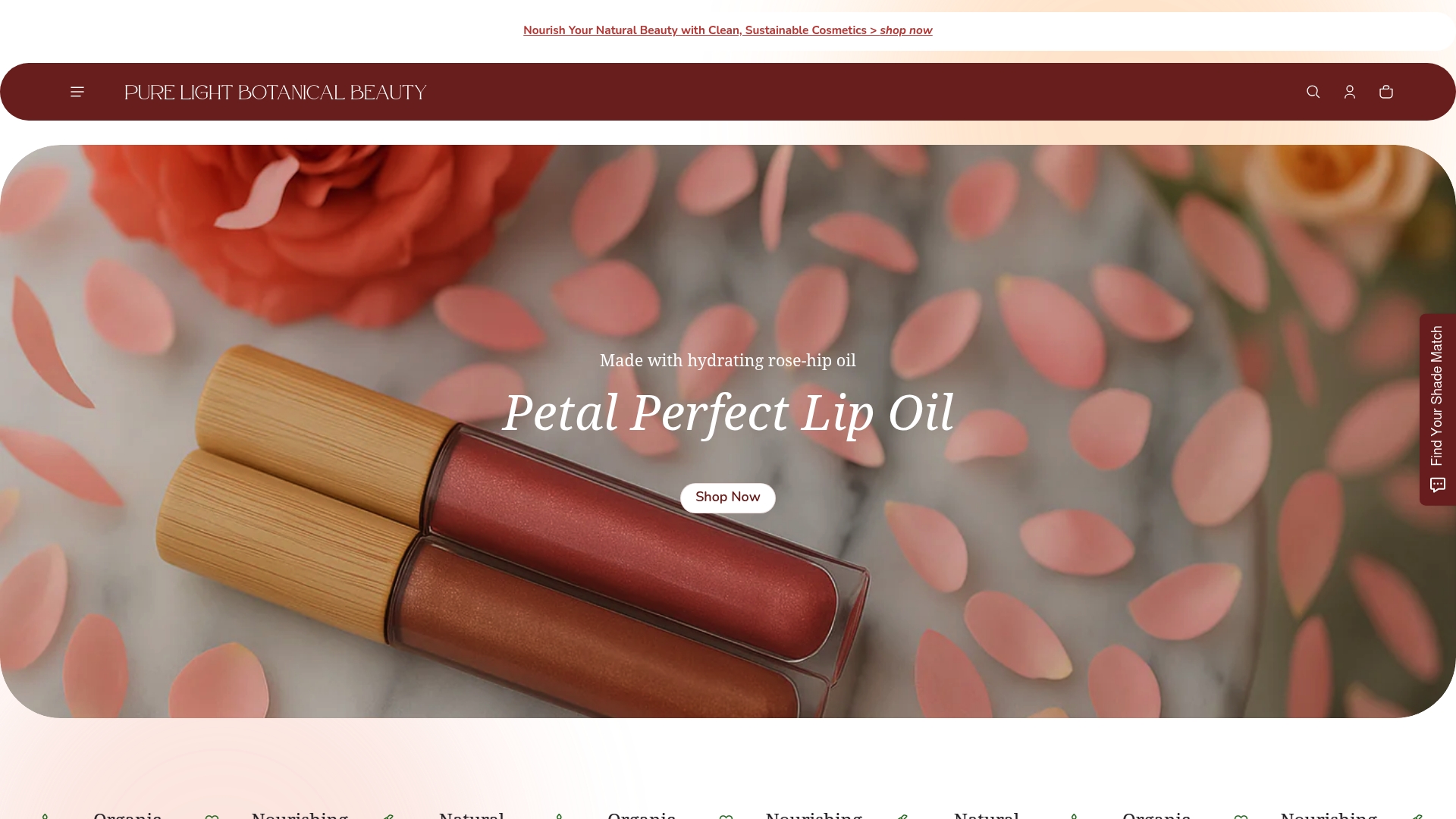
Experience the difference with products designed to nourish and restore your skin naturally. Visit Pure Light Botanical Beauty to explore how our line, including favorites like Petal Perfect Lip Oil and Botanical Crème Blush, embraces the principles of ingredient transparency and ethical sourcing and aligns with the growing demand for authentic, eco-conscious beauty. Start your ritual of self-care today by choosing beauty that feels as pure and powerful as nature itself.
Frequently Asked Questions
What is eco-conscious beauty?
Eco-conscious beauty is a holistic approach to skincare that prioritizes ethical standards, sustainable ingredient sourcing, and minimal environmental impact while promoting transparency and responsible production.
How can eco-friendly beauty products benefit sensitive skin?
Eco-friendly beauty products often feature non-toxic, gentle formulations that avoid harsh synthetic chemicals and irritants, thereby supporting sensitive skin’s natural healing processes and maintaining its pH balance.
What should I look for when evaluating eco-conscious beauty brands?
When evaluating eco-conscious beauty brands, look for transparency in ingredient sourcing, third-party certifications, sustainable packaging options, and detailed information about their manufacturing practices.
How can I identify greenwashing in beauty products?
To identify greenwashing, be wary of vague buzzwords, selective data sharing, and outdated certifications. Always seek clear explanations of environmental claims and verify them through credible sources.
Recommended
- Why Support Sustainable Beauty: Nurturing Skin and Planet – Pure Light Botanical Beauty
- Benefits of Conscious Cosmetics: Complete Guide – Pure Light Botanical Beauty
- What Is Mindful Beauty and Why It Matters – Pure Light Botanical Beauty
- What Is Green Chemistry in Beauty—Why It Matters – Pure Light Botanical Beauty
- Unlock Natural Glow with MyProtein MyVitamins Today – MyGymSupplements
- 7 Key Eco-Friendly Safari Benefits for Travelers - Namibia Luxury Safaris | Book Your 2025/2026 Adventure Today