

The short answer: warm a small amount of coconut oil between your palms, press it onto slightly damp skin, and use only a thin layer. Patch test first, and rinse or double cleanse if you use it to melt away makeup. Coconut oil can soothe very dry, flaky skin, but it can also clog pores, so how you use it matters as much as whether you use it. I have written this the way I would talk with a friend standing at my bathroom sink: with warmth, and with the honest details that protect your skin.
Key Takeaways
- Start with a patch test on your inner forearm or behind the ear, and watch your skin for one to two weeks before using it across your whole face.
- Use about a pea-sized to quarter-sized amount, warmed in your palms and pressed onto slightly damp skin. More is not better.
- Coconut oil is rated highly comedogenic, so oily or breakout-prone skin may do better with it as a makeup remover (followed by a water-based cleanser) than as an all-day moisturizer.
- It is not sunscreen. Dermatologists are clear that coconut oil cannot replace a proper broad-spectrum SPF.
- If your skin is sensitive or eczema-prone, choose purified, cold-pressed oil, and stop at the first sign of stinging, redness or new bumps.
Table of Contents
- Who Coconut Oil Tends to Suit, and Who Should Be Careful
- Choosing the Right Coconut Oil
- Patch Test Before You Commit
- How to Apply Coconut Oil to Your Face
- Coconut Oil Is Not Sunscreen
- When Your Skin Says No
- Our Perspective: Nourishment Without Overwhelm
- Bring the Ritual to Your Lips and Cheeks
- Building a Calm Routine Around Your Oil
- FAQ
Who Coconut Oil Tends to Suit, and Who Should Be Careful
Coconut oil is a solid at cooler temperatures and melts into a clear liquid once it touches your skin. That texture makes it feel luxurious, but it also makes it easy to overuse. Before you reach for the jar, it helps to know where your own skin sits on the spectrum.
Dermatologists quoted by Byrdie describe coconut oil as a good fit for very dry, sensitive and eczema-prone skin, while very oily or very acne-prone skin may want to limit it to the driest winter months. Advanced Dermatology PC makes a similar point: dry and normal skin types without a history of breakouts generally tolerate it well, and it can be an affordable moisturizer in colder weather.
The caution is real, though. Cleveland Clinic’s Dr. Wu explains that coconut oil is highly comedogenic, meaning it can clog pores, and that it may bring on blackheads, whiteheads and, in some people, tiny white bumps called milia, especially on thin skin such as under the eyes. A 2015 pilot study in the Thai Journal of Dermatology followed 30 volunteers who applied virgin coconut oil twice daily for a month. Skin hydration and sebum rose significantly and skin texture improved, but facial acne appeared in half of the participants.
So here is how I would sort it:
- Likely a gentle fit: dry, flaky, tight or windburned skin that rarely breaks out.
- Proceed with extra care: combination skin, or skin that breaks out only occasionally. Try it as a cleanser or makeup remover first.
- Best to skip on the face: oily, acne-prone skin, a history of fungal folliculitis (sometimes called Pityrosporum folliculitis), long-term antibiotic use, or a weakened immune system. Healthline notes that in these cases the oil can clog pores and create a breeding ground for fungal or bacterial infections.
- Ask a professional first: anyone with a coconut, walnut or hazelnut allergy, or a past reaction to natural oils. Verywell Health advises checking with a healthcare provider, and notes that unrefined coconut oil can carry allergenic proteins that refining may remove.
If you are not sure which group you belong to, a board-certified dermatologist can tell you in one visit. That is a better investment than a month of guessing.
Choosing the Right Coconut Oil
Not every jar is the same. Dr. Thornfeldt, quoted by Byrdie, recommends purified, cold-pressed coconut oil in liquid form, because low-quality oil can be highly processed and possibly contaminated, which may lead to breakouts and irritation. In practice that means reading the label for words like cold-pressed and purified, and choosing an oil made for skin rather than the cheapest bottle on the cooking shelf.
A few practical habits help:
- Keep it clean. Scoop with a clean spoon or spatula rather than wet fingers, so water and bacteria stay out of the jar.
- Mind the temperature. Cosmetic chemist Kelly Dobos, quoted by the George Washington University dermatology program, points out that coconut oil turns solid just below room temperature (about 77 degrees Fahrenheit) and melts easily with the warmth of your hands. Store it away from heat so it stays in that pleasant semisolid state.
- Use a small jar. A little goes a long way on the face, and fresher oil is kinder to your skin.
Patch Test Before You Commit
This is the step I would never skip, especially if your skin has ever reacted to a product. Healthline lists clogged pores, acne, clogged hair follicles, folliculitis and allergic reaction among the possible side effects, and recommends patch testing every time, particularly for anyone with nut allergies.
- Choose a quiet spot. The inner forearm or the area just behind your ear works well.
- Apply a dime-sized amount of melted oil and leave it undisturbed.
- Watch for 24 hours. Redness, itching, swelling or burning means you should wash it off and stop.
- Test on the jawline next. If the first test is calm, apply a small amount along one side of your jaw for several days.
- Give it one to two weeks. Advanced Dermatology PC recommends a patch test and a one-to-two-week observation period before full facial use, because pore congestion does not always show up overnight.
If you have eczema, tell your dermatologist before you add anything new, particularly during a flare. A flare is a time to simplify, not to experiment.
How to Apply Coconut Oil to Your Face
As a Moisturizer for Very Dry Skin
The method that appears again and again in dermatology advice is simple and ritual-like, which is the part I love.
- Cleanse with a gentle, fragrance-free cleanser and pat your face until it is just damp, not dripping.
- Melt a pea-sized amount between your palms. UpCircle’s guidance for body use suggests about a tablespoon, but your face needs far less.
- Press, do not rub. Smooth the oil over your cheeks, forehead and chin in gentle circular motions, using a very thin layer.
- Skip the delicate eye area, where milia are more likely.
- Blot with a clean tissue if the surface feels slick after a few minutes.
Dr. Goldstein, quoted by Healthline, advises applying coconut oil right after bathing while skin is still slightly moist, and Dr. Purvisha Patel explains that the oil works as a sealant that traps water in the skin. The principle is the same: oil does not add water, it holds in the water that is already there.
Before or After Moisturizer?
This is one of the most common questions, and the answer depends on what you want from the oil. Dr. Patel suggests using coconut oil over a moisturizer or on damp skin, rather than in place of the moisturizer step. Real Simple takes a slightly different route for body care, suggesting coconut oil fresh from the shower on its own. Both approaches agree that damp skin is the key.
For the face, here is a simple rule: if your skin is very dry, apply your usual gentle moisturizer first, then seal with a whisper of oil. If you prefer a minimal routine, use the oil alone on damp skin, but only if your patch test has gone well. Either way, one product layer at a time keeps things calm.
As a Makeup Remover
For many people, this is the safest and most useful way to use coconut oil on the face. Cleveland Clinic suggests applying it with a cotton ball or pad to remove the first layer of makeup, then rinsing thoroughly and following with a gentle, water-based cleanser to reduce the risk of clogged pores and milia. Real Simple agrees that nearly anyone, including people with sensitive skin, can use it to remove makeup, as long as an effective cleanser comes next.
My ritual version looks like this:
- Warm a small amount in your palms.
- Press it onto closed eyes and lips for a few seconds to loosen pigment, then sweep gently with a damp cotton pad.
- Massage the rest over your face for about a minute, using slow, light strokes.
- Rinse with warm water and cleanse a second time with a mild, water-based cleanser.
- Pat dry and follow with your usual moisturizer.
The second cleanse matters. Dr. Wu recommends double cleansing precisely so no oily film is left behind to clog pores. If you want more on gentle oil-based cleansing, our guide to using cleansing oil for sensitive skin walks through each step.
Overnight, with a Light Hand
Healthline says that people with very dry, chafed or flaky skin may find that a light layer of coconut oil overnight softens and hydrates. Its suggested method is to liquefy about a tablespoon between your hands, smooth it over your face and neck, remove any thick residue with a soft tissue, and leave a light layer on. I would start with far less than a tablespoon on the face and build up only if your skin asks for it.

The same source warns that overnight use can cause blackheads, pimples or whiteheads in people with oily skin. If you wake up with congestion, return to using the oil only as a cleanser, or pause it altogether. And please avoid stacking it under thick masks or heavy night creams, which can trap too much on the skin.
A Word About Masks
You will find recipes that mix coconut oil with honey or other kitchen ingredients. If you try one, keep it short. Fresh food-based mixtures can irritate sensitive skin, and each added ingredient is another possible trigger. Patch test the whole blend, rinse it off within about 20 minutes, and never sleep in it.
Coconut Oil Is Not Sunscreen
This deserves its own space because the myth is so persistent. Lab studies have measured a very low SPF for coconut oil, in the single digits, and dermatologists quoted by Dermatology Advisor in 2026 stated that natural oils offer no meaningful protection against UV damage and cannot replace sunscreen. The American Academy of Dermatology recommends a broad-spectrum sunscreen chosen for your skin type: look for ‘non-comedogenic’ on the label if you are acne-prone, avoid fragrance, parabens and oxybenzone if your skin is sensitive or allergy-prone, and consider zinc oxide-only formulas if your skin stings or burns easily.
So apply your oil at night or under a well-chosen sunscreen in the morning, never in place of it.
When Your Skin Says No
Skin gives clear signals. Stop using coconut oil and rinse it off if you notice:
- Stinging, burning, itching or spreading redness, which may point to irritation or allergy.
- Small, uniform bumps along the forehead or hairline, which can signal clogged follicles.
- New whiteheads, blackheads or milia, especially around the eyes and cheeks.
If redness spreads, swelling develops, or you have trouble breathing, seek medical care promptly. For persistent breakouts or a flare that does not settle, see a dermatologist.
Gentler routes exist if coconut oil is not your match. Oils rich in linoleic acid are often better tolerated by breakout-prone skin, and we have written about them in non-comedogenic oils for sensitive skin and the oils that won’t clog your pores. If you want to understand the terms on the label, what comedogenic means is a good place to start, and how to use facial oils safely for sensitive skin covers application in more depth.
Our Perspective: Nourishment Without Overwhelm
We believe that beauty and healing can come from the same source: nature. That is why we understand the pull of a simple jar of coconut oil. It feels honest, it is plant-based, and for many women with dry or sensitive skin it is the first ingredient that ever felt kind.
But we have also listened to the women who come to us after a well-meant kitchen remedy left them congested or flared. Their story is rarely about a bad ingredient. It is about a gap between a single ingredient and a whole ritual: how much, how often, where, and for whom.
This is the thinking behind everything we craft. Our formulas are designed with clean, plant-based ingredients for sensitive and eczema-prone skin, so your routine can be gentle without being guesswork. We see makeup and skincare as one practice: a small, slow ritual of nourishment that supports your skin and your confidence together.
If you take one thing from this guide, let it be this: listen to your skin first, patch test patiently, and choose what feels calm.
Caitlin Grey
Bring the Ritual to Your Lips and Cheeks
If what you love about coconut oil is that soft, glossy, nourished feeling, you do not have to give up color to get it. Our Petal Perfect Lip Oil™ ($44.44) is made for sensitive skin, and our Botanical Beauty Balm™ (from $44.44) offers a soothing, plant-based layer for dry moments. Our Botanical Crème Blush™ ($33.33) and Nourishing Lipstick™ ($33.33) complete a routine designed to nurture skin while you wear them.
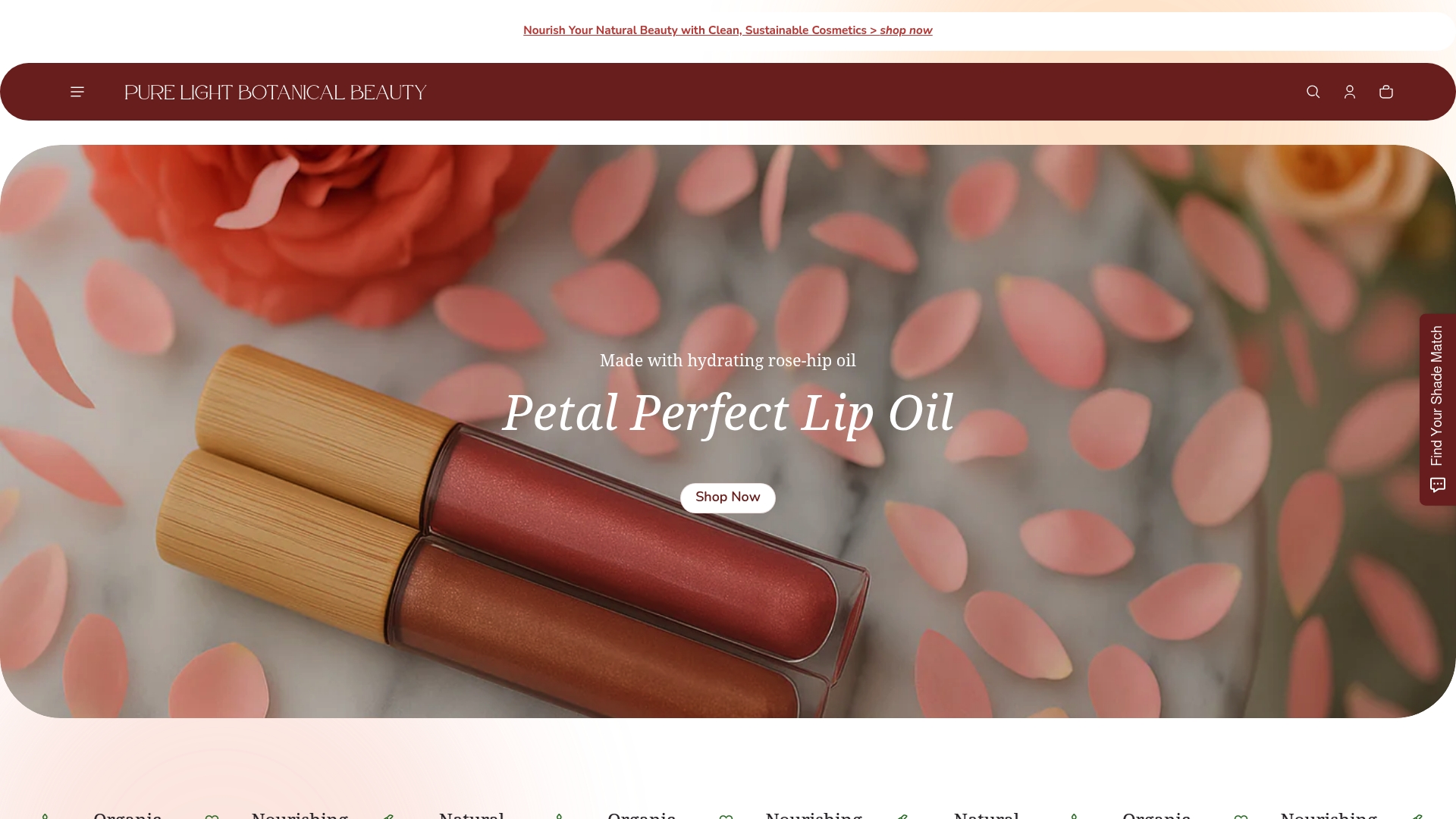
If you are living with eczema and want personal guidance, our Eczema Healing Consultation ($444) is a one-to-one space to talk through your skin, your triggers and your rituals. You can explore everything at Pure Light Botanical Beauty, and when you wear makeup over a facial oil, our guide to using face oil before makeup helps you layer with care.
Building a Calm Routine Around Your Oil
Some small habits make the difference between a soothing ritual and a frustrating one.
Keep the rest of your routine simple. If you are testing coconut oil, change one thing at a time. Adding a new serum, a new cleanser and a new oil in the same week makes it impossible to know what your skin is reacting to.
Match the season. Dr. Mikailov, quoted by Byrdie, notes that skin that is usually oily may still welcome coconut oil in very dry winter months. Dry air, heated rooms and cold wind are when many of us feel that tight, papery sensation. In summer, you may find a lighter lotion is plenty.
Use it on the body first. Cleveland Clinic and Verywell Health both describe coconut oil as a body moisturizer for elbows, knees, hands and feet, applied after showering. If you are unsure about your face, begin there. Several dermatologists, including Dr. Jessie Cheung, say it is best suited to the body rather than the face, and your elbows will thank you either way.
Know what the research does and does not say. A 2021 study of 60 volunteers found that overnight virgin coconut oil on the hands improved perceived moisture over 15 days compared with a control group. That is encouraging for dry hands, but it tells us little about facial pores. And a 2026 review in the Journal of Integrative Dermatology concludes that there is encouraging evidence for coconut oil on the skin, while advising vigilance for side effects, particularly for acne-prone skin. Hydration benefits and pore risks can both be true, which is why a small test and a light hand are the wisest guides.
Remember eczema-prone skin is individual. A review in The Dermatology Digest notes that coconut-based products are commonly recommended for compromised skin, and that the risk of sensitization from food-based emollients is clinically very low outside of people with existing allergies. Still, your own history comes first. If you have ever reacted to a nut-based or food-based product, speak to your dermatologist before trying it.

FAQ
Can I leave coconut oil on my face overnight?
It may help if your skin is very dry, chafed or flaky, since a light layer can soften and hydrate it. Use only a thin layer and blot away any thick residue. If you have oily or breakout-prone skin, it can cause blackheads and pimples, so skip overnight use.
Do I put coconut oil on before or after moisturizer?
On the face, apply it after your moisturizer, or on damp skin, as a thin sealing layer. Dermatologist Dr. Purvisha Patel describes it as a sealant rather than a replacement for a moisturizer. If you use it alone, apply it to slightly damp skin.
Can I use coconut oil to remove makeup?
Yes, many people do. Massage a small amount over your makeup or apply it with a cotton pad, rinse, and then cleanse again with a gentle, water-based cleanser. The second cleanse helps prevent leftover oil from clogging your pores.
Is coconut oil safe for eczema or sensitive skin?
Some dermatologists consider it a good option for dry, sensitive, eczema-prone skin, but reactions are individual. Patch test first and avoid it if you have a coconut or tree nut allergy. Check with your dermatologist before using it during a flare.
Can coconut oil protect my face from the sun?
No. Its SPF is far too low, and it does not protect against UVA rays. Use a broad-spectrum sunscreen of SPF 30 or higher, chosen for your skin type, every day.