

Comedogenic makeup is makeup that is likely to clog your pores and form comedones, the small bumps we call blackheads and whiteheads. The word is about likelihood, not certainty: a comedogenic formula does not break everyone out, and a product labeled non-comedogenic cannot promise it never will. What follows is how the idea works, why it matters if your skin is sensitive, and how to read a label with a calm, practiced eye.
Key takeaways
- Comedogenic means “likely to clog pores.” Comedones are the result: open ones are blackheads, closed ones are whiteheads.
- Comedogenic ratings describe single ingredients, not finished products, so a formula has to be judged as a whole and on your own skin.
- Labels such as “oil-free,” “won’t clog pores,” and “non-comedogenic” are helpful signals, never guarantees.
- If a product seems to cause breakouts, stop using it, cleanse gently, remove makeup every night, and keep brushes clean.
- Sensitive and eczema-prone skin has a second question to ask: not only “will this clog?” but “will this irritate?”
Table of Contents
- What “comedogenic” actually means
- What comedogenic makeup looks like on the skin
- Do comedogenic products always cause breakouts?
- The comedogenic scale, and why to hold it loosely
- Ingredients that are often called comedogenic
- How to tell if makeup may be comedogenic
- Are comedogenic ratings and non-comedogenic claims reliable?
- If your makeup seems to be clogging your pores
- Comedogenic versus irritating: the question sensitive skin must ask
- Our perspective on comedogenic makeup
- Makeup made with sensitive skin in mind
- Frequently asked questions
What “comedogenic” actually means
The word breaks into two parts. A comedo is a clogged pore, and “genic” means producing. Comedogenic, then, describes anything that tends to produce clogged pores. You will also see the term acnegenic, which points in the same direction.
A comedo forms when oil, dead skin cells, and other debris gather at the opening of a pore. MedlinePlus describes comedones as small bumps, flesh-colored, white, or dark, that sit at pore openings and give the skin a rough texture. When the pore stays open and the plug darkens at the surface, you have a blackhead. When the pore closes over the plug, you have a whitehead. Neither is a sign that you have done anything wrong. They are simply what happens when a pore becomes crowded.

So when someone asks what comedogenic makeup is, the short answer is this: foundation, concealer, primer, blush, powder, lip product, or any other cosmetic whose ingredients or texture make it more likely that pores will become blocked, especially on skin that already tends toward congestion or acne.
In my own years of working with sensitive skin, the most common surprise is that clogging is not a verdict on quality. A beautiful, expensive, even all-natural product can be comedogenic for one person and perfectly comfortable for another. The label tells you a tendency. Your skin tells you the truth.
What comedogenic makeup looks like on the skin
People often search for what comedogenic “looks like,” and the honest answer is that you never see the makeup itself doing anything. You see what follows, and it tends to arrive slowly.
The first sign is usually texture. The skin feels slightly rough or bumpy under your fingertips, especially along the forehead, chin, jawline, or around the nose, long before anything is visible in the mirror. Then come the small flesh-colored or white bumps of closed comedones, and sometimes dark-tipped blackheads where pores are open. In acne-prone skin, some of these can become inflamed and red.
Dermatologists use the phrase acne cosmetica for breakouts that seem to be triggered by cosmetics or skincare. The American Academy of Dermatology notes that some foundations and concealers can worsen acne or cause new breakouts, while also making clear that people with acne can generally still wear makeup if they choose suitable products and keep up an appropriate skin routine. That second half matters. Fear of makeup is not the goal. Informed choice is.
A few patterns can help you spot a link between a product and a reaction:
The breakout appears in the places where the product sits most, such as the cheeks after a new blush or around the mouth after a new lip product. It began a few weeks after you introduced something new. And it eases when you pause that product. None of these proves the cause, but together they are a useful trail to follow.

Do comedogenic products always cause breakouts?
No, and this is the point most articles rush past. Whether a comedogenic ingredient clogs your pores depends on how much of it is in the formula, what it is blended with, how thickly you apply it, how oily or dry your skin is, how thoroughly you cleanse at night, and your own biology. Two people can use the same product for a month with opposite results.
That is why a seasoned makeup artist will tell you that “non-comedogenic” is a phrase, not a promise. It means a product is formulated to be less likely to clog pores. It does not mean no one will ever react. The AAD makes the same point: it suggests people with acne look for labels saying oil-free, won’t clog pores, or non-comedogenic, while recognizing that an individual product can still make acne worse.
If you want a fuller walk-through of the opposite term, our guide to what non-comedogenic makeup means for your skin picks up where this one leaves off.
The comedogenic scale, and why to hold it loosely
You may have seen charts that rate ingredients from 0 to 5, where 0 means it will not clog pores and 5 means it very likely will. These scales are popular because they feel precise. The ratings are generally traced back to older laboratory testing, often on rabbit ears, where an ingredient was applied in pure form and the follow-up reaction was observed. Different charts disagree with each other, and a rating for a pure ingredient does not translate neatly into a finished lipstick or blush.
Three reasons to treat the numbers as a starting point rather than a ruling:
Concentration changes everything. An ingredient that rates high when applied neat may sit at a tiny percentage in a formula. The reverse can be true too, where a low-rated ingredient is combined with others that change how the whole product behaves.
Formulas are more than a list. Texture, the way ingredients are processed, and the way they interact with each other all shape how a product feels and performs. A label cannot show you that.
Skin is individual. Humans are not rabbit ears. Your oil production, your hormones, your climate, and your routine all influence whether a pore stays clear.
So use ratings the way you would use a weather forecast. They tell you what is likely, and you still bring an umbrella or leave it at home based on what you see outside.
Ingredients that are often called comedogenic
I want to be careful here, because lists of “bad ingredients” can send people into needless panic. Still, a handful of names show up again and again in comedogenic conversations.
Heavy, rich plant fats are the most discussed. Coconut oil and cocoa butter are often rated high on comedogenic charts, partly because of their dense fatty acid profile, including lauric acid. Some thick waxes and certain heavy butters get similar attention. This surprises many people who assume that anything plant-based must be gentle on pores. Natural is not a synonym for non-clogging, and I say that as someone who builds her work around botanicals.
Other frequent suspects include heavy occlusive oils, some pigments and thickeners in long-wear formulas, and certain fragrance or color additives, which are more often irritants than clogging agents but can inflame already reactive skin.
On the other side, many lighter oils that are rich in linoleic acid are commonly recommended for congestion-prone skin. If you would like to go deeper, we have written about linoleic-rich oils that suit sensitive, breakout-prone skin and about which oils tend not to clog pores, and which tend to.
A word of care: no single ingredient should decide your choice. An oil with a middling reputation in a thoughtfully balanced formula can be perfectly comfortable, and a “safe” oil in a heavy, waxy base may not be.
How to tell if makeup may be comedogenic
There is no test you can do in a store, but there is a calm, repeatable way to read a product. Think of it as a small ritual before you buy.
Start with the label claims
Look for wording like oil-free, won’t clog pores, or non-comedogenic. These are the phrases the AAD points people with acne toward. They are not regulated into a guarantee, so treat them as a first filter rather than a final answer.
Read the full ingredient list
You can usually find the complete list on the packaging or on the brand’s website. Ingredients are listed from the largest amount to the smallest, so what appears near the beginning makes up more of the formula. If a rich butter or heavy oil leads the list and your skin clogs easily, pause. If it appears near the end, its influence is likely smaller. Ingredient-checker websites can help, but they use differing ratings, so two tools may disagree about the same item. Our seven ways to decode a pure beauty ingredient list shows how to read a list without getting lost in it.
Run the product through a short checklist
We keep a simple four-step noncomedogenic checklist for acne-prone, sensitive skin that walks through label, list, texture, and a patch test. A patch test, applied to a small area for several days before the product goes anywhere near your face, tells you more than any chart.
Introduce one product at a time
If you change foundation, blush, and lip product in the same week and your skin reacts, you will never know which one was responsible. Add one new item, wait two weeks, and then add the next. It feels slow, and it is the most reliable method I know.
Are comedogenic ratings and non-comedogenic claims reliable?
They are useful, and they are limited. Ratings were built on single ingredients under laboratory conditions. “Non-comedogenic” on a finished product usually reflects the maker’s own formulation choices or testing, and standards differ from brand to brand. Neither one replaces your skin’s experience.
The best way to hold this is with gentle skepticism. A non-comedogenic claim is a sign that a brand has thought about pores. It is not proof that your pores will agree. Makeup artists and dermatologists alike will tell you that a product which suits ten clients may not suit the eleventh.
What can be relied on is the habit of observing. Notice how your skin feels after a week. Notice whether bumps appear in the same places. Keep a note on your phone of what you introduced and when. That small record becomes your own personal comedogenic chart, and it is worth more than any list.
If your makeup seems to be clogging your pores
When breakouts seem tied to a product, the guidance from dermatologists is refreshingly simple, and it begins with kindness.
- Stop the product you suspect. The AAD advises stopping the products that appear to cause the breakouts. Check every label across your makeup, skincare, and even haircare, since hair products can reach the forehead and jawline.
- Remove makeup before bed, every night. Sleeping in makeup gives pores hours to fill.
- Cleanse gently. Use a mild cleanser and your fingertips. Scrubbing does not unclog pores. It inflames them.
- Wash your brushes weekly and do not share makeup or applicators. Oil, dead skin cells, and acne-associated material build up on tools and can lead to new breakouts.
- Give it time. Skin rarely clears overnight. If breakouts persist or become painful or scarring, see a board-certified dermatologist.
That last step is not a formality. Persistent or inflamed acne deserves professional care, and a clinician can distinguish a makeup reaction from acne that has other causes.
Comedogenic versus irritating: the question sensitive skin must ask
Here is where our community lives. If you have eczema or very sensitive skin, clogged pores are only half the story. Your skin barrier is already working hard, and a product can be entirely non-comedogenic and still cause redness, stinging, dryness, or a flare.
The two concerns overlap but they are not the same. Comedogenic is about blocked pores. Irritating is about an inflamed barrier. A thick, rich balm may be soothing for dry, eczema-prone patches yet feel heavy on an oily T-zone. A very light, “oil-free” formula may clog nothing and still sting because of fragrance, alcohol, or harsh preservatives.
So for sensitive skin, I suggest asking three questions in order: Is this likely to irritate me? Is this likely to clog me? Does it suit the area where I will wear it? Cheeks, lips, and the center of the face often want different things. Lips, for instance, have no oil glands of their own, which is why nourishing lip products can be wonderful there and would not be the same choice for an oily forehead.
Preparation helps too. A calm, hydrated surface wears makeup more comfortably, and we outline it in our seven-day gentle skin prep for sensitive, eczema-prone skin and in the full routine for prepping your skin for makeup.
Our perspective on comedogenic makeup
When I began creating Pure Light Botanical Beauty, I was not trying to build a trend. I was trying to answer a question many of us carry quietly: why does so much makeup make skin feel worse? For women with eczema or reactive skin, that question is not abstract. It shows up as a flare before an important dinner, or a face that feels tight and angry by evening.
We approach comedogenic concerns the way we approach everything: with meticulous attention and with humility. Our products are handcrafted with organic, clean, ethically sourced botanical ingredients and formulated specifically for sensitive skin and conditions like eczema. We believe in transparency, so that you can read what is in a product and understand why it is there.
We will also tell you plainly what we do not claim. No makeup, ours included, can promise that no skin on earth will ever react. Plant-based does not automatically mean pore-friendly, and we do not pretend otherwise. What we offer is care in how each formula is made, and an invitation to introduce it slowly, watch your skin, and trust what you see.
To us, makeup is not a mask. It is a small ritual of nourishment, a few quiet minutes in which you decide to treat your skin as something worth tending. Understanding words like comedogenic is part of that tending. Knowledge is a form of gentleness.
— Caitlin Grey
Makeup made with sensitive skin in mind
If you are ready to try plant-based color that was designed around reactive and eczema-prone skin, our collection is a gentle place to begin. The Nourishing Lipstick™ is $33.33, the Botanical Crème Blush™ is $33.33, and the Petal Perfect Lip Oil™ is $44.44.
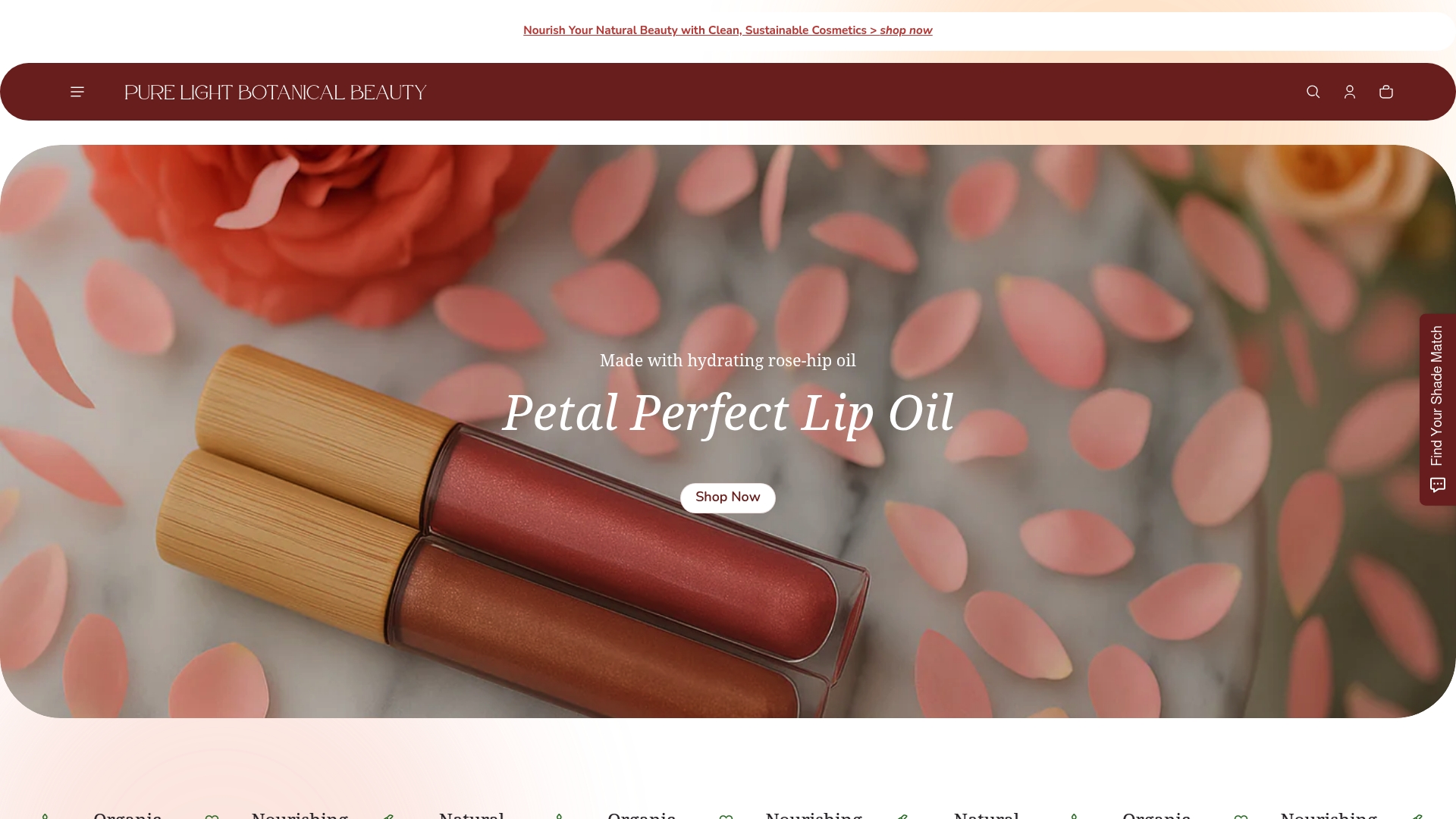
Introduce one at a time, patch test first, and let your skin set the pace. If your concerns go beyond makeup, our Eczema Healing Consultation is $444 and offers personal guidance on eczema-prone skin.
Frequently asked questions
How do you know if makeup is comedogenic?
Start with the label and the full ingredient list, looking for terms like oil-free, won’t clog pores, or non-comedogenic, and noting heavy butters or oils near the top of the list. Then confirm with a patch test and by introducing one product at a time. Only your own skin can give the final answer, because the same formula can behave differently from person to person.
What are comedogenic cosmetics?
They are makeup and skincare products whose ingredients or texture make clogged pores more likely. That can include foundations, concealers, primers, powders, and blushes. Whether they actually cause comedones depends on the formula, how much you use, and your skin type.
Is non-comedogenic makeup guaranteed not to break me out?
No. It means a product is formulated to be less likely to clog pores, but individual reactions still happen. If you notice new bumps after starting a product, stop using it, cleanse gently, and see a dermatologist if breakouts continue.
Are natural oils always safe for pores?
Not always. Some plant oils and butters, such as coconut oil and cocoa butter, are commonly rated as more likely to clog pores, while lighter, linoleic-rich oils are often better tolerated. The formula as a whole matters more than any single ingredient. You can read more in our guide to oils that won’t clog your pores.
Can makeup brushes make breakouts worse?
Yes, they can. Oil, dead skin cells, and other material build up on brushes and applicators, which can contribute to new breakouts. Wash brushes weekly and avoid sharing makeup tools.