

TL;DR:
- Conscious beauty is a comprehensive approach to personal care emphasizing ingredient transparency, ethical sourcing, and environmental responsibility. It differs from clean beauty by evaluating the full lifecycle and social impact of products, aiming for integrity over mere exclusion. Practicing mindful routines and scrutinizing brands ensures genuine commitment, fostering trust and mental wellbeing.
Conscious beauty is not another marketing trend. If you have been told it is simply the same as “clean beauty” with a fancier label, that is a misconception worth correcting. What is conscious beauty, really? It is a values-driven approach to personal care that weaves together ingredient safety, ethical sourcing, environmental responsibility, and mindful self-care into a single, coherent philosophy. With 80% of consumers now defining beauty as mental and physical wellbeing rather than appearance alone, the definition of conscious beauty is no longer niche. It is the future.
Table of Contents
- Key takeaways
- What is conscious beauty and how it differs from clean beauty
- Core principles and benefits of conscious beauty
- How to practice conscious beauty every day
- Common misconceptions about conscious beauty
- My honest take on conscious beauty
- Experience conscious beauty with Purelightbotanicalbeauty
- FAQ
Key takeaways
| Point | Details |
|---|---|
| Beyond “clean” labels | Conscious beauty evaluates ethics, sustainability, and efficacy, not just ingredient lists. |
| Transparency is non-negotiable | True conscious brands explain the why behind every ingredient, not just what is excluded. |
| Mindful routines matter | Shifting your attention during beauty rituals improves skin response and mental wellbeing. |
| Lifecycle thinking | Conscious consumers assess a product’s full environmental and social impact, from sourcing to packaging. |
| Skepticism protects you | “Natural,” “clean,” and “conscious” are unregulated terms. Critical evaluation is your best tool. |
What is conscious beauty and how it differs from clean beauty
The definition of conscious beauty extends far beyond avoiding parabens or sulfates. Clean beauty, as most people know it, centers on exclusion. It asks: what is NOT in this product? Conscious beauty asks a much bigger set of questions. What is in this product, why is it there, where did it come from, and what happens to the packaging when you are done?
Here is a clear comparison to make that distinction concrete:
| Category | Clean beauty | Conscious beauty |
|---|---|---|
| Ingredient focus | Avoids specific “bad” ingredients | Evaluates efficacy, sourcing, and safety together |
| Environmental impact | Often minimal consideration | Full lifecycle analysis, including packaging and carbon footprint |
| Ethical sourcing | Rarely addressed | Labor practices, biodiversity, and animal welfare are assessed |
| Transparency | Ingredient lists provided | Full disclosure of why ingredients are chosen and where they originate |
| Scientific basis | Free-from lists, often fear-based | Evidence-based formulation and green chemistry principles |
The problem with clean beauty alone is that it relies on exclusion lists rather than evidence. Ingredients are assessed not only individually but for formulation stability, synergistic effects, and overall suitability. A formula can avoid every ingredient on a popular “dirty” list and still be ineffective, poorly sourced, or environmentally damaging.
Conscious beauty philosophy demands more. It asks brands to demonstrate that their products genuinely perform, that their supply chains are traceable, and that their environmental footprint has been considered at every stage. This is not perfectionism. It is integrity.
Pro Tip: When evaluating a product, look past the “clean” badge and ask: Does this brand publish ingredient sourcing details? Do they explain formulation choices? If the answer is no, the label may be more marketing than meaning.
Core principles and benefits of conscious beauty
The principles of conscious beauty cluster around five interconnected values. Each one connects back to a specific benefit you experience as a consumer.
Ingredient transparency and science-backed safety. With 81% of Gen Z beauty consumers prioritizing ingredient transparency as a primary driver of trust, this is no longer optional for credible brands. Transparency means publishing not just ingredient names but concentrations, sourcing origins, and the reasoning behind each choice. True transparency requires explaining the why behind formulation decisions, not just presenting a minimalistic label.
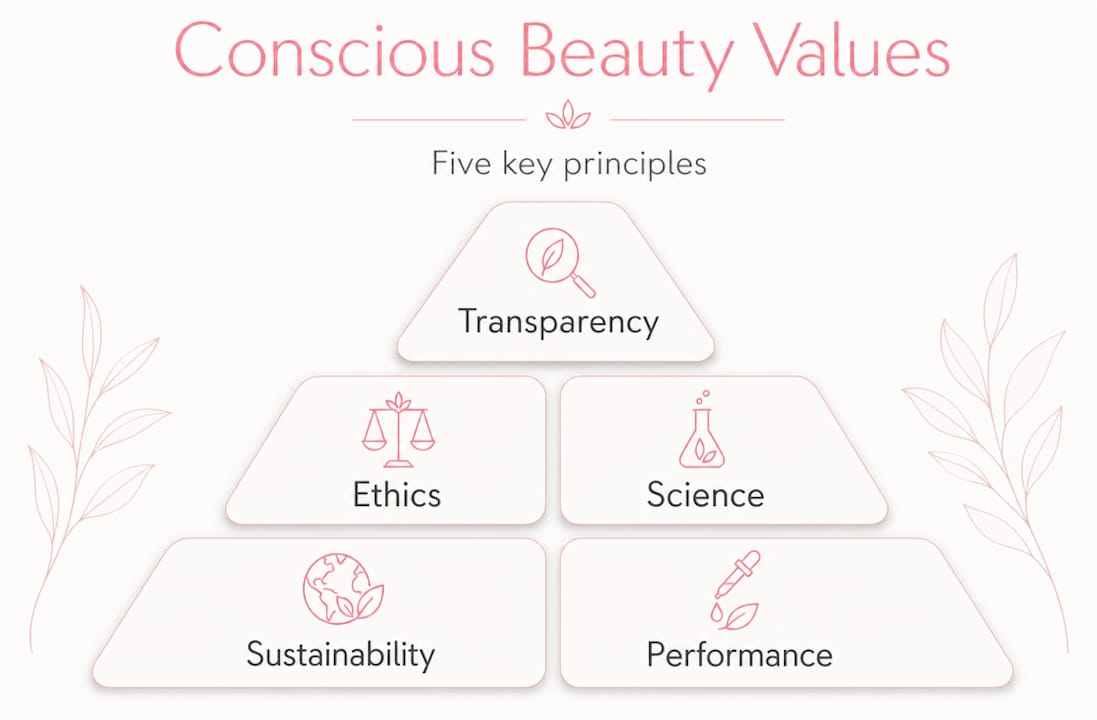
Sustainable and ethical sourcing. Conscious brands trace their ingredients from farm or lab to formula. This means evaluating carbon footprints, ensuring fair labor practices, protecting biodiversity, and refusing to fund animal cruelty anywhere in the supply chain. When you choose a product with verified ethical sourcing, your purchase carries a real-world impact beyond your bathroom shelf.

Biotechnology and green chemistry. Conscious beauty is not anti-science. It embraces innovations that reduce environmental load while improving performance, such as lab-grown botanical actives that replace wild-harvested plants, or waterless formulas that cut shipping weight and preserve resources.
Consumer benefits you feel directly. When your products are genuinely transparent and ethically made, you gain more than good skin. You gain confidence. You know what you are putting on your body, you trust the brand behind it, and that trust reduces the low-grade anxiety that comes with uncertainty about ingredients.
Mindful self-care as a conscious beauty practice. Mindfulness in beauty routines improves mental wellness by encouraging presence, attention to sensation, and gentler choices for your skin. When you slow down during your routine, you are not just applying product. You are practicing self-respect.
“Conscious beauty is not about adding more steps to your routine. It is about bringing more awareness to the ones you already have.” This shift in how you think about beauty rituals can transform them from obligations into something genuinely restorative.
Pro Tip: You do not need a ten-step routine to practice conscious beauty. Paying full attention to the texture, scent, and sensation of a single product during application is enough to begin.
How to practice conscious beauty every day
Making conscious beauty part of your daily life is practical, not precious. It does not require a full product overhaul overnight. Here is how to start integrating conscious beauty principles into your routine, one intentional choice at a time.
-
Audit your current products. Go through what you already own. Look up ingredients you cannot identify. Check whether the brand publishes sourcing information. This single step builds your literacy fast.
-
Replace, do not purge. As products run out, replace them with options from brands that meet your conscious beauty standards. Throwing away products you already own creates more waste, not less.
-
Apply with attention. Mindful beauty is about the quality of attention you bring, not the number of products you use. Notice texture, scent, and how your skin responds. This practice improves skin response and supports mental wellbeing, according to research on mindful attention during routines.
-
Let your skin guide you. Conscious beauty means listening to your skin rather than following trends. If a product causes irritation or dullness, that is information. Adjust accordingly rather than pushing through because an ingredient is “trending.”
-
Use technology wisely. An impressive 75% of consumers now use AI tools to research beauty and wellness products. Tools like these can help you decode ingredient lists, compare brand ethics, and find products that genuinely match your skin’s needs.
-
Avoid over-consumption. Conscious beauty is incompatible with haul culture. Buying fewer products that work well for your specific skin is more aligned with conscious values than collecting products marketed as “clean” but used minimally.
Pro Tip: Before purchasing any new product, ask yourself three questions: Do I know what is in this? Do I know where those ingredients came from? Do I genuinely need it? If you cannot answer at least two of those three, wait.
Understanding the connection between beauty and mental health is a key part of building this kind of intentional practice. Your routine is not just skin-deep.
Common misconceptions about conscious beauty
The biggest challenge facing conscious beauty right now is the language around it. The terms “clean,” “natural,” “green,” and “conscious” are not regulated by the FDA or any governing body. Any brand can print these words on a label without meeting a single standard.
This creates a problem called greenwashing. Brands perform consciousness without practicing it. They use earthy packaging, botanical imagery, and vague claims of sustainability without disclosing supply chains, publishing full ingredient sourcing, or committing to measurable environmental targets.
Here is what genuine transparency actually looks like, and what it does not:
- Genuine: Publishing full ingredient lists with sourcing origins and function explanations
- Genuine: Third-party certifications with published audit results, not just logos
- Genuine: Clear environmental commitments with measurable targets and progress reports
- Not genuine: “Made with natural ingredients” with no specification of which ingredients or what percentage
- Not genuine: Vague badges like “eco-conscious” with no certification or disclosure behind them
- Not genuine: Minimalist packaging designed to look sustainable without verified recyclability
“The most important skill a conscious beauty consumer can develop is the ability to ask uncomfortable questions of brands they love, not just brands they distrust.”
Learning to read beyond marketing requires understanding cosmetic transparency at a practical level. Conscious beauty benefits you only when the brands you choose actually practice what they claim. Critical thinking is not cynicism. It is care.
My honest take on conscious beauty
I want to be direct about something I have seen again and again. Conscious beauty can become its own kind of performance if you are not careful. I have watched people swap one brand of anxiety, “Is this ingredient safe?” for another: “Am I conscious enough in my choices?” That is not what this philosophy is for.
In my experience, the real shift happens when you stop treating your beauty routine as a checklist and start treating it as a genuine moment of presence. When I began paying attention to how my skin felt during application, not just after, everything changed. I noticed which textures calmed me and which felt harsh. I noticed when I was rushing and when I was actually caring for myself. That awareness changed which products I reached for far more than any ingredient label did.
What I have found is that beauty rituals for mental health are not a luxury. They are a legitimate tool for grounding yourself in your body, especially if you have sensitive skin that reacts to stress as much as to ingredients.
My honest advice: start with one product you genuinely love and give it your full attention for one week. Notice what happens, not just to your skin, but to how you feel during that ritual. That experience will tell you more about conscious beauty than any guide ever could.
— Kaitlyn
Experience conscious beauty with Purelightbotanicalbeauty
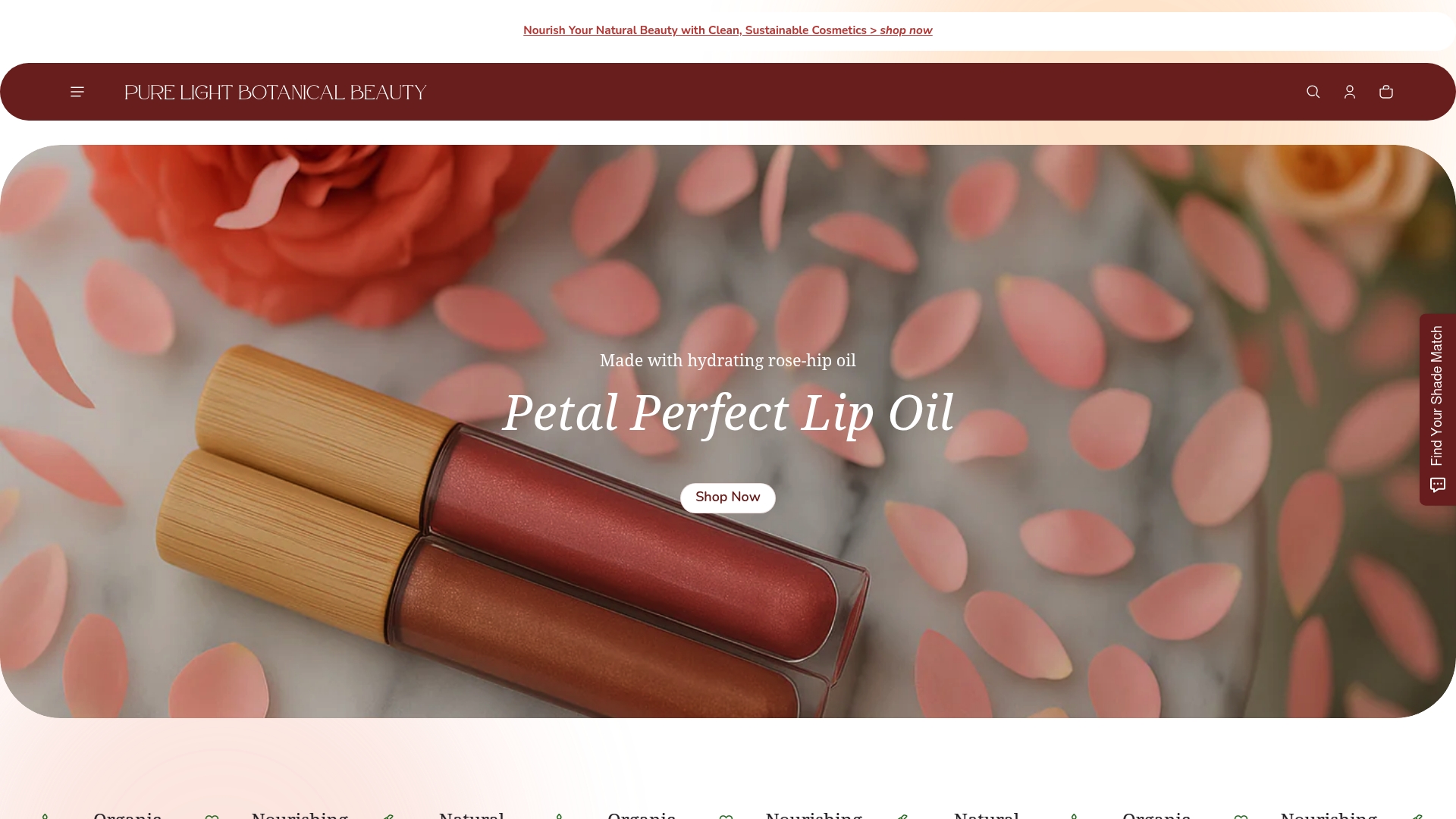
If you are ready to put the principles of conscious beauty into practice, Purelightbotanicalbeauty was built precisely for this. Every formula in the line is created with plant-based, clean ingredients chosen for both skin health and sensory experience. Products like the Petal Perfect Lip Oil and Botanical Crème Blush are formulated with full transparency, thoughtful sourcing, and the kind of skin-nurturing intention that conscious beauty demands. They are especially suited for sensitive skin and conditions like eczema, where ingredient integrity is not a preference but a necessity. Visit Purelightbotanicalbeauty to explore a product range that does not ask you to choose between beautiful and responsible. You deserve both.
FAQ
What is the definition of conscious beauty?
Conscious beauty is a holistic approach to personal care that integrates ingredient transparency, ethical sourcing, environmental responsibility, and mindful self-care. It goes beyond clean beauty by evaluating the full lifecycle and social impact of every product.
How is conscious beauty different from clean beauty?
Clean beauty focuses on excluding specific ingredients, while conscious beauty addresses ingredient efficacy, sourcing ethics, environmental impact, and the overall values of the brand. Clean beauty is a subset; conscious beauty is the bigger picture.
What are the main benefits of conscious beauty?
The conscious beauty benefits include healthier, better-understood skin, reduced exposure to poorly tested ingredients, greater trust in your products, and a more intentional self-care practice that supports mental wellbeing alongside physical appearance.
How do I know if a brand is genuinely practicing conscious beauty?
Look for full ingredient sourcing disclosures, third-party certifications with published audits, and clear explanations of why each ingredient was chosen. Vague claims like “natural” or “eco-conscious” without supporting evidence are warning signs of greenwashing.
Can conscious beauty work for sensitive skin?
Yes. Conscious beauty is particularly well suited for sensitive skin because its emphasis on ingredient transparency, evidence-based formulation, and ethical sourcing reduces the risk of irritants and undisclosed allergens that often trigger reactions.
Recommended
- Benefits of Mindful Beauty: Complete Guide for 2025 – Pure Light Botanical Beauty
- What Is Mindful Beauty and Why It Matters – Pure Light Botanical Beauty
- Benefits of Conscious Cosmetics: Complete Guide – Pure Light Botanical Beauty
- Intentional beauty: A wellness approach to glowing skin – Pure Light Botanical Beauty