

TL;DR:
- Greenwashing in beauty involves deceptive marketing that makes products appear eco-friendly without substance or verification. Most products with green claims, including labels like “natural” or “clean,” lack regulatory standards and often hide harmful ingredients or trade-offs. Consumers can counteract this by scrutinizing ingredient lists, seeking third-party certifications, and requesting transparent sustainability information.
You picked up a moisturizer with a leaf on the label, “plant-powered” across the front, and packaging the color of a forest. It felt like the right choice. But here is the uncomfortable truth: that product may have had little to no connection to actual sustainability. Greenwashing in beauty is the practice of making products appear more eco-friendly, natural, or ethical than they actually are, and it is far more widespread than most shoppers realize. This guide will give you the tools to see through the marketing and make choices that actually align with your values.
Table of Contents
- Key Takeaways
- What greenwashing in beauty really means
- The data behind greenwashing prevalence
- How to spot greenwashing when you’re shopping
- Real green beauty standards vs. greenwashing
- Turning knowledge into smarter daily purchases
- My take on why greenwashing persists
- Clean beauty you can actually trust
- FAQ
Key Takeaways
| Point | Details |
|---|---|
| Greenwashing is widespread | Almost all products with eco-labels exhibit at least one misleading practice. |
| Vague labels are red flags | Words like “natural” and “clean” are unregulated and mean nothing without third-party verification. |
| The INCI list is your best tool | The ingredient list on the back of a product is the only legally binding disclosure you can trust. |
| Certifications signal real accountability | Look for third-party verified labels like USDA Organic or EWG Verified instead of brand-created badges. |
| Consumer awareness drives change | Asking questions and sharing knowledge pressures brands to adopt genuinely transparent practices. |
What greenwashing in beauty really means
Greenwashing in beauty happens when a brand uses language, imagery, or labeling to create the impression of environmental responsibility without the substance to back it up. The leaf motifs. The brown kraft paper packaging. The words “pure,” “botanical,” “eco,” and “green” scattered across product descriptions. None of these are regulated terms. None of them require proof.
The practice generally falls into a few recognizable patterns:
- Vague claims: Phrases like “environmentally friendly” or “made with nature’s best” sound meaningful but commit to nothing specific.
- Single attribute focus: A brand promotes one minor green feature, like a recyclable bottle, while hiding other trade-offs such as synthetic fillers or harmful preservatives inside.
- Irrelevant certifications: A product may display a badge that the brand created internally, with no outside body verifying the claims.
- Misleading imagery: Green packaging, nature photography, and earth tones are used to trigger subconscious associations with purity and sustainability.
- Fear-based framing: Products marketed as “free from” certain ingredients often use fear to sell formulas that are not necessarily safer or more sustainable. They simply exploit consumer anxiety for profit.
The result is consumer confusion caused by brands that overcommunicate vague green messaging and undercommunicate the specifics that would actually matter, like full ingredient sourcing, manufacturing practices, or carbon footprints.
Pro Tip: If a brand uses the word “clean” prominently but offers no definition of what that means to them and no third-party verification, treat it as a marketing term, not a safety guarantee.
The data behind greenwashing prevalence
The scale of greenwashing in the beauty and personal care space is staggering once you look at the numbers. And the numbers are not reassuring.
A broad survey of packaged products found that nearly 40% carry some kind of sustainability or environmental claim, the majority of which are self-declared without any independent verification. You are not looking at a fringe problem. You are looking at standard industry practice.
The situation becomes more alarming when you examine what is actually inside products marketed as natural or clean. The FDA identified 51 types of PFAS in 1,744 US cosmetic products that were actively marketed under “clean” or “natural” positioning. PFAS are synthetic chemicals linked to serious health risks, and they showed up in 56% of eyeshadows and foundations included in the study.
| Greenwashing stat | What it reveals |
|---|---|
| 40% of products carry eco-claims | Most are self-declared with no outside verification |
| 98% of eco-labeled products show greenwashing | Almost no product with a green claim is fully honest |
| 51 PFAS types found in 1,744 “clean” cosmetics | Hidden harmful ingredients persist behind natural marketing |
| 56% of foundations and eyeshadows contained PFAS | The most commonly greenwashed product categories carry real risk |
“98% of products carrying environmental claims committed at least one ‘sin’ of greenwashing.” — Terrachoice study, via Raw Beauty Lab
That figure should reframe how you approach every “green” beauty claim you encounter. The default is greenwashing. Genuine transparency is the exception.
How to spot greenwashing when you’re shopping
Learning how to spot greenwashing does not require a chemistry degree. It requires slowing down, asking the right questions, and knowing where to look on the packaging.
Here is a practical framework you can use on any product:
-
Read the full ingredient list. The INCI (International Nomenclature of Cosmetic Ingredients) list is the only legally binding disclosure on beauty packaging. Front-of-pack claims like “natural,” “organic,” or “botanical” are largely marketing language with no legal requirement behind them. Flip the product over. That list is where the truth lives.
-
Ask: what exactly is being claimed? A recyclable bottle is not the same as a sustainable product. Break the claim down into what is actually being stated, what proof exists for it, and what trade-offs might be hidden behind it.
-
Look for third-party verification. Does the certification on the label come from an independent organization or from the brand itself? Certifications like USDA Organic, EWG Verified, and Leaping Bunny require external audits. A brand’s own “clean seal” requires nothing.
-
Count how many vague words appear on the front label. Words like “pure,” “natural,” “green,” “eco,” and “botanical” appear frequently on greenwashed products. Their presence is not the problem. Their use without any substantive backing is.
-
Search for full lifecycle transparency. A brand committed to actual sustainability addresses sourcing, manufacturing, packaging, and end-of-life disposal together, not just one piece of the puzzle. Check their website. Look for an impact or sustainability page with specific, verifiable claims.
Pro Tip: When shopping online, search for a brand’s ingredient glossary or sustainability report before purchasing. Genuinely transparent brands publish these. Greenwashed brands typically do not.
Understanding clean beauty terminology also helps you parse what brands actually mean when they use phrases that sound regulated but are not.

Real green beauty standards vs. greenwashing
Genuine green beauty standards and greenwashing tactics can look remarkably similar on a shelf. The difference lives in the details of what a brand is willing to prove and who they are willing to let verify it.
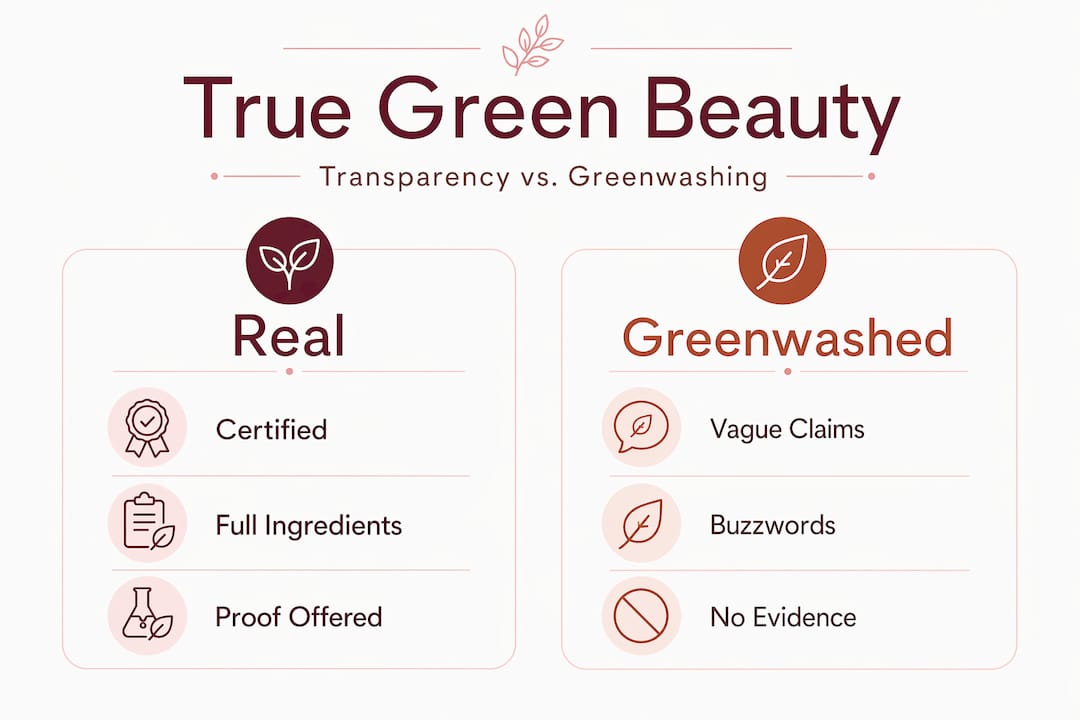
Here is how legitimate sustainability commitments compare to common greenwashing tactics:
| What real transparency looks like | What greenwashing looks like |
|---|---|
| Third-party certified ingredients (USDA Organic, EWG Verified) | Brand-created seals with no external oversight |
| Full INCI list with sourcing notes | Vague “plant-based” or “botanical” front-label claims |
| Published sustainability reports with measurable goals | General statements like “we care about the planet” |
| Cruelty-free certification from Leaping Bunny or PETA | “Not tested on animals” with no certifying body named |
| Packaging with verified recycled content percentages | “Eco-friendly packaging” with no specifics |
Credible clean beauty certifications require brands to meet defined standards for ingredient safety, manufacturing transparency, and environmental impact. They also require periodic renewal, which means the accountability is ongoing rather than a one-time application.
A few markers of genuine commitment worth knowing:
- The brand openly publishes its “free from” list alongside the reasons why those ingredients are excluded, backed by science rather than fear.
- The brand addresses full lifecycle impact rather than spotlighting one green feature while ignoring others.
- Environmental claims are backed by verifiable data, not just confident-sounding language.
When you find a brand willing to show you its work, that transparency itself is one of the most meaningful signals of integrity in the eco-conscious beauty space.
Turning knowledge into smarter daily purchases
Understanding greenwashing is one thing. Changing how you shop is another. Here are practical ways to bring this awareness into your everyday beauty routine:
- Build a short checklist for new product research. Before buying, spend three minutes checking the full ingredient list, looking for third-party certification, and scanning the brand’s website for a real sustainability page.
- Use trusted databases. Resources like EWG’s Skin Deep database allow you to search individual ingredients and full products for safety and transparency ratings.
- Favor brands that name their sources. A brand that tells you exactly where their rosehip oil comes from and how it is extracted is far more trustworthy than one that simply prints “rose extract” on a label.
- Question “free from” marketing. A product free of one ingredient is not automatically safe or sustainable. Focus on what is in the product rather than what has been removed for marketing purposes.
- Share what you learn. Consumer awareness creates real pressure on brands. When you ask pointed questions on social media or in reviews about certifications and ingredients, other shoppers benefit and brands take notice.
My take on why greenwashing persists
I’ve spent years reading labels, researching certifications, and watching the beauty industry respond (and fail to respond) to consumer demand for honest products. What I’ve come to believe is that greenwashing persists not because consumers are naive, but because the regulations that would force accountability simply do not exist at the scale they need to.
The fear-based marketing around “clean beauty” is clever in a troubling way. It sells the feeling of doing the right thing without requiring brands to actually do it. And because terms like “natural” and “clean” carry no legal definition in the US cosmetics space, there is nothing stopping a brand from printing them on a product full of synthetic chemicals.
What I’ve found, though, is that consumer pressure moves faster than regulation. The brands that now voluntarily publish full ingredient sourcing, maintain verified certifications, and answer direct questions about their sustainability practices did not all do so because a law required it. Many did it because informed, vocal consumers asked for it and walked away when they did not get answers.
You are more powerful than the label wants you to think. Knowing what greenwashing looks like is not just consumer self-defense. It is how you vote with your purchases for the kind of beauty industry you want to exist.
— Kaitlyn
Clean beauty you can actually trust
If you have been doing the work of reading labels, questioning claims, and searching for brands that take transparency seriously, Purelightbotanicalbeauty was built for exactly that.
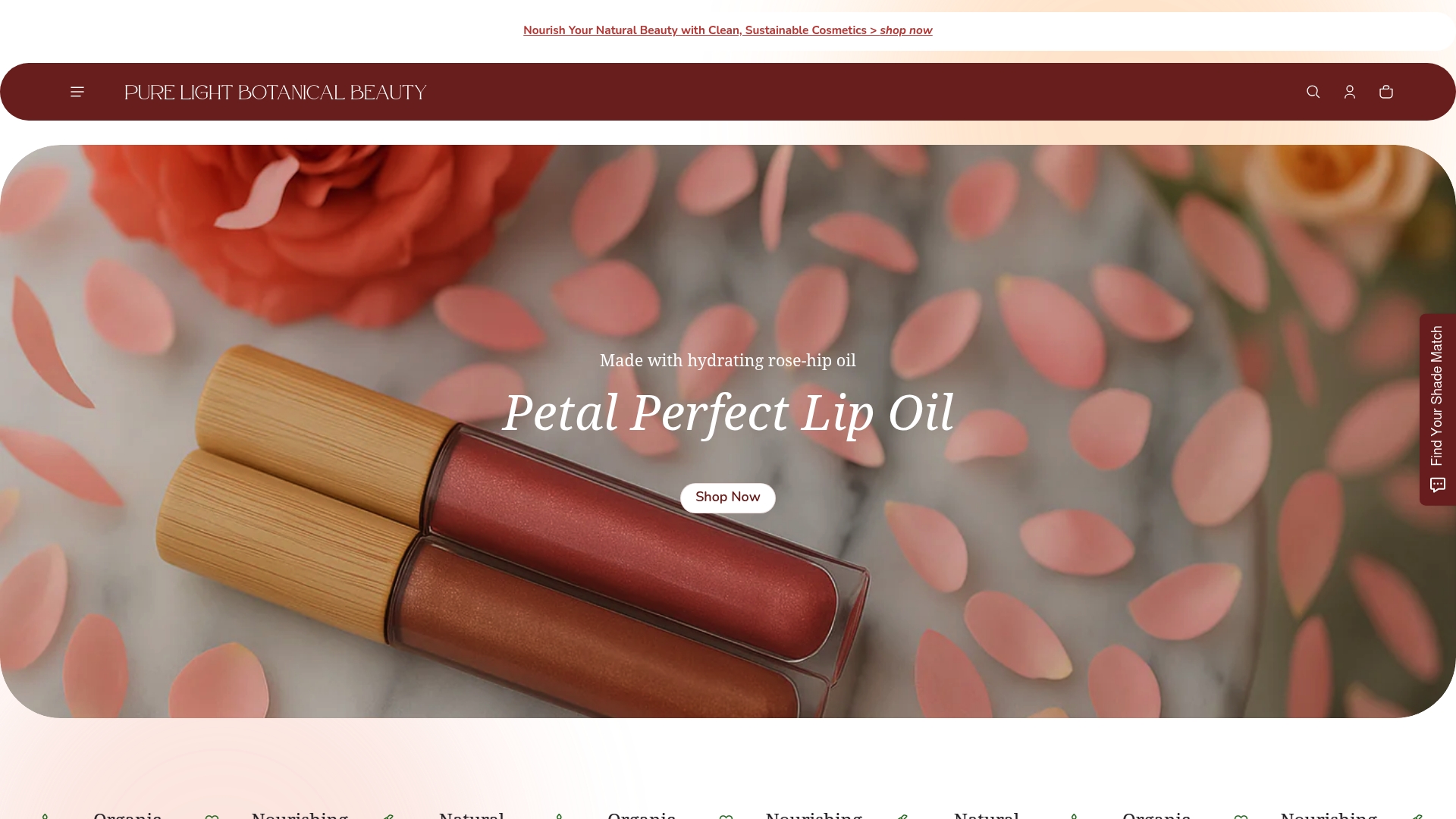
Every formula at Purelightbotanicalbeauty starts with plant-based, thoughtfully sourced ingredients designed to nourish skin rather than simply decorate it. There are no vague “botanical blend” mysteries here. The brand publishes ingredient transparency because it believes you deserve to know what you are putting on your skin, especially if you have sensitive skin or eczema. From the Petal Perfect Lip Oil to the Botanical Crème Blush, each product reflects genuine commitment to both skin health and honest beauty. Explore the full clean beauty collection and experience the difference that real transparency feels like.
FAQ
What is greenwashing in beauty products?
Greenwashing in beauty is when a brand uses misleading language, imagery, or unverified labels to make a product appear more eco-friendly or natural than it actually is. Common tactics include vague terms like “pure” or “green,” brand-created seals, and highlighting one minor sustainable feature while concealing harmful ingredients.
How do I spot greenwashing on a beauty label?
Start with the INCI ingredient list on the back of the product, which is the only legally required disclosure. Look for third-party certifications from recognized bodies like USDA Organic or EWG Verified, and treat front-label claims like “natural” or “clean” as marketing language unless they are backed by verifiable proof.
Are “natural” and “clean” beauty labels regulated?
No. In the United States, terms like “natural,” “clean,” and “eco-friendly” on cosmetics have no legal definition and require no government verification. Any brand can use them without meeting specific standards, which makes third-party certification the only reliable signal of genuine accountability.
What are common greenwashing examples in beauty?
Common greenwashing examples in beauty include using recyclable packaging while keeping harmful synthetic ingredients in the formula, displaying brand-created “clean” seals with no outside oversight, and marketing products as “free from” one ingredient while containing others that raise concern.
What certifications should I look for in green beauty products?
Look for certifications from independent organizations that require external auditing, including USDA Organic, EWG Verified, Leaping Bunny (for cruelty-free claims), and COSMOS Organic. These certifications come with specific, verifiable standards rather than brand-controlled definitions.
Recommended
- What Is Green Chemistry in Beauty—Why It Matters – Pure Light Botanical Beauty
- Earth Conscious Beauty | Eco-friendly & Sustainable Beauty – Pure Light Botanical Beauty
- What Is Clean Label Beauty? Complete Overview – Pure Light Botanical Beauty
- What Is Green Beauty? 40% Less Flare-Ups for Sensitive Skin – Pure Light Botanical Beauty