

The habits that reshape how your skin looks are almost boring in their simplicity: steady hydration, seven to eight hours of sleep, a barrier-first skincare routine with SPF, meals built around protein and antioxidants, twenty minutes of daily movement, and a few minutes spent lowering stress. Hydration and sleep show small shifts within days. A barrier-first routine, better nutrition, and consistent movement produce visible changes in four to eight weeks. Every habit below comes with gentle, plant-forward adaptations for sensitive or eczema-prone skin.
TL;DR:
- Drinking water on waking, before meals, and before bed supports rapid hydration improvements, with noticeable softness within about a week.
- A minimalist skincare routine with a gentle cleanser, barrier-supportive moisturizer, and daily SPF effectively promotes skin health, especially for sensitive skin.
- Weekly honey and yogurt masks and soothing aloe vera help brighten and calm skin, but coconut oil should be limited to dry patches due to its clogging potential.
- Using broad-spectrum SPF 30 or higher daily and reapplying every two hours during outdoor exposure is crucial for preventing photoaging and UV damage.
- Consistent sleep, stress management, and gentle movement accelerate skin repair, with visible benefits appearing within two to eight weeks.
Table of Contents
- How to Enhance Beauty Naturally Through Hydration and Diet
- What Is the Simplest Skincare Routine for Natural Beauty?
- Which DIY Masks Actually Help Your Skin?
- Do You Really Need Sunscreen Every Day?
- How Sleep and Stress Habits Speed Up Skin Repair
- Can Movement and Face Massage Really Improve Your Glow?
- Grooming and Minimal Makeup That Support Your Natural Look
- Why Does Indoor Air Quality Affect Your Skin?
- Natural Hair Care Habits That Round Out Your Look
- Why Smoking and Excess Alcohol Undo Your Beauty Routine
- How Does Mental Wellness Show Up on Your Skin?
- Pure Light’s Perspective: Adapting This Guide for Sensitive Skin
- Ways to Build These Habits Into Your Routine
- Sources and Further Reading
- FAQ
How to Enhance Beauty Naturally Through Hydration and Diet
Hydration works from two directions at once, and most people only manage one of them. Reviews on water intake and skin health report measurable improvements in hydration and softness within about a week of drinking more water consistently, which makes it one of the fastest wins on this list.
A simple internal rhythm removes the guesswork:
- A glass of water on waking, before your system has anything else to process
- Another glass before each meal, which also helps with portion awareness
- A final glass before bed, unless nighttime bathroom trips disrupt your sleep
- Water-rich foods like cucumber and watermelon layered in as snacks
Diet matters just as much as fluid intake. Aim for a protein source at every meal, omega-3s from fatty fish or walnuts, vitamin C from citrus or berries, and zinc from legumes and seeds. Colorful vegetables supply the antioxidants that help offset everyday oxidative stress on skin cells. A 2023 review also linked probiotics to reduced inflammation, which is worth considering if your skin reacts easily to diet changes.
Externally, hydration only works if you layer it correctly. Apply a humectant like hyaluronic acid or glycerin to damp skin, then seal it with an emollient or occlusive moisturizer before the water evaporates.
Pro Tip: Keep a water bottle where you already spend time, your desk, your car, your nightstand. Habit location matters more than willpower.
What Is the Simplest Skincare Routine for Natural Beauty?
The simplest effective routine has exactly three products: a gentle cleanser, a barrier-supporting moisturizer, and broad-spectrum SPF. Dermatology guidance increasingly favors this minimalist, barrier-first structure over complex multi-step regimens, especially for reactive or sensitive skin, because overusing actives tends to damage the very barrier you’re trying to protect.
- Cleanse twice daily, or after sweating, with something that doesn’t leave skin tight or squeaky.
- Treat, only if needed, with a single active. Never introduce more than one new active at a time.
- Moisturize while skin is still damp, choosing a formula with ceramides, glycerin, or panthenol.
- Apply SPF every morning as the final step.
- In the evening, repeat cleansing and swap SPF for a richer moisturizer or occlusive.
Introduce a new active only after your barrier has been stable for a few weeks, and never layer multiple acids or retinoids at once. That guidance holds particularly true for eczema-prone skin, where barrier stability is the whole game, not a side note. Our natural beauty routine guide walks through how to sequence this for skin that reacts to too much, too fast.
Which DIY Masks Actually Help Your Skin?
Two home remedies hold up well, and one deserves a caveat. A honey and yogurt mask, used once weekly, offers gentle brightening thanks to honey’s humectant properties and yogurt’s mild lactic acid. Aloe vera, applied after cleansing, soothes and supports the barrier without the sting many actives cause.
Coconut oil is where people get it wrong. It works well on very dry patches of skin, but its comedogenic profile makes it a poor daily choice for acne-prone or oily skin. Save it for localized dry spots, not routine facial application.
- Patch test any new mask on your inner arm 24 hours before facial use
- Limit masking to one or two times per week, never daily
- Skip anything containing fragrance if your skin flares easily
Pro Tip: If a mask stings within the first minute, rinse immediately. Sensitive skin doesn’t need to “push through” discomfort to see benefits.
For more tested combinations, our homemade glowing skin tips page covers additional ratios and timing.
Do You Really Need Sunscreen Every Day?
Yes, and it’s the single habit with the longest payoff. The FDA identifies sunscreen as a primary tool for protecting skin from UV damage and slowing the visible signs of photoaging, which means the sunscreen you skip today shows up as a wrinkle year from now.
- Use a broad-spectrum SPF 30 or higher every single day, including cloudy days
- Reapply every two hours during extended outdoor exposure
- Consider mineral formulas (zinc oxide, titanium dioxide) if you have sensitive or reactive skin, since they tend to sit better than chemical filters
- Layer in a tinted SPF for light coverage, an SPF lip balm, and a wide-brimmed hat for extra protection without extra product
Daily SPF is the one habit on this entire list where consistency outweighs everything else, including the exact formula you choose.
How Sleep and Stress Habits Speed Up Skin Repair
Skin repairs itself overnight, and it needs seven to eight hours of consistent sleep to do that work properly. Cutting screen time thirty to sixty minutes before bed helps your body actually reach that repair window instead of just lying in bed scrolling.
- Set a consistent bedtime and wake time, even on weekends.
- Dim lights and step away from screens at least thirty minutes before sleep.
- Add a five-minute breathing break during the day when stress spikes.
- Take a short walk when you feel tension building rather than pushing through it.
- Journal briefly at night to offload worries before they follow you into sleep.
Some benefits, like reduced puffiness, show up within days. Clearer repair and lighter under-eye darkness typically take two to eight weeks of consistent practice to become obvious.
Pro Tip: A silk pillowcase reduces friction against skin overnight, a small, low-effort swap that compounds over weeks.
Can Movement and Face Massage Really Improve Your Glow?
Gentle, regular movement improves circulation and skin tone more reliably than occasional intense workouts, because consistency keeps blood flow elevated rather than spiking it once a week.
- Twenty minutes of daily movement, walking counts, works better long term than sporadic hour-long sessions
- A short facial massage, using upward strokes from jaw to temple and gentle pressure at the cheekbones, encourages lymphatic drainage
- Fold either into a morning routine (movement) or evening wind-down (massage) so it doesn’t compete for time
Neither requires special equipment or more than a few spare minutes, which is exactly why they stick when other habits don’t.
Grooming and Minimal Makeup That Support Your Natural Look
Small grooming details move the needle more than most people expect. Well-groomed eyebrows, healthy oral hygiene, and tidy nails read as “put together” faster than any full face of makeup.
- Shape eyebrows monthly rather than letting them go untouched for months
- Keep nails trimmed and moisturized, cuticle oil counts as skincare
- Choose a tinted moisturizer over full-coverage foundation to let skin texture show through
- A cream blush warms the complexion without the mask-like finish of powder
- A lip oil adds shine and hydration in one step
Plant-based, clean formulas matter more here than in almost any other category, since lips and eyelids are thin-skinned and prone to reactivity. Our guide on switching to natural makeup breaks down how to transition without a jarring switch that irritates skin.
Why Does Indoor Air Quality Affect Your Skin?
Dry indoor air pulls moisture straight out of your skin, which is why winter skin feels tighter even when your routine hasn’t changed.
A humidifier in your bedroom overnight replaces some of that lost moisture while you sleep, working alongside your topical moisturizer rather than replacing it. Position it a few feet from your bed, not directly beside your face, and clean it regularly to avoid mold growth, which defeats the purpose entirely.
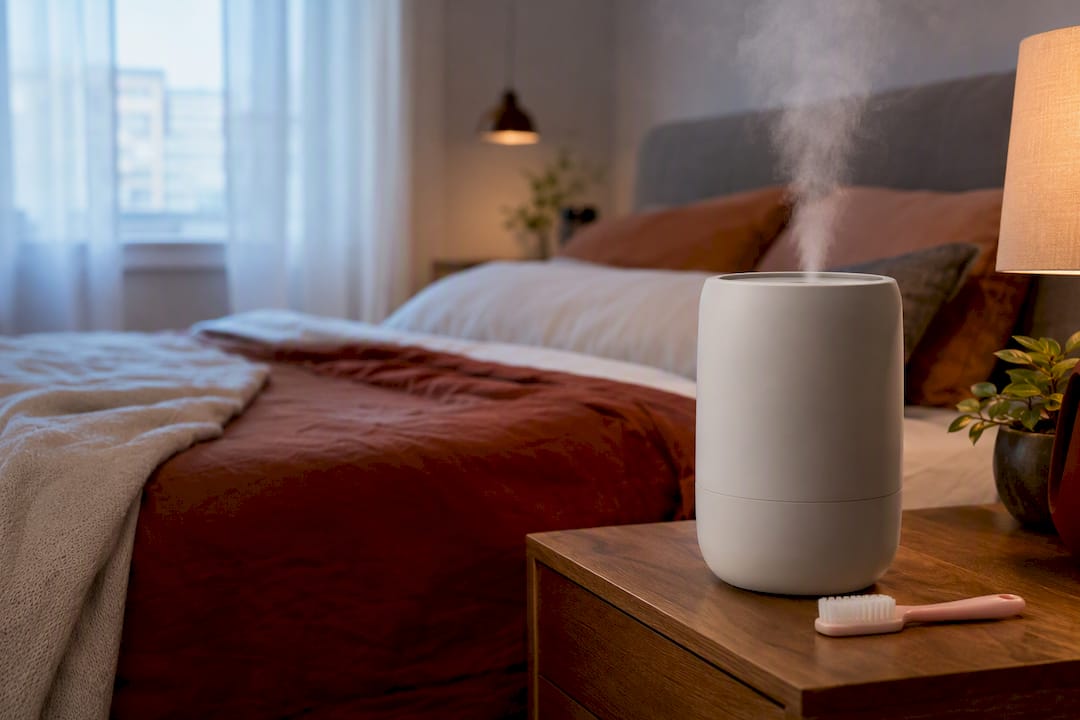
Beyond humidifiers, small environment adjustments add up. Keep showers shorter and cooler, since prolonged hot water strips natural oils and worsens dryness. Facial steaming, while popular, can dehydrate skin when overdone. Limit it to occasional use rather than a daily ritual. Positioning your bed away from direct heating vents, and cracking a window briefly even in cold months, both help regulate the air your skin sits in for eight hours a night.
None of this requires a major purchase or renovation. It requires noticing that the air around you is either helping your skin hold moisture or actively working against it, and adjusting accordingly.
Natural Hair Care Habits That Round Out Your Look
Hair health reads as part of your overall glow, even though most beauty advice treats it as separate. Overwashing strips natural oils the same way over-cleansing strips facial skin, so washing every other day, or every third day for drier hair types, usually preserves shine better than a daily wash.
Heat styling is the biggest hidden damage source. A heat protectant before any hot tool, and lowering the temperature setting when possible, prevents the brittle, dull texture that heavy styling causes over months. Air-drying whenever your schedule allows gives hair a break that a blow-dryer never will.
Scalp health deserves the same attention skin gets. A gentle scalp massage for a few minutes, whether during a shower or with a dry brush, encourages circulation to hair follicles the same way facial massage supports skin tone. Trimming split ends every eight to twelve weeks prevents breakage from traveling up the shaft and making hair look thinner than it is.
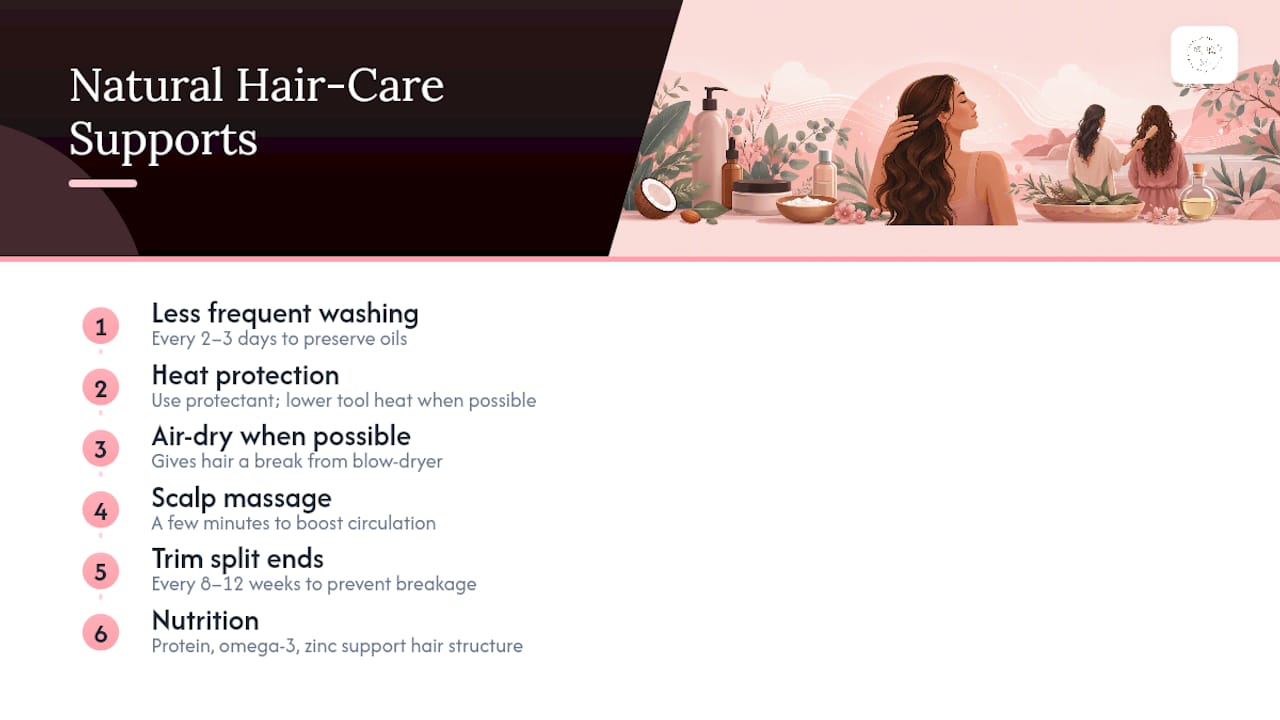
Diet plays a role here too. The same protein, omega-3, and zinc intake that supports skin also supports hair structure, since hair is largely built from protein. If your skin routine already covers nutrition, your hair benefits from the same effort without any extra work.
Why Smoking and Excess Alcohol Undo Your Beauty Routine
No skincare routine outruns smoking or heavy drinking. Smoking constricts blood vessels in the skin, reducing the oxygen and nutrients that reach skin cells, and it breaks down collagen and elastin over time, the two proteins responsible for skin’s firmness and bounce. The result shows up as premature lines, especially around the mouth, and a dull, uneven tone that no serum fully corrects.
Alcohol works differently but arrives at a similar place. It dehydrates skin from the inside, dilates blood vessels temporarily (leading to that flushed, puffy look), and disrupts the deep sleep your skin needs for repair. Even moderate drinking the night before tends to show up as under-eye puffiness and a tired complexion the next morning.
Neither habit needs to disappear overnight to see benefit. Reducing frequency, cutting back on quantity, or adding alcohol-free days each week all produce visible improvement over weeks, not months. This is one area where the payoff for cutting back arrives faster than almost any product change could deliver.
How Does Mental Wellness Show Up on Your Skin?
Stress management gets most of the attention, but broader mental wellness reaches further than a five-minute breathing break can fix. Chronic anxiety, unresolved emotional patterns, and low self-worth all show up physically, through tension held in the jaw and forehead, through skin-picking habits, through disrupted sleep that never quite counts as rest even when you’re in bed for eight hours.
Beauty that comes from genuine ease looks different from beauty that comes from covering something up. People who feel settled in themselves tend to hold less tension in their face, which softens expression lines that stress tends to deepen. This isn’t about achieving constant calm. It’s about building small practices, therapy, community, creative outlets, that support emotional steadiness the way sleep and nutrition support physical repair.
Self-talk matters here too. The way you speak to yourself in the mirror each morning shapes posture, expression, and the energy you carry into a room, all of which read as part of how “put together” you appear, regardless of what’s on your skin.
Pure Light’s Perspective: Adapting This Guide for Sensitive Skin
The belief is that skin that reacts easily doesn’t need less care, it needs gentler, more intentional care. Every habit in this guide holds true for eczema-prone skin, but the execution changes. Patch test everything, including “natural” ingredients, since plant-based doesn’t automatically mean non-reactive. Introduce fewer actives, and space them further apart than a standard routine would suggest. Choose fragrance-free formulas as a default, not an exception, and add new products one at a time so you can trace a reaction back to its source.
If your skin has a history of flaring, working through this alone can feel like guesswork. Coaching services exist to help close that gap.
— Caitlin Grey
Ways to Build These Habits Into Your Routine
There are other routes to steadier skin: dermatologist visits, subscription skincare boxes, generic wellness apps. None of them translate the exact habits in this guide into a ritual built specifically for sensitive and eczema-prone skin tailored as specialized coaching does.

The You Glow Girl™ Transformative Beauty Rituals e-book turns every habit above into a day-by-day ritual guide, ideal if you want structure without a subscription. For readers who need a trained eye on their specific skin, Beauty Within™ Online Coaching offers one-on-one, personalized guidance for building a routine that fits your exact reactivity and lifestyle. If you’d rather start with product than theory, The Carnelian Face™ Bundle gives you a barrier-first starter set formulated for the exact routine this article describes.
Whichever path fits your life right now, the next step is simple: pick one, and start with the You Glow Girl™ e-book if you’re not sure where to begin.
Sources and Further Reading
Guidance in this article draws on FDA sunscreen recommendations, Healthline’s home remedy roundup, and WebMD’s facial steaming overview. Explore layering skincare naturally and glowing skin steps for more from Purelightbotanicalbeauty.
FAQ
How Do I Increase My Beauty Naturally?
Focus on hydration, seven to eight hours of sleep, a barrier-first skincare routine with daily SPF, balanced nutrition, and twenty minutes of daily movement. Most people notice visible changes within four to eight weeks of consistency.
How Can I Make Myself Pretty Naturally Without Makeup?
Prioritize skin health basics, cleanser, moisturizer, sunscreen, alongside good sleep and hydration, then add minimal touches like groomed brows and a tinted lip oil. Confidence and a settled expression also shape how “pretty” reads to others, beyond any product.
How Can I Increase My Face Beauty?
Support your skin barrier with a simple cleanse, moisturize, and SPF routine, add a weekly gentle mask, and improve circulation with a short daily facial massage. Reducing smoking, excess alcohol, and chronic stress accelerates the results.
How Long Does It Take to See Natural Beauty Changes?
Hydration and sleep improvements can appear within days, while skin barrier repair, tone, and reduced puffiness typically take four to eight weeks of consistent habits to become clearly visible.
Does Purelightbotanicalbeauty Offer Guidance for Sensitive Skin?
Yes. Purelightbotanicalbeauty’s Eczema Healing Consultation and Beauty Within™ Online Coaching are both listed on its coaching services page, designed specifically for reactive or eczema-prone skin.