

TL;DR:
- Engaging intentionally with beauty activates feel-good neurochemicals and reduces stress markers. Practicing mindful rituals with botanical products fosters self-regulation and personal growth. However, relying solely on appearance for self-worth can create emotional volatility and undermine confidence.
Intentional engagement with beauty, through sensory ritual and botanical nourishment, supports self-regulation, personal agency, and identity growth. Neuro-aesthetics research confirms that engaging with beauty activates dopamine, endorphins, serotonin, and oxytocin while lowering stress markers like blood pressure and heart rate. Therapist Dr. T.J. Addington describes beauty as “medicine for the soul” that grounds attention in the present and halts unproductive mental loops. Purelightbotanicalbeauty was built on exactly this understanding: that a few minutes of intentional, plant-based care can shift your nervous system and, over time, reshape how you see yourself.
Three things you can do today to feel this shift:
- Breathe before you begin. Take three slow breaths while holding your skincare product. Let the scent register fully before you apply anything.
- Name one intention. Before touching your face, say quietly: “I am caring for myself because I choose to.” Agency, not obligation, is what makes a ritual stick.
- Notice one thing you appreciate. After your ritual, look in the mirror and name one feature or quality you genuinely like. This mirrors the “nine beautiful things” practice shown to measurably improve wellbeing in short interventions.
Statistic callout: A systematic review and meta-analysis found a small-to-moderate improvement in self-esteem following cosmetic interventions, indicating consistent but variable self-esteem gains.
Table of Contents
- What does science say about beauty, mood, and self-concept?
- When does beauty help, and when can it trap you?
- How can you build a mindful beauty ritual in 5–15 minutes?
- How do botanical ingredients support skin healing and sensory nourishment?
- How do you choose botanical skincare for self-growth and sensitive skin?
- How does Purelightbotanicalbeauty’s approach align with this guide?
- What benefits will you notice, and when?
- Key Takeaways
- Beauty as healing: a personal reflection
- Where to begin with Purelightbotanicalbeauty
- Authoritative sources and further reading
What does science say about beauty, mood, and self-concept?
The strongest research takeaway is this: beauty engagement is not vanity. It is a neurological event. Looking at or interacting with beauty triggers the same feel-good neurochemical cascade as love, exercise, and chocolate. That cascade, dopamine, serotonin, endorphins, and oxytocin working together, actively lowers physiological stress markers. The implications for self-healing through beauty are significant.
Experimental work adds nuance. Beautification can increase both explicit and implicit assertiveness in women, but the effect depends on intermediary states: when the motivation is self-expression rather than appearance anxiety, the assertiveness gains are more consistent. A meta-analysis measuring the impact of cosmetic interventions on self-esteem found an overall effect size of Hedges’ g = 0.43, a meaningful shift, though one that varies by individual and context. Makeup use specifically correlates with improved perceived social competence, though its relationship with general self-esteem is mixed and context-dependent. Research also links a beauty growth-mindset, the belief that beauty practices can be cultivated and developed, to measurable prosocial outcomes, suggesting that how you think about your rituals shapes what they produce.
| Research Area | Key Finding | Implication for Ritual Practice |
|---|---|---|
| Neuro-aesthetics | Beauty activates dopamine, serotonin, endorphins, oxytocin | Immediate mood shift possible in minutes |
| Meta-analysis (self-esteem) | Hedges’ g = 0.43 across cosmetic interventions | Consistent but variable self-esteem gains |
| Assertiveness experiments | Beautification raises assertiveness when agency-driven | Motive matters as much as the act |
| Beauty growth-mindset | Linked to prosocial behavior and self-transformation | Rituals work better when framed as development |
When does beauty help, and when can it trap you?
Beauty supports self-growth when it is agency-driven. It can harm when it becomes the primary currency of self-worth. This distinction is the difference between a ritual that heals and one that quietly erodes confidence.
The contingent self-esteem trap is real and worth naming clearly. It occurs when your sense of value rises and falls with how you look on a given day. Signs to watch for:
- You feel significantly worse about yourself on days you skip your beauty routine.
- Compliments feel necessary rather than pleasant.
- You avoid social situations when you feel “off” in your appearance.
- Cultural or social media beauty standards feel like requirements, not suggestions.
Clinical and experimental work warns that depending on appearance for core self-esteem creates volatility. The protective factor is self-compassion, treating yourself with the same warmth you would offer a close friend. If you recognize those red flags, two reframes help immediately. First, shift the ritual’s stated purpose: from “I need to look acceptable” to “I am choosing to care for myself.” Second, pair your ritual with a brief self-compassion prompt: “I am more than how I look today, and this practice is for my wellbeing.” If the pattern feels entrenched, a therapist trained in emotional wellness and beauty can help you untangle appearance-based worth from your deeper identity.
How can you build a mindful beauty ritual in 5–15 minutes?
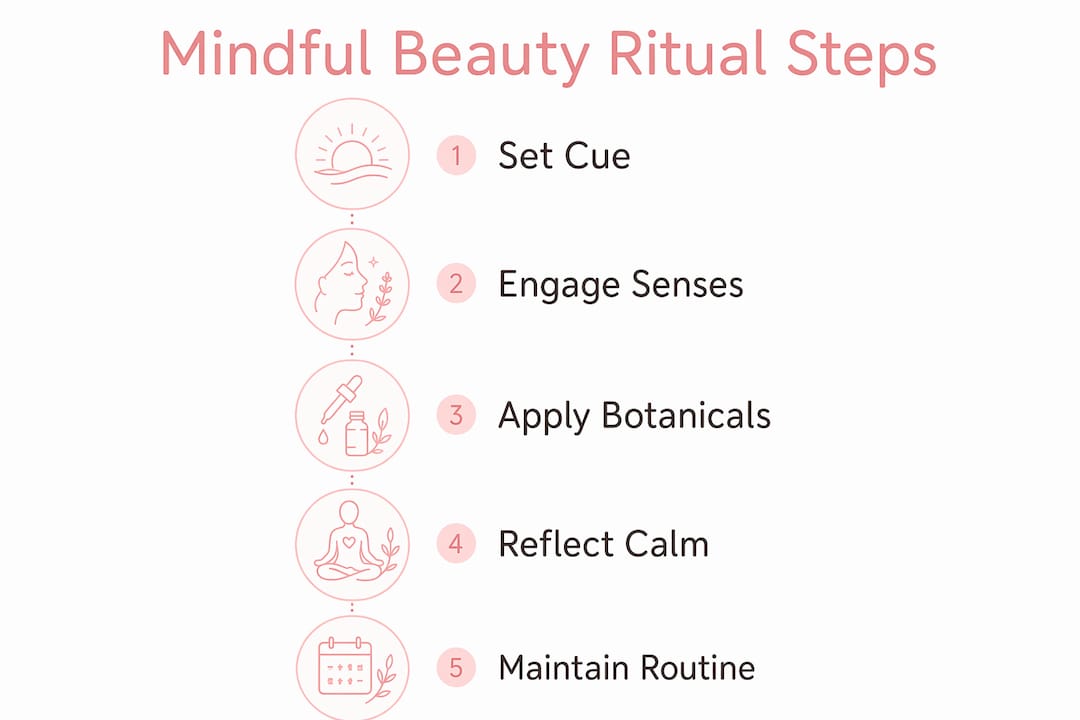
Short rituals act as sensory anchors that interrupt rumination and reinforce personal agency. The key is pairing tactile application with an explicit intention, because rituals that include an agency statement are more likely to produce sustained behavioral change than purely cosmetic use.
5-Minute Morning Reset
- Hold your product and take three slow breaths, letting the scent fully register.
- Apply with deliberate, slow strokes, noticing the texture and warmth of your hands.
- Say one intention aloud: “Today I choose care over criticism.”
- Name one thing you are looking forward to.
10-Minute Midday Anchor
- Step away from screens. Wash your hands slowly, feeling the water temperature.
- Apply a lip treatment or balm, pressing your lips together and noticing the sensation.
- Spend two minutes writing one sentence: “Right now, I feel _____, and I am choosing _____.”
- Take five deep breaths before returning to your day.
15-Minute Evening Ritual
- Dim the lights. Begin with a gentle cleanse, treating it as a transition from the day’s demands.
- Apply your botanical skincare in layers, pausing between each step to breathe.
- Use a brief body scan: notice where you are holding tension and consciously soften it.
- Close with a journaling prompt: “One beautiful thing I noticed today was _____.” This mirrors the “nine beautiful things” practice linked to measurable wellbeing improvements.
Pro Tip: Set a physical cue, like a specific candle or a dedicated tray for your products, to signal to your nervous system that the ritual is beginning. Consistency of environment accelerates the calming response.
How do botanical ingredients support skin healing and sensory nourishment?
Botanical ingredients can combine gentle skin healing with sensory cues that reinforce mindful presence, making them uniquely suited to ritual-based self-growth work.
- Calendula is rich in flavonoids and triterpenes with well-documented calming and anti-inflammatory properties. For sensitive or eczema-prone skin, it reduces redness and supports barrier repair without the irritation risk of synthetic actives.
- Rose works on two levels: topically, its natural polyphenols support hydration and a more even tone; aromatically, its scent activates calming neural pathways, making it a powerful mood cue during ritual.
- Sensory texture matters as much as the ingredient list. A balm that melts on contact, a blush that blends like silk, these tactile experiences are not luxuries. They are the sensory signals that tell your nervous system the ritual is worth repeating.
For sensitive skin, ingredient transparency is non-negotiable. Look for short, readable ingredient lists with no synthetic fragrance, no parabens, and no known irritants. Always patch-test a new formula on the inner arm for 24–48 hours before applying to the face. If redness, itching, or swelling appears, discontinue and consult a dermatologist.
How do you choose botanical skincare for self-growth and sensitive skin?
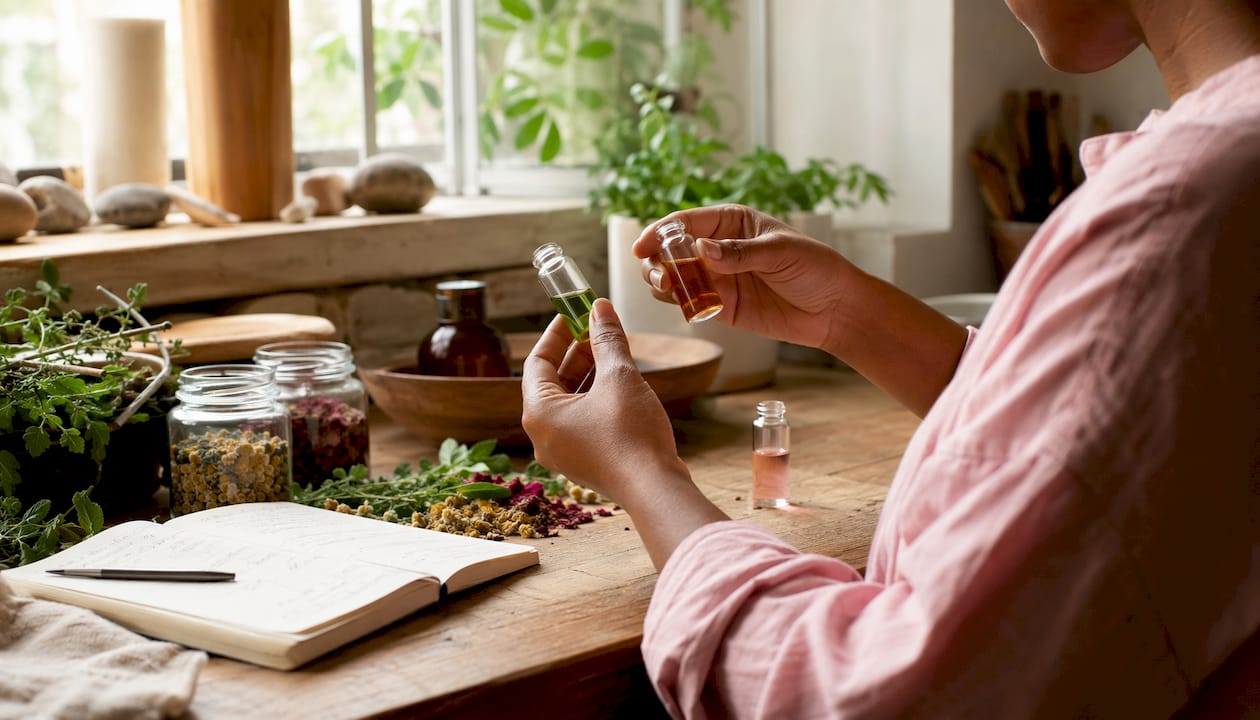
Choose gentle, transparent formulations that encourage repeatable rituals. Texture, scent, and application method are not afterthoughts; they are the sensory architecture of a ritual that you will actually return to.
Product checklist:
- Short ingredient list with recognizable plant-based names
- No synthetic fragrance (listed as “fragrance” or “parfum”)
- No parabens, sulfates, or known sensitizers
- Scent derived from natural botanicals (essential oils or hydrosols)
- Texture that suits your skin type (balm for dry/eczema-prone, lightweight oil for combination)
Patch-test protocol: Apply a small amount to the inner forearm. Wait 24–48 hours. No reaction means you can proceed to a small facial area for another 24 hours before full use.
Timeline: Sensory and mood benefits often appear within the first few uses. Skin-healing changes, particularly for barrier repair in sensitive or eczema-prone skin, typically require 4–8 weeks of consistent use.
Affordability: Quality botanical makeup and skincare spans a wide range. A practical starter approach is to begin with one or two multi-use items, a tinted lip oil or a blush that doubles as a cheek stain, rather than a full routine at once. Purelightbotanicalbeauty’s Petal Perfect Lip Oil and Botanical Crème Blush are designed as exactly this kind of entry point: sensory-rich, multi-use, and formulated for sensitive skin.
How does Purelightbotanicalbeauty’s approach align with this guide?
Purelightbotanicalbeauty’s formulation and ethos are designed for ritualized, gentle care that supports self-healing from the inside out. Every product in the line is built around the same principle this guide rests on: that beauty and healing can come from the same source.
- Petal Perfect Lip Oil: A nourishing, sensory-forward treatment that doubles as a ritual touchpoint. The act of applying it slowly, feeling the glide, noticing the subtle scent, makes it a natural anchor for a midday reset.
- Botanical Crème Blush: Formulated with plant-based pigments and skin-conditioning botanicals, it applies with a warmth and blendability that makes the ritual feel indulgent rather than rushed.
- Nourishing Lipstick: Clean color that conditions as it covers, designed for women who want their makeup to work for their skin, not against it.
- Botanical Beauty Balm ~ Calendula & Rose: The most direct expression of the brand’s healing ethos. Calendula’s anti-inflammatory properties and rose’s calming scent make this balm a sensory ritual in a single step, ideal for sensitive or eczema-prone skin.
The brand’s transparency about ingredients and its commitment to sensitive-skin safety are trust signals that matter. Knowing exactly what is in your product lets you practice with confidence, not caution.
What benefits will you notice, and when?
Immediate sensory benefits, a mood lift, a sense of calm, often appear within minutes of a mindful ritual. Skin-healing and identity shifts take weeks to months.
| Timeline | Ritual/Psychological Benefits | Skin Benefits |
|---|---|---|
| Minutes to days | Mood lift, reduced rumination, present-moment focus | Immediate hydration, softness |
| 4–8 weeks | Increased sense of agency, more consistent self-compassion | Visible reduction in redness; improved texture for sensitive skin |
| 3+ months | Stronger self-identity, growth-mindset shifts, prosocial behavior | Barrier repair, reduced eczema flares with consistent botanical use |
Realistic expectations matter here. Individual results vary based on skin type, stress levels, and how consistently the ritual is practiced. Journaling accelerates awareness of change: a simple weekly note, “What did I notice this week about how I feel before and after my ritual?”, builds the self-observation muscle that makes growth visible.
- Track mood before and after each ritual for the first two weeks.
- Note any skin changes with photos taken in the same light weekly.
- Revisit your intention statement monthly and update it as you grow.
Key Takeaways
Beauty’s role in self-growth is most powerful when rituals are agency-driven, botanically grounded, and practiced with self-compassion rather than appearance-based pressure.
| Point | Details |
|---|---|
| Sensory reset is immediate | Engaging with beauty activates dopamine, serotonin, and oxytocin, shifting mood within minutes. |
| Agency-first framing matters | Rituals paired with an explicit intention produce more sustained behavioral change than cosmetic use alone. |
| Botanical ingredients serve dual roles | Calendula and rose support skin barrier repair and provide sensory cues that reinforce mindful presence. |
| Guard against contingent self-worth | If your mood depends on how you look, reframe the ritual’s purpose and add a self-compassion prompt. |
| Purelightbotanicalbeauty as a starting point | The Botanical Beauty Balm ~ Calendula & Rose and Petal Perfect Lip Oil are designed as sensory-rich, sensitive-skin-safe ritual anchors. |
Beauty as healing: a personal reflection
At Purelightbotanicalbeauty, we believe beauty is not a performance. It is a practice of returning to yourself. The science supports this, and so does the lived experience of every woman who has stood at her mirror in the quiet morning hours and felt something shift, not because she looked different, but because she chose, deliberately, to care for herself. That choice is where self-growth begins. If you are ready to explore what a holistic beauty ritual can do for your skin and your sense of self, start small. One product. One intention. One breath.
Where to begin with Purelightbotanicalbeauty
Full disclosure: Purelightbotanicalbeauty is the publisher of this guide and the maker of the products referenced throughout. We share that openly because trust is the foundation of everything we do.
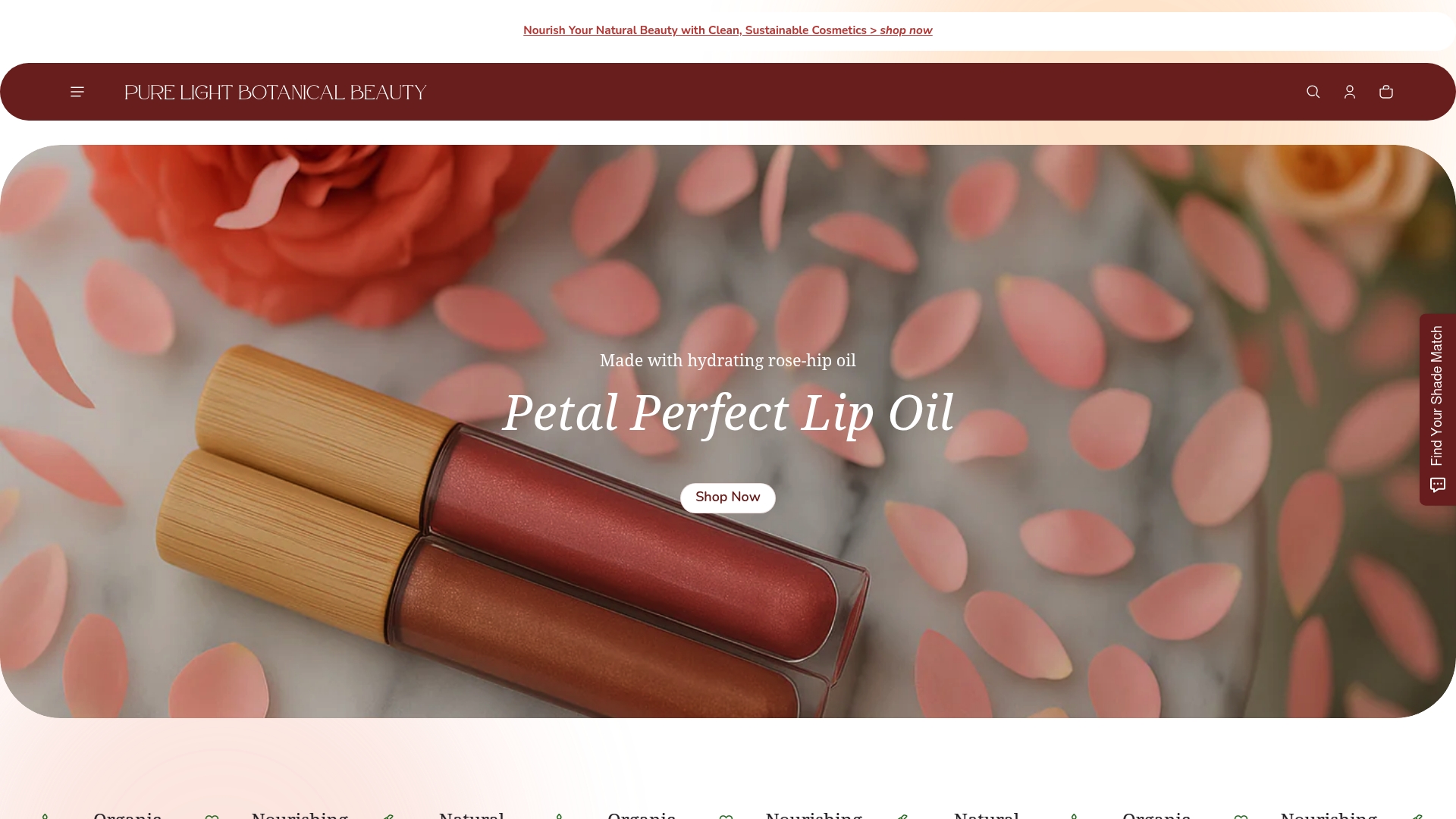
A gentle starting point: the Botanical Beauty Balm ~ Calendula & Rose (currently available for pre-order) is formulated specifically for sensitive and eczema-prone skin, with calendula and rose as its healing core. Pair it with the Petal Perfect Lip Oil for a complete two-step ritual that takes under five minutes. Before your first use, patch-test on your inner arm for 24–48 hours. Then visit Pure Light Botanical Beauty to explore the full collection and find the ritual that fits your life.
Authoritative sources and further reading
These sources ground the guide’s core claims and are worth exploring for deeper context.
- PMC: The impact of cosmetic and plastic surgery on self-esteem — meta-analysis with Hedges’ g = 0.43; use for evidence_summary claims.
- PMC: Contrasting effects of body image and self-esteem in makeup usage — supports psychological_cautions on variability of outcomes.
- PLOS ONE: Beautification and assertiveness — experimental data on conditional assertiveness gains; cite in evidence_summary and cautions.
- Psychreg: Beauty rituals and intentional self-care — practitioner analysis of agency-driven rituals; foundational for how_to and botanical_role.
- Psychology Today (Dr. T.J. Addington): Beauty as medicine for the soul — therapist perspective and the “halt unproductive loops” framing.
- Psychology Today UK: The Health Benefits of Looking at Beauty — neurochemical data (dopamine, serotonin, oxytocin, endorphins) and the “nine beautiful things” intervention.
- Nature (preview): Beauty growth-mindset and prosocial behavior — links growth-oriented beauty views to prosocial outcomes; use in what_to_expect.
- ScienceDirect: Contingent self-esteem and beauty standards — clinical warning on appearance-based self-worth volatility; essential for psychological_cautions.
This article is general information, not medical or psychological advice. For personal skin or mental health concerns, consult a qualified dermatologist or licensed therapist.
Recommended
- Why Beauty Matters for Inner Growth and Healing – Pure Light Botanical Beauty
- Why Beauty Is Self-Love: Holistic Healing for Sensitive Skin – Pure Light Botanical Beauty
- The Role of Holistic Health in Beauty: What Works – Pure Light Botanical Beauty
- Beauty as Healing: Transforming Skin and Soul – Pure Light Botanical Beauty