

Clean makeup brands formulate products by deliberately avoiding ingredients linked to health or environmental harm, and they back that promise with full ingredient disclosure. There is no legal definition to hold them to, so your next move matters more than any label: pull up the ingredient list, look for a verification signal like EWG Verified, and treat transparency as the real qualifier. Some brands build their formulas around that same standard for sensitive and eczema-prone skin.
TL;DR:
- Many “clean” makeup brands lack standardized definitions and rely on marketing, so verifying full ingredient lists and third-party badges is crucial.
- Ingredients like fragrance, parabens, phthalates, formaldehyde releasers, MI/MCI, and certain sulfates are commonly avoided, especially by brands targeting sensitive or eczema-prone skin.
- Transitioning to clean makeup should be gradual, starting with long-wear products, patch-testing new items, and replacing one product at a time to prevent irritation.
- Reliable verification signals include full ingredient disclosure, verified badges, and transparent brand policies; avoid brands that only use vague marketing claims.
- Price does not guarantee cleanliness or safety, and brands across all price points can offer well-formulated, transparent options appropriate for various skin types.
Table of Contents
- What Does ‘Clean’ Actually Mean in Makeup?
- Which Ingredients Do Clean Brands Avoid, and Why?
- How Do You Evaluate a Clean Makeup Brand Quickly?
- How Purelightbotanicalbeauty Meets This Checklist
- Are Third-Party Certifications Like EWG Verified Worth Trusting?
- How Should You Transition to Clean Makeup Without Irritating Your Skin?
- The Evidence Behind These Formulation Standards
- What Does Clean Makeup Typically Cost?
- Where Can You Buy Clean Makeup Products?
- What Are the Biggest Myths About Clean Makeup Brands?
- How Do You Choose Clean Makeup for Your Specific Skin Type?
- What Are Some Reputable Clean Makeup Brands to Know?
- A Reflection on Balanced, Gentle Choices
- Ready to Start With One Clean Swap?
- Where This Guide’s Claims Come From
What Does ‘Clean’ Actually Mean in Makeup?
No government agency, standards body, or law defines “clean” when it comes to cosmetics. A brand can print the word on its packaging without meeting any external benchmark, which is exactly why two products both marketed as “clean” can have wildly different ingredient lists. Healthline and Harvard Health have both pointed out that “clean beauty” functions as a marketing term, not a regulatory one, which puts the burden of verification on the shopper rather than the manufacturer.
That gap has not stopped credible organizations from building working definitions. The Clean Beauty Coalition, for instance, centers its framework on four pillars that show up across most reputable clean brands:
- Ingredient safety — avoiding substances known or reasonably suspected to harm human health.
- Transparency — full disclosure of what’s in a formula, including fragrance components.
- Sustainability — packaging and sourcing choices that reduce environmental impact.
- Ethical sourcing — supply chains that treat workers and communities fairly.
The health-equity piece of that framework deserves more attention than it usually gets. Research compiled by the Clean Beauty Coalition found that products marketed specifically to Black women carry disproportionately higher hazard rankings than products marketed broadly. That is not a footnote. It means the stakes of “clean” claims are not evenly distributed, and it reframes ingredient transparency as something closer to a health-equity issue than a lifestyle preference.
A newer industry framework, developed through EDF+Business, tries to close the definition gap by proposing shared criteria: chemical safety thresholds, standardized transparency practices, and accessibility so clean products aren’t priced only for a narrow slice of shoppers. It has not become an enforced standard, but it gives brands and shoppers alike a more concrete rubric than “clean” alone ever offered. Until something like it becomes universal, your best filter stays the same: does the brand show you everything, or just the parts that sound good?
Which Ingredients Do Clean Brands Avoid, and Why?
Clean formulators tend to draw the line at a fairly consistent list, even without a shared rulebook. The usual suspects:
- Fragrance blends listed simply as “fragrance” or “parfum,” which can hide dozens of undisclosed compounds.
- Parabens, preservatives used to extend shelf life that some research associates with hormone disruption.
- Phthalates, often used to help fragrance last longer on skin.
- Formaldehyde releasers, preservatives that slowly release small amounts of formaldehyde over time.
- MI/MCI (methylisothiazolinone and methylchloroisothiazolinone), preservatives increasingly flagged as contact allergens.
- Certain sulfates, which can strip natural oils and irritate compromised skin barriers.
Here’s where nuance matters: not every ingredient on that list carries the same weight of evidence. Harvard Health’s editorial on clean cosmetics, working from research compiled with the American Contact Dermatitis Society, is specific about which ones have documented allergen status rather than theoretical risk. MI/MCI, fragrance mixes, and formaldehyde releasers fall into the “known contact allergens” category. That’s a meaningfully different claim than “linked to cancer” or “hormone disruptor,” and conflating the two is how misinformation spreads in both directions, overstating some risks while underselling others.
Why this matters for eczema-prone skin specifically: a compromised skin barrier absorbs and reacts to irritants more readily than healthy skin does. If you already manage eczema, sensitivity, or rosacea, an allergen that causes mild irritation in most people can trigger a genuine flare in you.
Pro Tip: Never assume “natural” means “gentle.” Essential oils and plant extracts can irritate sensitive skin just as easily as synthetic ingredients. Patch-test any new product, clean or otherwise, on your inner forearm for 48 hours before it goes near your face.
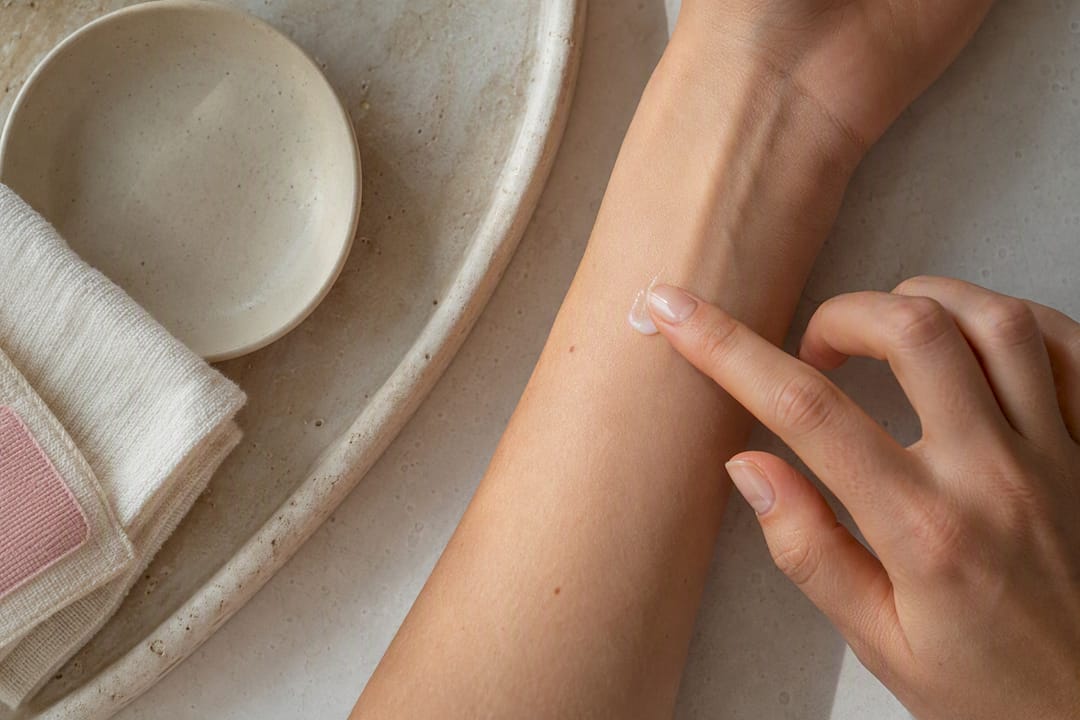
The pragmatic move isn’t chasing a zero-risk formula, because that doesn’t exist. It’s prioritizing brands that disclose enough for you to make an informed call, then patch-testing before full use. Dermatology guidance consistently backs a slow, deliberate swap over an all-at-once overhaul, particularly for anyone managing a reactive skin condition.
How Do You Evaluate a Clean Makeup Brand Quickly?
Marketing copy is designed to make you feel confident fast. Your job is to slow that down just enough to check the substance behind it. Here’s the order that actually matters, ranked from non-negotiable to nice-to-have:
- Full ingredient disclosure. Every component listed, including what’s inside a fragrance blend, not just “fragrance.”
- Third-party verification. A badge like EWG Verified or inclusion in a retailer’s vetted clean program.
- A published ingredient policy. A dedicated page explaining what the brand excludes and why, not a single vague sentence in the About section.
- Safety or testing data. Evidence the brand has done more than assume its formula is safe.
- Cruelty-free status. Confirmed through a recognized certification, not just a claim.
- Packaging sustainability. Refillable, recyclable, or reduced-waste design choices.
- Shade inclusivity. A range that reflects a genuinely diverse customer base.
- Accessible customer support. A real contact method, not a contact form that vanishes into silence.
Red flags worth walking away from: a fragrance ingredient list that just says “fragrance (blend)” with nothing further, marketing language heavy on words like “toxin-free” with zero ingredient specifics to back it, and a complete absence of any verification badge despite a brand plastering “clean” across every product photo. If you see any of these, treat the “clean” label as unverified until proven otherwise.
Here’s a routine that takes less time than reading this paragraph: open the product page, scan the full ingredient list for the categories above, look for a verification badge, and check whether a customer support link actually resolves to something. Sixty seconds, most of the guesswork removed. Our guide to reading transparency in cosmetics breaks this scan down further if you want to build the habit permanently.
How Purelightbotanicalbeauty Meets This Checklist
We built Purelightbotanicalbeauty on the belief that a woman shouldn’t have to choose between a formula that performs and one that respects her skin. Every product exists because we ran it against the same checklist above before it ever reached a shelf. Here’s how three of our staple pieces hold up.
- Bamboo Hand-Mirror. A simple, sustainably sourced accessory designed to support your daily application ritual without adding plastic waste to your routine. It’s a small object, but it reflects the same values driving the formulas: intentional materials, no unnecessary packaging, no shortcuts.
- Botanical Crème Blush™ ~ Rose Quartz. Formulated with plant-based emollients chosen specifically for reactive skin, this blush skips the synthetic fillers and fragrance blends that tend to trigger flares. The full ingredient list is published on the product page, not buried behind a marketing summary, so you can verify exactly what’s touching your cheeks before you buy.
- Nourishing Lipstick™ Refill. Refillable by design, this swap lets you keep the original bullet casing and simply replace the color core when it runs out. That’s a meaningful sustainability upgrade over single-use lipstick tubes, and the formula itself leans on nourishing plant oils rather than the waxes and synthetic film-formers that can dry out already-sensitive lips.
None of this means we’re claiming to be the only option worth considering. It means we’ve done the work the checklist demands, and we’d rather show you the ingredient list than ask you to take our word for it.
Are Third-Party Certifications Like EWG Verified Worth Trusting?
Badges help, but they answer a narrower question than most shoppers assume. Here’s what each one actually verifies:
| Program | What it checks | What it doesn’t check |
|---|---|---|
| EWG Verified | Screens ingredients against EWG’s hazard database; maintains a searchable makeup product listing | Does not clinically test finished-product performance or wear |
| Clean Beauty Coalition standards | Advocacy-driven framework covering ingredient safety, transparency, and sourcing ethics | Not a certifying body with an enforced badge system |
| Clean at Sephora / Conscious Beauty at Ulta | Retailer-level vetting that screens brands against an internal excluded-ingredients list before shelf placement | Standards vary by retailer and are not independently audited by an outside regulator |
The limitation worth remembering: ingredient screening tells you what’s excluded, not how the finished product performs on skin over time. A brand can pass an ingredient screen and still formulate poorly, or vice versa. That’s why the Clean Beauty Coalition’s own guidance points toward combining signals rather than trusting one badge in isolation.
A sensible trust hierarchy looks like this: full ingredient disclosure first, a recognized verification badge second, retailer vetting third, and marketing copy dead last. Our ingredient transparency guide walks through how to layer these signals when you’re comparing two brands side by side.
How Should You Transition to Clean Makeup Without Irritating Your Skin?
Replacing an entire makeup bag overnight is the fastest way to lose track of which product caused a reaction if something goes wrong. Dermatology guidance from Harvard Health backs a slower, staged approach instead, and it’s the same advice we give inside our own transition content.
- Start with the products that touch skin longest. Foundation and concealer sit on your face for hours; swap those before eyeshadow or mascara.
- Patch-test every new product on your inner forearm for 48 hours before applying it to your face, even if the brand markets itself as gentle.
- Expect a different wear profile. Clean formulas often rely on natural waxes and oils instead of synthetic film-formers, which can mean more frequent touch-ups, especially in humidity.
- Keep useful conventional items you’re not ready to replace rather than discarding everything at once purely for the sake of consistency.
- See a dermatologist if you notice persistent redness, itching, or breakouts that don’t resolve within a week of switching.
Pro Tip: Introduce one new product per week during your transition. If a reaction shows up, you’ll know exactly which formula caused it instead of guessing across five new products at once.
Refillable formats, like our Nourishing Lipstick™ Refill, are a practical way to reduce packaging waste as you rebuild your routine. Our full swap guide covers product-by-product replacement timing in more depth.
The Evidence Behind These Formulation Standards
Every claim in this guide traces back to a specific evidentiary source rather than a marketing assumption. Harvard Health’s contact-dermatitis research, cross-referenced with the American Contact Dermatitis Society, backs the ingredient guidance above. The Clean Beauty Coalition’s published priorities and health-equity data inform the “what clean means” framework. EWG’s product-screening database gives shoppers a searchable way to verify brand claims independently.
Caitlin Grey oversees the editorial standards behind this guide, and the checklist above maps directly to what dermatology sources and advocacy research actually document, not to what sounds reassuring in a product description. Case-by-case skin responses vary, which is precisely why patch-testing sits at the center of every recommendation here rather than a blanket promise of universal tolerance.
What Does Clean Makeup Typically Cost?
Clean makeup spans a wider price range than most shoppers expect, and cost alone tells you almost nothing about formulation quality. Mass-market clean lines sold at drugstores can run comparable to conventional drugstore makeup, while boutique and small-batch clean brands often price closer to prestige cosmetics, sometimes higher, because plant-based sourcing and smaller production runs cost more per unit than synthetic mass manufacturing.
Refillable formats change that math over time. A refill system, like a lipstick refill, usually costs less than buying a full new product each time, since you’re only replacing the color core rather than the casing, applicator, and packaging. That’s a meaningful long-term savings if you wear a shade regularly.
The honest takeaway: a higher price does not guarantee a cleaner formula, and a lower price does not automatically mean corners were cut. Check the ingredient list at every price point. Some of the most transparent, well-formulated clean products sit in the middle of the market, not at the extremes.
Where Can You Buy Clean Makeup Products?
Clean makeup has moved well past niche health-food stores into mainstream retail, both physical and online. Retailer-curated sections, like Clean at Sephora and Conscious Beauty at Ulta, screen brands against an internal excluded-ingredients list before granting shelf space, which gives shoppers a pre-filtered starting point even though the standards vary by retailer.
Direct-to-consumer brand websites remain one of the most reliable places to buy, mainly because you get the fullest ingredient disclosure straight from the source, along with any published testing or sourcing information the brand chooses to share. Some brands sell directly through their own sites for exactly this reason: no intermediary editing down the ingredient story.
Specialty clean-beauty retailers and their online storefronts offer another vetted option, typically applying their own ingredient exclusion lists before accepting a brand. Wherever you shop, the verification hierarchy from earlier in this guide still applies. Retailer vetting is a helpful filter, not a substitute for reading the label yourself.
What Are the Biggest Myths About Clean Makeup Brands?
The myth that causes the most confusion: “clean” means “natural,” and “natural” means “safe.” None of those three words are interchangeable. Poison ivy is natural. Some synthetic ingredients are extensively studied and demonstrably gentle. Clean beauty, at its best, is about documented safety and transparency, not about avoiding anything with a chemical-sounding name.
A second myth worth retiring: clean makeup doesn’t perform as well as conventional makeup. That was truer years ago than it is now. Formulation technology has closed much of that gap, though it’s fair to say clean formulas still tend to rely more on natural waxes and oils than long-wear synthetic film-formers, which can mean different touch-up needs, not necessarily worse results.
A third misconception: if a brand is clean, every product it makes is automatically hypoallergenic. Clean and hypoallergenic are different promises. A clean brand can still use a plant-derived ingredient that happens to be a common allergen for a specific person. That is exactly why patch-testing stays relevant even when you’re buying from a brand you trust.
Finally, some shoppers assume “clean” is a synonym for “expensive.” As covered above, that’s not consistently true. Price and formulation integrity move somewhat independently of each other.
How Do You Choose Clean Makeup for Your Specific Skin Type?
Skin type should drive your ingredient priorities more than any general “clean” checklist alone. If you manage eczema or a compromised skin barrier, prioritize brands that disclose full fragrance breakdowns and skip MI/MCI preservatives specifically, since those show up repeatedly in contact-dermatitis research as documented allergens.
If you have oily or acne-prone skin, look for clean formulas that avoid heavy natural oils and waxes that can sit on top of the skin rather than absorb, since those ingredients are exactly what replace the synthetic film-formers many clean brands exclude. Ask whether the brand publishes any information about comedogenicity, not just “toxin-free” language.
Dry or mature skin tends to respond well to clean formulas built around nourishing plant oils, which is one of the more genuine performance advantages of the category. A vegan makeup brand focused on plant-based emollients, for instance, can offer real hydration benefits that some conventional formulas skip entirely in favor of long-wear synthetics.
Whatever your skin type, the evaluation order stays the same: ingredient disclosure first, verification signal second, then match the specific ingredients to your known sensitivities. Our clean makeup checklist is built around exactly this kind of personalized filtering.
What Are Some Reputable Clean Makeup Brands to Know?
The clean beauty space has grown enough that shoppers now have real variety across price points and formulation philosophies, rather than a handful of niche options. A few categories worth knowing as you build your own list:
Plant-based, sensitive-skin-focused brands like Purelightbotanicalbeauty formulate specifically around skin conditions such as eczema, emphasizing full ingredient disclosure and gentle, nourishing plant oils over synthetic film-formers. Mass-market clean lines have expanded into drugstore and big-box retail, making ingredient-conscious options accessible at a lower price point, though disclosure quality still varies brand to brand within this tier. Boutique clean labels carried at retailers with vetting programs, such as Sephora’s Clean at Sephora section, tend to combine higher price points with more rigorous internal ingredient screening before they ever reach shelf placement.
Rather than chasing a single “best” brand, the smarter approach is matching brand philosophy to your specific skin needs using the checklist covered earlier in this guide. A brand that’s ideal for oily, acne-prone skin may be the wrong formulation choice entirely for someone managing eczema, regardless of how “clean” either one claims to be.
A Reflection on Balanced, Gentle Choices
I think the clean beauty conversation sometimes tips into perfectionism, and that does a disservice to the women it’s supposed to help. You don’t need to purge your entire vanity in a weekend or feel guilt over every conventional product still sitting in your drawer. Real change happens through gentle, deliberate swaps, ones that respect both your skin’s reactivity and your budget’s reality. If you manage eczema or sensitivity, give yourself permission to move slowly, patch-test honestly, and treat this as a self-care ritual rather than a test you can fail. If you want a guided path through that transition, our step-by-step transition guide walks through it at a pace that respects your skin’s timeline, not a marketing calendar’s.
— Caitlin Grey
Ready to Start With One Clean Swap?
You don’t need to overhaul your entire routine this week. Purelightbotanicalbeauty’s plant-based formulas are built specifically for sensitive and eczema-prone skin, so a single swap, one product, one honest test, tells you more than reading another ingredient list ever will.
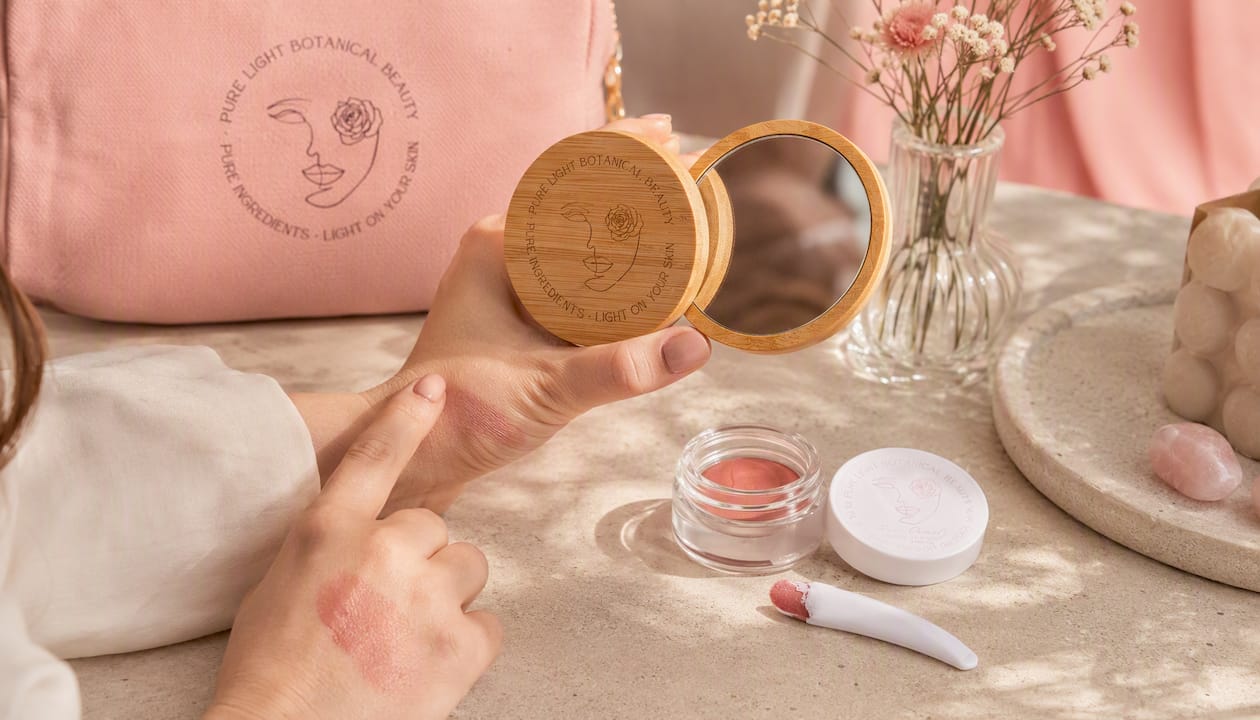
A soft, buildable color is often the easiest place to start, which is why we’d point you toward the Botanical Crème Blush™ in Rose Quartz as your first purchase. If you’re already committed to reducing packaging waste, the Nourishing Lipstick™ Refill replaces just the color core, not the whole tube, and pairs naturally with the Bamboo Hand-Mirror for a low-waste application ritual. Every ingredient we use is listed in full on the product page, so you can verify it yourself before it touches your skin.
Where This Guide’s Claims Come From
- Clean Beauty Coalition — the ingredient safety, transparency, and health-equity framework this guide leans on.
- EWG Verified — a searchable database for confirming ingredient screening on makeup products.
- Harvard Health and Healthline — dermatology-grounded analysis of contact allergens and the unregulated “clean” label.
- EDF+Business — a proposed industry framework for standardizing clean-beauty criteria.