

TL;DR:
- Transformative beauty emphasizes long-term skin healing using natural, plant-based ingredients.
- It promotes a holistic approach connecting skin health with emotional and lifestyle wellness.
- This philosophy prioritizes patience, consistency, and genuine self-care over quick fixes and temporary results.
If you’ve ever stood in a drugstore aisle, reading ingredient labels on yet another “soothing” cream while your skin quietly flared beneath your fingertips, you already know the frustration. Most skincare promises fast relief but delivers short-lived results, especially for women with sensitive skin or eczema. What if the solution isn’t another quick fix, but a completely different way of thinking about beauty altogether? Transformative beauty is that shift, a philosophy that treats your skin as something to genuinely heal, not just manage, and builds the kind of confidence that doesn’t wash off at the end of the day.
Table of Contents
- Understanding transformative beauty
- Core principles of transformative beauty
- How transformative beauty compares: Conventional vs. holistic
- Transformative beauty in practice: Rituals and routines
- Long-term impact: Confidence, healing, and empowerment
- Why transformative beauty is more than a trend
- Discover your transformative beauty journey
- Frequently asked questions
Key Takeaways
| Point | Details |
|---|---|
| Gentle healing focus | Transformative beauty prioritizes slow, natural healing ideal for sensitive skin and conditions like eczema. |
| Confidence through wellness | Long-term routines improve both self-esteem and emotional wellbeing. |
| Natural, meaningful rituals | Adopting plant-based routines supports holistic skin health and authenticity. |
| Ancient roots, modern results | This approach draws on traditional healing to deliver proven confidence and skin improvements. |
Understanding transformative beauty
Let’s get clear on what transformative beauty actually means and why it matters for your skin’s wellness.
Transformative beauty isn’t a product category. It’s a mindset. Instead of asking “what will calm my skin tonight?” it asks “what will genuinely restore my skin over time?” This distinction is everything, particularly for women living with eczema or heightened skin sensitivities.
At its core, transformative beauty treats the skin as a living ecosystem. When that ecosystem is disrupted, by stress, synthetic chemicals, or environmental triggers, the goal isn’t to silence the symptoms. It’s to rebuild the system. This is where it fundamentally diverges from conventional skincare, which often reaches for corticosteroids or harsh actives that deliver fast but temporary relief.
What does that ecosystem approach look like in practice? Here’s a breakdown of its key characteristics:
- Gradual, cumulative healing rather than immediate suppression of symptoms
- Plant-based ingredients that work with the skin’s natural biology, not against it
- Holistic wellness integration, meaning beauty is connected to sleep, stress, nutrition, and emotional health
- Sustainable confidence, built from genuine skin improvements rather than cosmetic camouflage
- Reduced reliance on reactive treatments, replacing the cycle of flare and suppress with consistent nourishment
“True transformation doesn’t happen overnight. It happens in the quiet, consistent moments of choosing your skin’s long-term health over a temporary fix.”
For women navigating eczema or reactive skin, understanding this philosophy can feel like finally being handed a roadmap. And building beauty habits for sensitive skin that align with this way of thinking is one of the most empowering places to start.
Core principles of transformative beauty
Now that you know the definition, let’s explore the underlying values that make transformative beauty such a unique approach.
Three principles anchor this philosophy, and each one directly addresses the frustrations that come with living in reactive, sensitive skin.
1. Long-term healing is the priority. This means resisting the urge to reach for the fastest fix and instead choosing ingredients that support the skin’s own regenerative processes. Botanicals like calendula, sea buckthorn oil, and oat extract have centuries of use behind them precisely because they support barrier repair without overwhelming the skin. This approach aligns with a growing recognition that gradual, ecosystem-like regeneration is more sustainable than repeated rounds of potent actives.
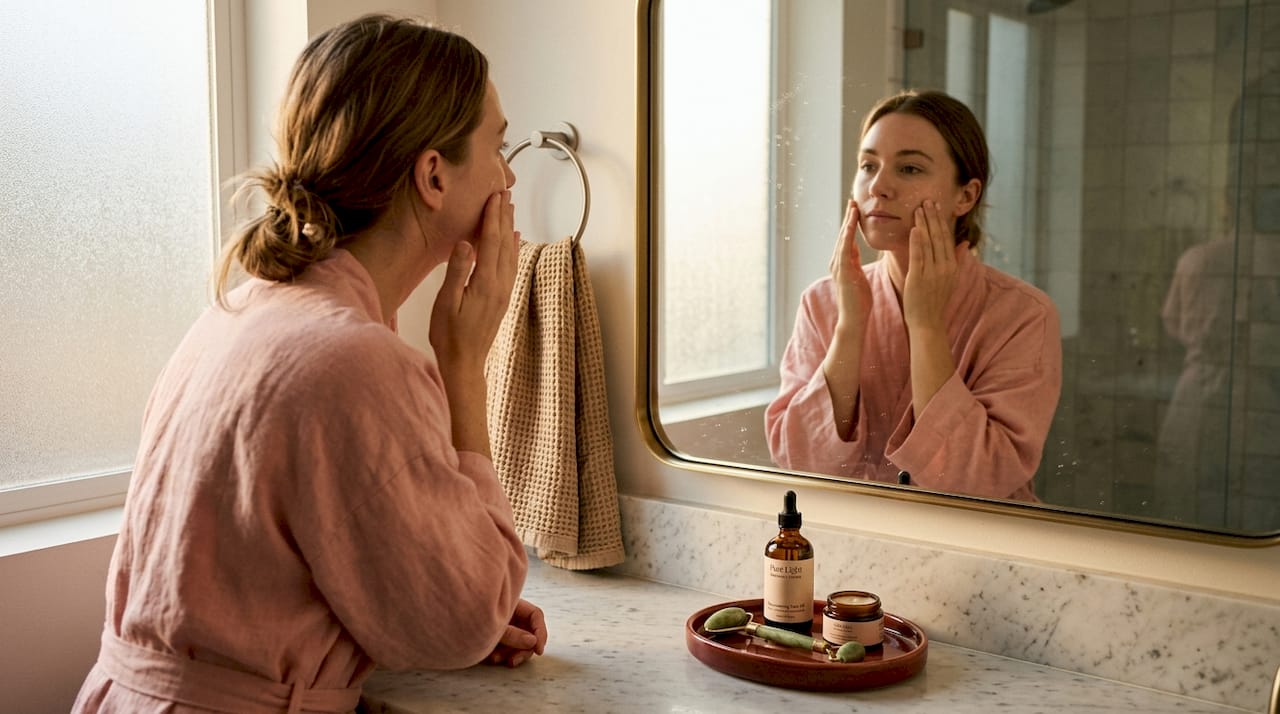
2. Self-acceptance is part of the formula. Stress is one of the most underestimated triggers for eczema flares. Cortisol, the body’s primary stress hormone, is known to weaken the skin barrier, making skin more reactive and vulnerable. Transformative beauty treats emotional wellness as inseparable from skin wellness. Practices like mindful application, intentional self-care rituals, and choosing products that genuinely feel nurturing can lower the body’s stress response over time. Exploring inner growth through beauty is not just poetic, it’s physiologically meaningful.
3. Choosing products intentionally, not reactively. A wellness approach to glowing skin means reading labels with purpose, not panic. It means building a small, thoughtful routine rather than cycling through dozens of products in search of a miracle.
Here’s a simple framework to guide your product choices:
| Feature | What to look for | What to avoid |
|---|---|---|
| Ingredient origin | Plant-based, certified botanical extracts | Synthetic fragrances, parabens, sulfates |
| Formulation philosophy | Barrier-supporting, gentle, nourishing | High concentrations of actives (acids, retinols) |
| Skin response | Calming, reducing redness over time | Immediate tingle or “purging” phases |
| Wellness alignment | Minimal ingredients, transparent sourcing | Long, unpronounceable ingredient lists |
| Emotional experience | Products that feel like a ritual | Products that feel clinical or fear-driven |
Pro Tip: When introducing a new botanical product, apply it to a small patch of skin near your inner wrist for three days before using it on your face. This gives your skin time to signal how it feels without risking a full flare.
How transformative beauty compares: Conventional vs. holistic
To see why transformative beauty might feel so different, here’s how it stacks up against typical skincare approaches.
Understanding the contrast makes the choice feel less overwhelming and more empowering. Neither approach is entirely without merit, but for women with sensitive or eczema-prone skin, the differences are significant.
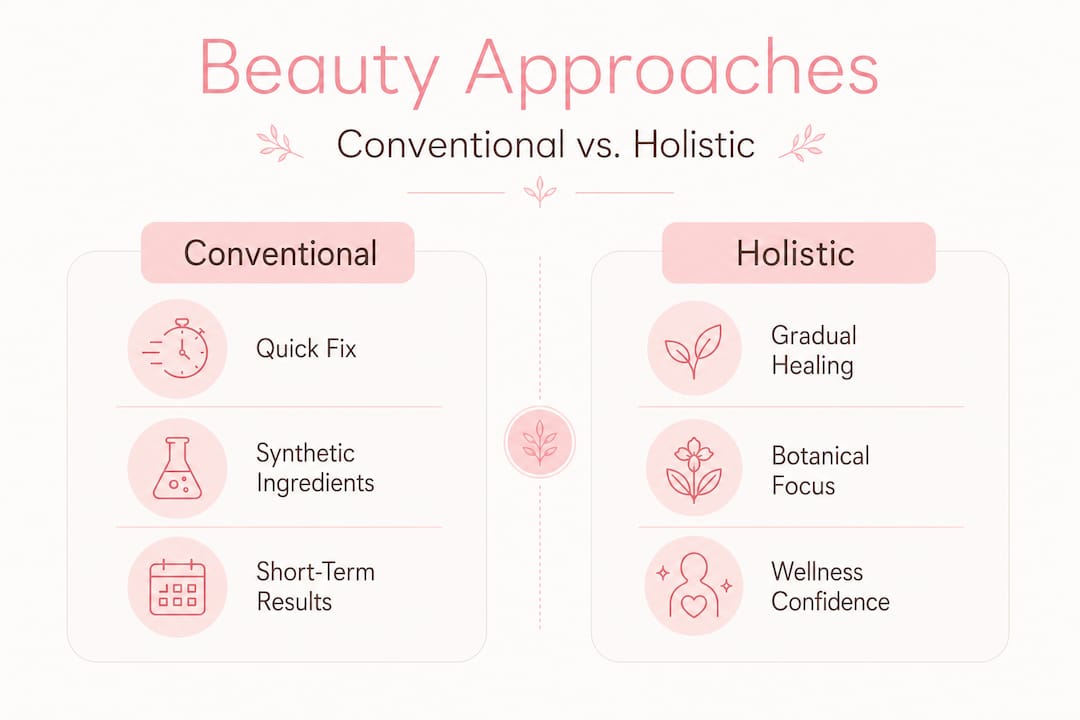
- Speed of results. Conventional skincare often delivers visible change in days, sometimes hours. Transformative beauty operates on a longer timeline, typically four to twelve weeks before cumulative results become noticeable. That patience requires trust in the process.
- Mechanism of action. Traditional treatments work by suppressing inflammation aggressively, for example through topical steroids that reduce immune response. Botanical alternatives work by providing the skin with nutrients it needs to calm and repair itself organically.
- Side effect profile. Prolonged use of corticosteroids can lead to skin thinning, increased sensitivity, and rebound flares when discontinued. Botanical routines, when well-formulated, typically have no such withdrawal cycle.
- Confidence impact. This is the most overlooked difference. Conventional skincare often creates dependency, meaning your confidence is tied to whether the product is working today. Transformative beauty builds a foundation of genuine skin health, which creates a more stable, lasting sense of self-confidence.
- Sustainability. Eco-friendly skincare routines built on botanical ingredients tend to have smaller environmental footprints, which matters increasingly to women who want their wellness choices to reflect their values.
“The beauty industry has long sold us the idea that faster means better. But for sensitive skin, slow and steady isn’t just a preference. It’s a necessity.”
The science of gradual regeneration supports what many women with eczema already know intuitively: their skin doesn’t respond well to being pushed. It responds to being gently guided.
| Approach | Timeframe | Skin risk | Confidence effect | Sustainability |
|---|---|---|---|---|
| Conventional skincare | Days to weeks | Possible sensitivity or rebound | Short-term | Lower |
| Transformative beauty | Weeks to months | Minimal, if well-formulated | Long-term, stable | Higher |
Transformative beauty in practice: Rituals and routines
It’s time to make all this practical: here’s how to apply transformative beauty at home.
Knowing the philosophy is one thing. Living it is another. The good news is that transformative beauty doesn’t require an extensive product arsenal or a complicated multi-step routine. In fact, simplicity is one of its defining features.
Here’s what a foundational transformative beauty routine for sensitive or eczema-prone skin might look like:
- Morning: A gentle botanical cleanser (look for oat extract or chamomile), a hydrating toner mist with rose water or aloe vera, and a lightweight serum containing calendula or sea buckthorn. Finish with a mineral SPF that doesn’t contain chemical UV filters, which can irritate sensitive skin.
- Evening: Oil cleansing with jojoba or rosehip oil to remove the day gently, followed by a simple barrier cream containing ceramides and plant butters like shea or mango butter. This is when your skin does most of its repair work, so the goal is to nourish and leave it undisturbed.
- Weekly: A gentle, enzyme-based exfoliation using papaya or pumpkin enzymes rather than physical scrubs or chemical acids. This removes dead skin cells without aggravating sensitivity.
- Daily ritual: Mindful product application. Take thirty seconds to breathe, feel the texture of what you’re applying, and be present in the moment. This isn’t just “self-care talk.” It genuinely signals the parasympathetic nervous system to relax, which reduces cortisol and supports skin healing.
Healing through botanicals looks different for every woman, but the thread connecting all effective natural routines is consistency. You cannot transform reactive skin with occasional gentleness. It takes a daily, unwavering commitment to nourishment.
Pro Tip: Keep your routine to five products or fewer. The more products you layer, the harder it becomes to identify what’s helping and what’s not. Simplicity is protective skin strategy, not a shortcut.
One of the most powerful realizations many women have is that their natural beauty routine doesn’t have to be separate from their makeup routine. Botanical makeup products, those formulated with nourishing plant oils and skin-supporting actives, can actually extend the healing work of your skincare. The two don’t have to compete.
As the Global Wellness Institute notes, the movement away from quick-fix skincare toward natural, gradual regeneration is one of the most significant shifts in modern wellness. And women with sensitive skin are often the ones leading it, because they have the most to gain.
Long-term impact: Confidence, healing, and empowerment
Finally, let’s look at how transformative beauty continues paying off in your life beyond skincare.
The benefits of a consistent, holistic beauty practice don’t stay on your skin. They migrate inward. Women who commit to a transformative beauty approach often report shifts in how they feel about themselves that go far deeper than clear skin.
Here’s what the long-term journey tends to look like:
- Greater self-trust. When you learn to listen to your skin, you also learn to trust your own instincts about what it needs. That self-trust extends into other areas of life.
- Reduced beauty anxiety. Eczema and sensitive skin can create intense anxiety around appearance, especially during flares. As skin stability improves, so does peace of mind around how you look and feel each day.
- Deeper connection to self-care as a ritual. What starts as a skincare routine often becomes a meaningful practice of self-love and reflection.
- Authentic confidence. This is the big one. Beauty empowerment for wellness is about feeling good in your skin because your skin is genuinely healthy, not because you’ve mastered a concealment technique.
- Alignment with personal values. Choosing clean, botanical beauty aligns with a broader commitment to wellness, environmental care, and authenticity. That alignment creates a sense of integrity that compounds over time.
“Beauty isn’t a problem to solve. It’s an ongoing relationship with yourself, and like all meaningful relationships, it deepens with patience, honesty, and care.”
The connection between beauty authenticity and healing is something that shows up repeatedly in women’s experiences with transformative beauty. When your routine is rooted in genuine care rather than fear of your own skin, something quietly powerful shifts. You stop fighting your reflection and start nurturing it.
This aligns with a global wellness movement that recognizes mental and emotional health as foundational to physical beauty. The two have never truly been separate. Transformative beauty simply makes that connection visible and intentional.
Why transformative beauty is more than a trend
Here’s something we believe firmly: the most important thing the beauty industry could do right now is slow down. And not just for the sake of sensitive skin.
We live in a world that rewards immediacy. Fast shipping, instant results, overnight transformations. When that culture collides with skincare, it produces an endless cycle of product churn and frustrated skin. Women with eczema know this better than anyone. You try something, it seems to help, then it stops working, or worse, causes a new problem.
Transformative beauty is often labeled a “wellness trend,” and that framing concerns us. Because trends, by definition, pass. What we’re talking about here is something rooted far deeper than a cultural moment. Traditional medicine systems, including Ayurveda, Traditional Chinese Medicine, and Indigenous plant healing, have used botanical ingredients therapeutically for thousands of years. The role of botanicals in skin health isn’t a recent discovery. It’s ancient knowledge being rediscovered and validated through modern research.
What’s new is the application of that wisdom within contemporary beauty. And that’s worth taking seriously. The shift away from quick fixes toward ecosystem-like regeneration isn’t a marketing angle. It’s a return to something that was always true about skin: it heals best when it’s supported, not suppressed.
The uncomfortable truth is that most of us have been conditioned to distrust our own healing capacity. We reach for the strongest solution available because we’ve lost faith that anything gentler could work. Transformative beauty asks you to reclaim that faith. Slowly. Consistently. With intention. And for women with sensitive skin or eczema, that reclamation is genuinely life-changing.
Discover your transformative beauty journey
Ready to put these principles into practice and see real results? Here’s where to start.
At Pure Light Botanical Beauty, every formula is built with your skin’s healing in mind. We know that finding products you can trust with sensitive or eczema-prone skin takes more than a good ingredient list. It takes a brand that understands the full picture: the frustration, the hope, the need for something that genuinely works without harm.
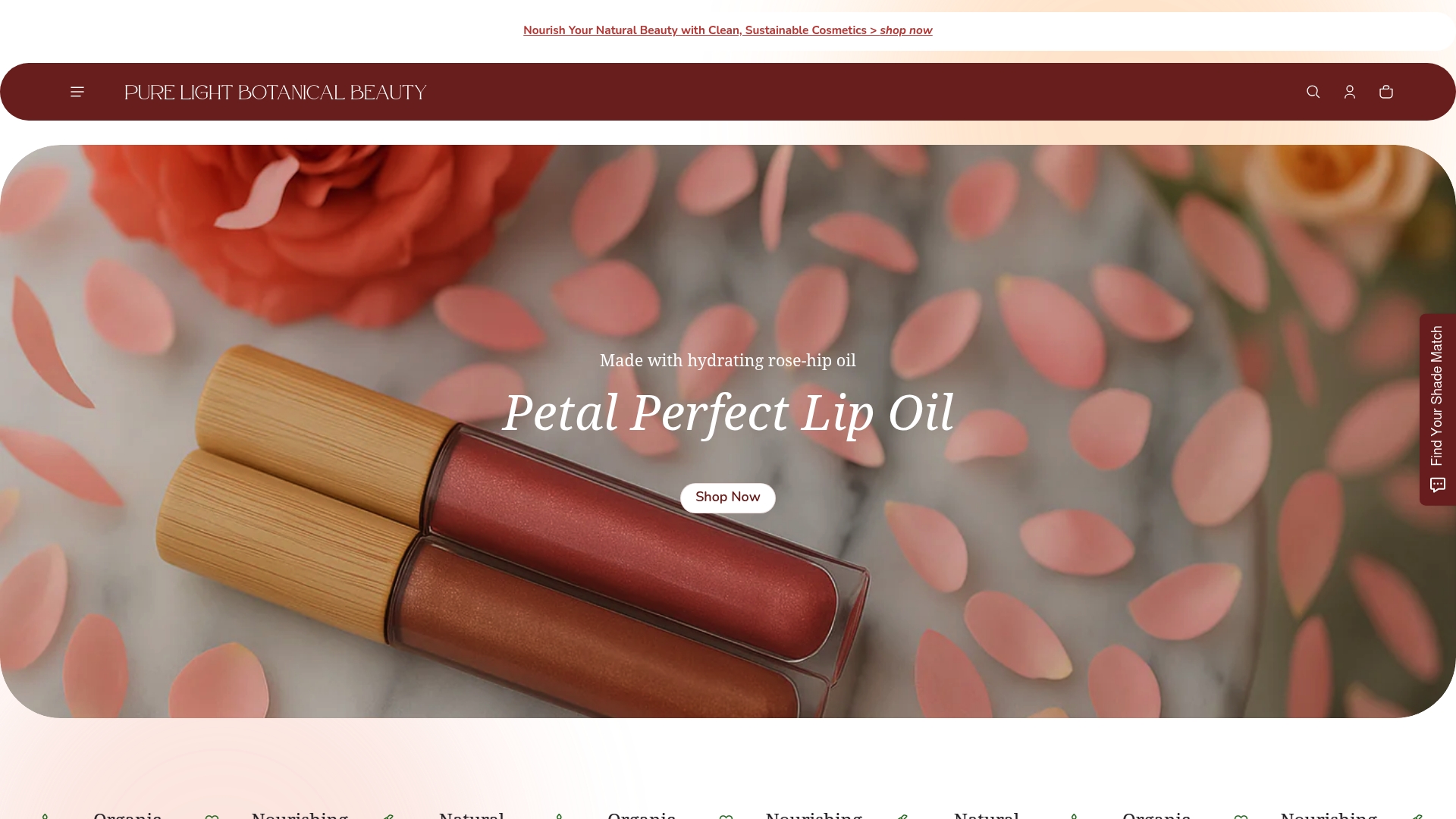
Whether you’re beginning your botanical journey or deepening an existing ritual, Pure Light Botanical Beauty offers a thoughtfully curated collection of clean, plant-based products designed to nourish your skin while enhancing your natural glow. From our Petal Perfect Lip Oil to our Botanical Crème Blush, each product is formulated to feel as good as it looks, turning your daily routine into an act of genuine self-care. Your healing, your confidence, and your beauty deserve that kind of intention.
Frequently asked questions
What makes transformative beauty ideal for sensitive skin?
Transformative beauty avoids harsh chemicals and focuses on gradual healing with natural, nurturing ingredients, supporting the skin’s own regeneration via naturals rather than suppressing symptoms with aggressive actives.
How is transformative beauty different from traditional skincare?
Unlike traditional skincare, transformative beauty emphasizes long-term healing, holistic wellness, and uses botanicals instead of quick-fix actives, moving away from quick fixes like steroids toward gradual, ecosystem-like skin regeneration.
Can transformative beauty approaches help with eczema?
Yes, many people with eczema find meaningful relief through gentle, plant-based routines because botanical ingredients support barrier repair and reduce inflammation without the side effects associated with repeated corticosteroid use.
Is transformative beauty just a trend?
No. It’s a holistic philosophy rooted in thousands of years of traditional plant medicine, and modern skincare research increasingly validates its approach as a sustainable, effective path to lasting skin confidence.
Recommended
- Why Beauty Matters for Inner Growth and Healing – Pure Light Botanical Beauty
- Beauty authenticity: healing, confidence & clean rituals – Pure Light Botanical Beauty
- Beauty as Healing: Transforming Skin and Soul – Pure Light Botanical Beauty
- Transformational Beauty Habits for Sensitive Skin – Pure Light Botanical Beauty