

TL;DR:
- Beauty journaling deepens emotional self-awareness and transforms how women see their skin and worth.
- Research supports its benefits in reducing anxiety, improving body image, and fostering holistic self-care habits.
- Daily structured prompts and rituals promote self-compassion, identity growth, and mindful skincare practices.
Beauty journaling might sound like a simple habit, but the emotional rewards it delivers go far beyond product tracking. When you sit down each morning or evening with a pen and your thoughts, you are doing something quietly powerful: you are rewriting your relationship with yourself. For women who embrace holistic self-care, this practice can shift how you see your skin, your body, and your worth. The research backs this up, and the practical tools are simple enough to start today. This guide walks you through the science, the daily mechanics, and the deeper identity work that makes beauty journaling one of the most underrated rituals in a natural beauty routine.
Table of Contents
- What is beauty journaling and why does it matter?
- The science-backed benefits of beauty journaling
- How beauty journaling works: Rituals, prompts, and daily mechanics
- Limitations, edge cases, and how to maximize the benefits
- What most articles miss: Beauty journaling as identity transformation
- Start your holistic beauty journaling journey
- Frequently asked questions
Key Takeaways
| Point | Details |
|---|---|
| Holistic journaling | Beauty journaling transforms routines into emotional, self-care rituals tied to well-being. |
| Science-backed benefits | Expressive and self-compassion writing offer measurable improvements in mental health and body image. |
| Practical daily rituals | 10-15 minute daily sessions using natural rituals and beauty-specific prompts drive lasting change. |
| Know your limits | Journaling best supports anxiety and stress, but isn’t a substitute for professional care in severe cases. |
| Authentic self-love | Beauty journaling empowers women to build confidence and redefine beauty on their own terms. |
What is beauty journaling and why does it matter?
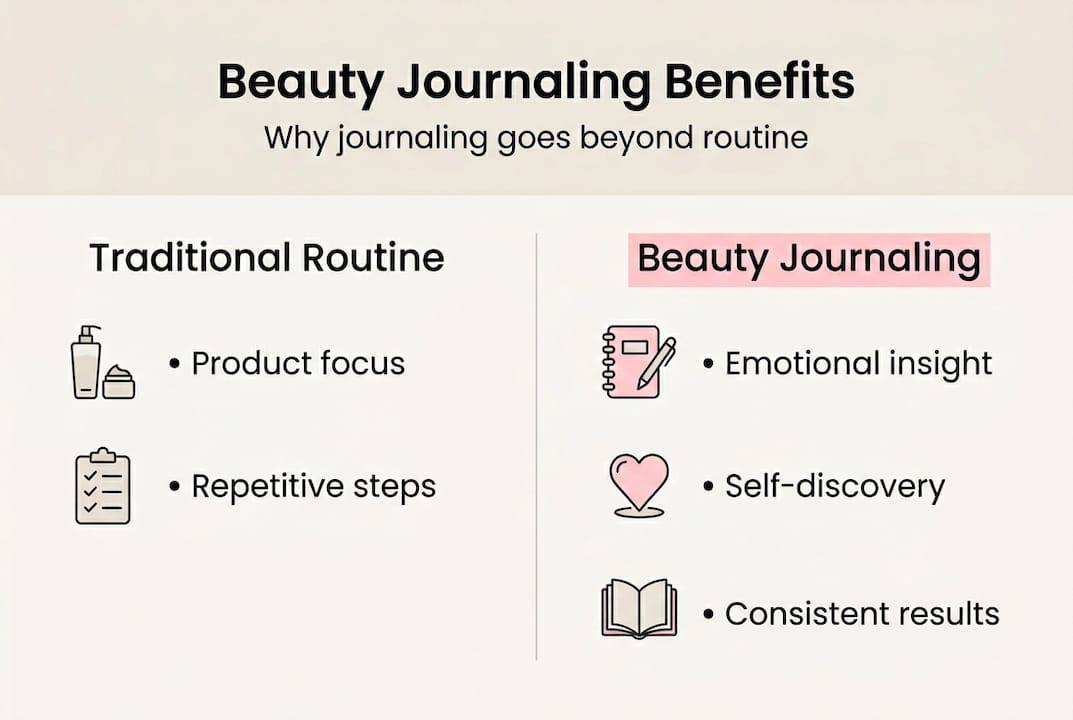
Beauty journaling is a structured self-reflection practice that weaves your skincare and makeup rituals together with emotional awareness. It is not a product log or a shopping list. It is a daily conversation with yourself about how you feel, what you notice, and what you need. That distinction matters because it repositions beauty from something external to something deeply personal.
Unlike a standard beauty routine, which is often mechanical, beauty journaling asks you to slow down and engage. You notice whether you feel rushed during your cleansing routine. You write about whether a certain botanical serum made your skin feel calmer, and whether that calm also shifted your mood. You track patterns. Over time, those patterns reveal a lot about how your inner world and your outer skin are connected.
Building beauty habits for skin and mind through intentional journaling is fundamentally different from following a trend. The practice is rooted in self-compassion, not self-criticism. Instead of judging what you see in the mirror, you get curious about it.
A strong beauty journal typically includes:
- Daily ritual reflections (morning and evening)
- Emotional check-ins tied to your routine
- Skin observations and product responses
- Gratitude entries related to your body
- Prompts that invite self-love and honest self-expression
Understanding beauty rituals importance is the first step, and journaling amplifies that importance by giving each ritual meaning. As one holistic beauty guide puts it:
Beauty journaling elevates routines from mechanical to transformative rituals, enhancing emotional resilience via natural and clean practices.
That shift from mechanical to transformative is everything. It is the difference between applying a lip oil absentmindedly and applying it as a small act of self-care that you actually notice and feel. The journaling for stress relief research community has long understood that the act of writing itself creates psychological distance from stress, giving you perspective you simply cannot access in your head alone.
With the foundation laid for why beauty journaling is more than product tracking, let’s explore the proven mental health effects next.
The science-backed benefits of beauty journaling
The emotional payoffs of beauty journaling are not anecdotal. They are supported by a growing body of research on expressive writing, self-compassion practices, and the skin-mind connection.
Expressive writing and mental health outcomes
Expressive writing for 15 to 20 minutes daily reduces symptoms of anxiety and depression, supports immune function, and has been confirmed through multiple meta-analyses. That is not a minor side effect. That is a clinically meaningful shift, achieved with nothing more than a pen and honest reflection.
For women navigating the pressures of external beauty standards, this kind of writing creates a protected space where your inner voice gets to be heard without judgment.
| Benefit | What the research shows |
|---|---|
| Anxiety reduction | Up to 9% symptom decrease with consistent practice |
| Body image | Short-term improvements with self-compassion prompts |
| Immune function | Measurable improvement after expressive writing sessions |
| Skin awareness | Mood-skin links revealed through consistent skin diaries |
The body image connection
Self-compassion writing improves body image in the short term, particularly for women who already value holistic self-care. Skin diaries, a subset of beauty journaling, help you connect stress levels, sleep quality, and emotional state to visible skin changes. When you track these connections consistently, you stop blaming your skin and start understanding it.
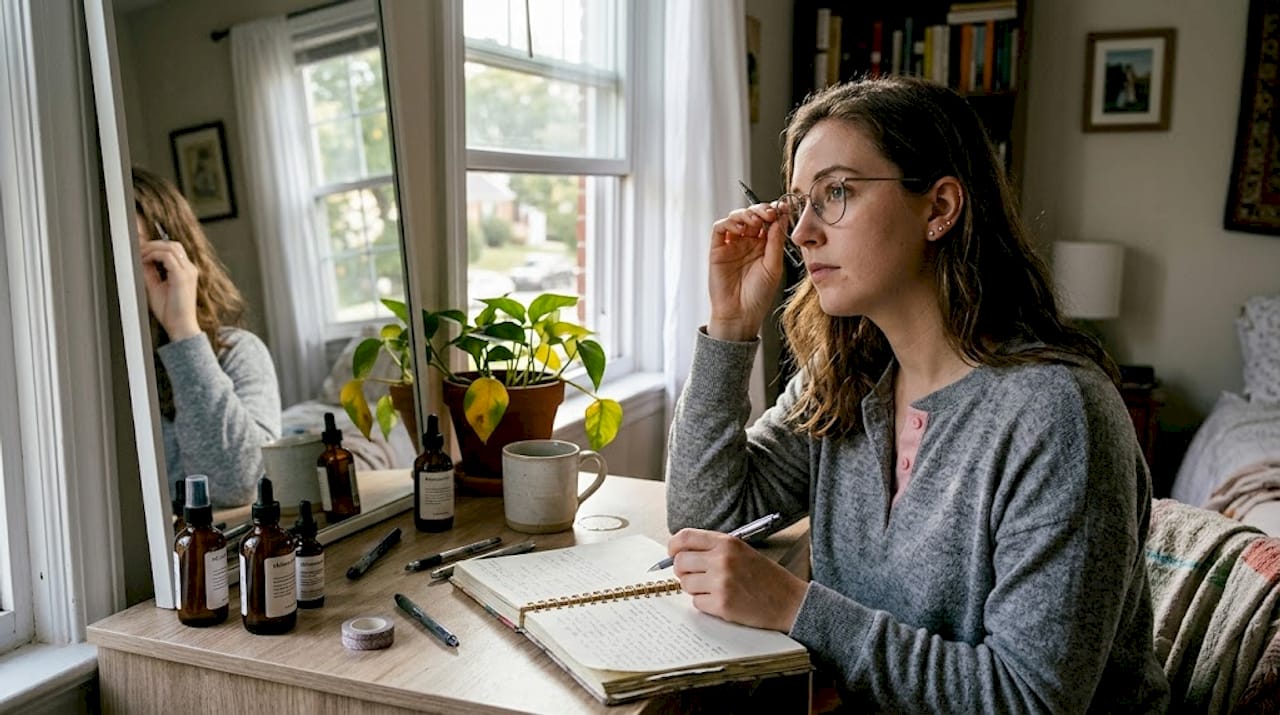
For women managing sensitive skin or conditions like eczema, this understanding is genuinely life-changing. You begin to see flare-ups not as failures but as signals from your body.
Exploring holistic beauty rituals through journaling also helps you identify which clean ingredients and routines genuinely work for your skin, versus which ones you adopted out of habit or external pressure.
Pro Tip: Pair your morning skincare routine with a two-minute gratitude entry focused on one thing you appreciate about your body today. Over time, this small habit rewires how you relate to your reflection.
The mental health journaling effects are most pronounced when journaling is practiced consistently, not just during stressful periods. Treat it like your favorite botanical serum: daily use is where the real transformation happens. You can also support this practice by exploring healing through beauty journaling as a form of creative self-expression tied to clean cosmetic rituals.
Given these science-backed benefits, the next step is to understand the core mechanics and daily application of beauty journaling.
How beauty journaling works: Rituals, prompts, and daily mechanics
The daily practice of beauty journaling does not require a lot of time. Most women find that 10 to 15 minutes, either in the morning or evening, is enough to make a meaningful difference. The key is structure without rigidity.
Here is a simple daily framework to get started:
- Set your space. Light a candle, make tea, or simply sit quietly. This signals to your mind that this time is sacred.
- Open with a skin check-in. Note how your skin looks and feels before or after your routine, without judgment.
- Choose a prompt. Use one focused question to guide your reflection.
- Write freely for 10 minutes. Do not edit yourself. Let the words come.
- Close with one gratitude statement about your body or your ritual.
Tracking daily rituals and emotional reflections alongside product effects and stress-reframing prompts is what makes beauty journaling distinct from a generic diary.
Effective prompts to try:
- What overwhelmed me today, and how did my skin respond?
- How did applying my botanical products feel as a ritual, not just a routine?
- What is one thing I genuinely love about my face or skin right now?
- How can I nurture myself emotionally today?
These self-love journaling prompts do something important. They shift your internal narrative from criticism to curiosity.
Traditional journaling vs. beauty journaling
| Feature | Traditional journaling | Beauty journaling |
|---|---|---|
| Focus | Daily life events | Beauty rituals and skin-mind connection |
| Prompts | Open-ended | Beauty and self-compassion specific |
| Outcomes | General emotional release | Body image, skin awareness, ritual confidence |
| Tools | Notebook | Notebook, swatches, product notes |
You can also add fabric swatches, color samples, or product sketches to make your journal feel like a creative sanctuary. This tactile dimension deepens the practice and makes it feel like authenticity in beauty journaling rather than a chore.
Pro Tip: Use the inside cover of your journal to paste a photo or write a mantra that reminds you why you started. It becomes an anchor on days when motivation dips.
Now that you know how to structure beauty journaling, let’s discuss the nuanced limitations and recommendations for maximizing impact.
Limitations, edge cases, and how to maximize the benefits
Beauty journaling is powerful, but it works best within specific conditions. Knowing those conditions helps you use the practice wisely and sustainably.
Where it shines most
The research is clearest for women managing anxiety and chronic stress. Studies show works best for anxiety and stress rather than clinical depression, and that effects fade significantly without consistent repetition. This is not a weekend activity. It is a ritual that needs to be tended.
Beauty journaling is most effective as a daily practice, not a crisis tool. The women who see the deepest shifts are those who show up to the page even on ordinary days.
Who benefits most from beauty journaling:
- Women managing mild to moderate anxiety or chronic stress
- Those with sensitive skin or eczema tracking emotional triggers
- Women rebuilding their relationship with their appearance after major life changes
- Those drawn to transformational beauty habits as a form of holistic healing
- Anyone seeking a grounded, intentional way to practice self-care journaling daily
When to pause and seek support
Beauty journaling is not a substitute for professional mental health care. For women navigating acute trauma, severe depression, or disordered eating, journaling without therapeutic guidance can occasionally surface difficult material without the support structure to process it safely. In those situations, beauty journaling works best as an adjunct to therapy, used alongside professional support rather than instead of it.
How to maintain the ritual long-term:
- Keep your journal visible and accessible, not hidden away
- Pair journaling with an existing habit (like morning coffee or your evening skincare routine)
- Revisit old entries monthly to notice your evolution
- Adjust your prompts seasonally to stay fresh and engaged
- Celebrate consistency, not perfection
Having addressed the nuances and limitations, it’s time to share a fresh, expert perspective on integrating beauty journaling with holistic self-care.
What most articles miss: Beauty journaling as identity transformation
Most conversations about beauty journaling stop at the surface: better skin awareness, less stress, improved routine consistency. Those are real outcomes. But the deeper reward is something most articles do not name directly: identity transformation.
When you write about your beauty rituals with honesty and self-compassion, you are not just tracking products. You are defining what beauty means to you, on your own terms. Over weeks and months, you build a record of who you are, how you care for yourself, and what you value. That record becomes a foundation of authentic confidence that external standards simply cannot shake.
Beauty as healing is a concept we believe in deeply. The page of a journal is where that healing often begins, quietly and honestly. Gratitude prompts and self-love reflections do not just feel nice; they build authentic identity and counter beauty standards that were never designed with your whole self in mind. The long-term reward is emotional resilience that shows up in how you carry yourself, not just how your skin looks.
Start your holistic beauty journaling journey
Beauty journaling is one of the most accessible self-care rituals you can adopt, and you deserve tools that match its intention.
At Pure Light Botanical Beauty, we believe that clean, plant-based beauty products are the perfect companions to a mindful journaling practice. When your skincare and makeup support your skin’s health while reflecting your values, every entry in your journal becomes richer. Explore our holistic self-care products and discover botanical formulas designed to nourish sensitive skin, inspire daily rituals, and make every self-care moment feel intentional. From our Petal Perfect Lip Oil to our Botanical Crème Blush, each product is a small act of healing you can write home about.
Frequently asked questions
How can I start beauty journaling if I’m new to it?
Begin with daily prompts like gratitude, self-love, and skin check-ins for 10 to 15 minutes each morning or evening, recording how you feel during your rituals and what you notice about your skin.
Does beauty journaling really improve mental health or skin outcomes?
Yes. Expressive writing daily reduces anxiety and depression symptoms, and skin diaries reveal how stress and mood directly influence skin behavior, helping you identify and address personal triggers.
What prompts are most effective for beauty journaling?
Prompts like “What overwhelmed me today?”, “What am I grateful for?”, and “How did my skin and mood shift?” work well because they reframe stress and invite gratitude rather than judgment.
Is beauty journaling safe for women with acute trauma or severe depression?
Beauty journaling is best used as an adjunct to professional therapy in those cases, not as a standalone tool. Research confirms it works best for anxiety and stress management, with stronger results when paired with qualified mental health support for more serious conditions.
Recommended
- How beauty habits transform skin and mental health – Pure Light Botanical Beauty
- Beauty as Healing: Transforming Skin and Soul – Pure Light Botanical Beauty
- Why Beauty Matters for Inner Growth and Healing – Pure Light Botanical Beauty
- Self-Expression in Beauty: Pathway to Healing and Confidence – Pure Light Botanical Beauty